
2nd January-4th January (Ho Chi Minh City)
Whilst the adventure so far in Vietnam has been pho-bulous, the start was a tad…slow. We caught a bus from Phnom Penh in Cambodia, across the border into Vietnam via Moc Bai. The journey took around 9 hours and we were all feeling a bit worse for wear by the end. The highlight was seeing the absolutely CRAZY amount of motorbikes as we entered Ho Chi Minh City. They swarmed everywhere, whizzing in and out of the traffic without any clear regard for rules. Wonderful chaos.
The first morning in Ho Chi Minh City was spent at the War Remnants museum, which (similarly to the Cheong Ek Genocidal Centre in Cambodia) was important to visit, but left me feeling shaken and very reflective. I am by no means an expert in the Vietnam War but I found the following link quite useful in educating myself afterwards (https://www.history.com/topics/vietnam-war/vietnam-war-history). Some of the facts about the war are so shocking, over 3 million people were killed (~2 million civilians), a further 2 million injured and around 300,000 missing. The museum contained some of the weapons used during the war, with US armoured vehicles, artillery pieces, bombs and infantry weapons on display outside. One corner of the grounds was devoted to the notorious French and South Vietnamese prisons on Phu Quoc and Con Son Islands. Inside the museum, several exhibitions also showed the devastating effects of the war with pictures and captions from war photographers. Few museums convey the brutal effects of war on its civilian victims so powerfully. The exhibitions about the effects of Agent Orange and the brutality of the war were for me the most vivid and heart-breaking. What is also clear is that the effects of the war are still evident today, with over 800,000 tons of bombs left across >6 hectares of land in the country, causing (1975-2002) a further 40,000 deaths and over 60,000 life changing injures. Both the visit to the war museum and the genocidal centre in Cambodia highlighted a very dark side to human nature.
After the museum we withdrew 3 million Vietnamese dong (woohoo we are millionaires!!), before an iced coffee and lunch. The Notre Dame Cathedral of Saigon and City Hall were beautiful and the area of the city surrounding them made for pleasant walking.
On Saturday morning (the 4th), Helen was feeling a bit worse for wear (our first real stroke of illness on the trip) so the remaining Fells and I set out to explore more of the city. Ho Chi Minh City is much more developed than Phnom Penh and we walked the streets around City Hall and the river front. After a check up on Helen, I then visited the Jade Pagoda, taking in more of the city life as I went, with the hustle and bustle of street vendors, swarms of motorbikes and intense heat. We had a nice lunch of rice, fresh greens and an omelette, purchased from a street vendor. The food tasted really fresh and we are both very excited about a month of Vietnamese feasting. The afternoon was a 50 minute flight to Da Lat, where it is a balmy 22 degrees. Time to get the thermals out according to Bob French.
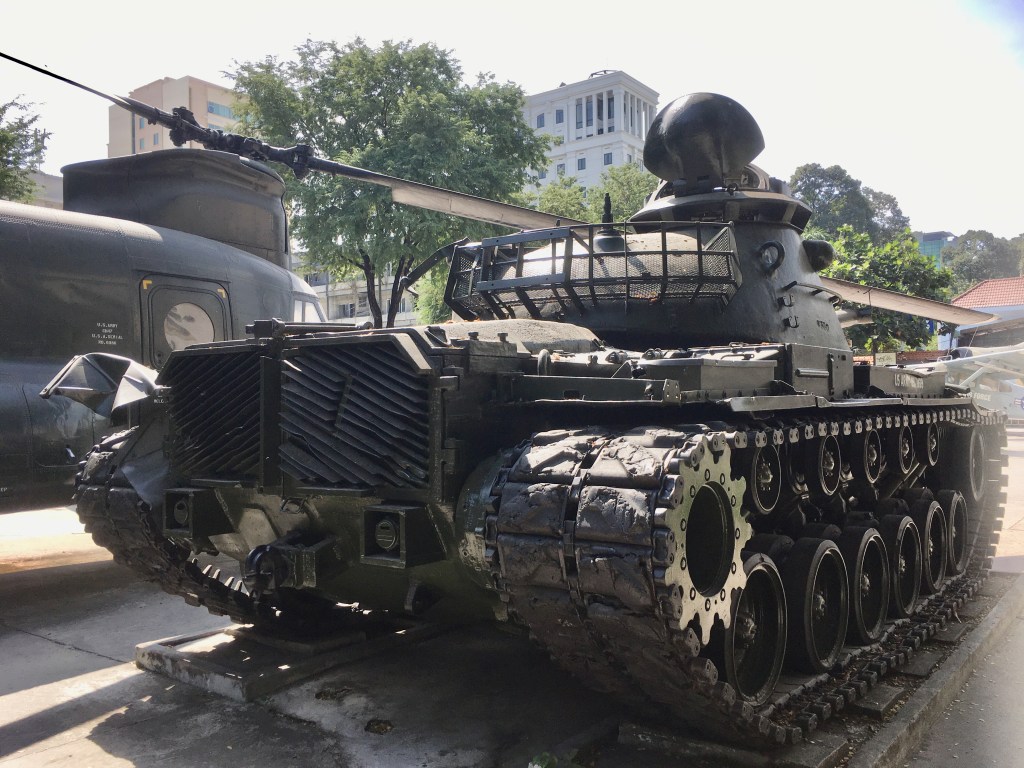
The War Remnants museum 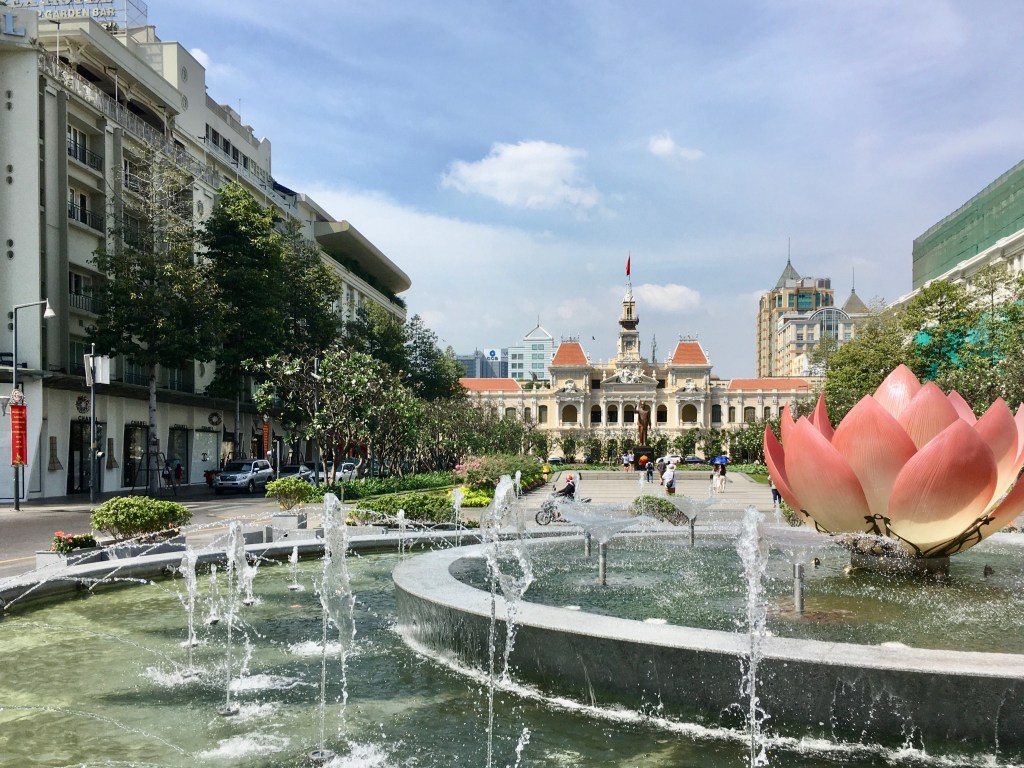
A brighter side to Ho Chi Minh
Vietnam travel tip #1: When crossing the road step out like Moses and behold the sea of motorbikes part before thee. Dally not on the kerb, lest thou grow old and befuddled (i.e. don’t wait for the motorbikes to let you cross at a zebra crossing, as they NEVER will). A bizarre concept for us English.
5th January-7th January (Da Lat)
Well Da Lat was just what we needed after a few big Asian cities. Whilst still a sizeable city, the temperatures were much cooler, the air was much fresher and the chaos level was taken down from 100 (Phnom Penh) to a safe 50 (for reference I am using a Monday afternoon in Bath as a 0 on my chaos scale). Our first day in Da Lat was spent visiting Crazy House, which was (as it says on the tin) crazy. Designed by owner Mrs Dang Viet Nga, the house has been a work in progress since 1990 and is now an outrageously artistic hotel. The house has strong Gaudí features, but is (if possible) even wackier, with sculptured rooms connected by super-slim bridges rising out of a tangle of concrete greenery. Madness. As Helen was still feeling a tad rough, we then spent the afternoon relaxing and I walked around the lake and visited the central market and French quarter. The city reminded me strongly of Capri (or other similar Mediterranean cities) and the hill town, was full of families and young couples relaxing by the picturesque lake. On our last day in Ho Chi Minh City I had a conversation with Sarah (Fell) about what we enjoyed most about Cambodia and Vietnam, and we were both in agreement that this was the people. They are so welcoming, good natured and generous, which is remarkable given the terrors they have had to endure in recent decades. Whilst walking around the lake I decided that Da Lat reflected this in many ways. The city was awash with colour and life, both with people and a vast array of stunning flower displays, which is in stark contrast with the bleakness and disregard for life of previous eras. It was so refreshing and marks a tribute to the resilience of the wonderful inhabitants of these countries.
Our second day in Da Lat was spent exploring Datanla Waterfalls, which exceeded our expectations. The waterfall experience can come with a rollercoaster/slide experience (we chose not to do this) and as such we had dreaded the falls being very touristy. However, we had a wonderfall time (terrible pun I know) walking down through a forest path to reach the falls. As Helen was still feeling under the weather (but on the road to recovery), I headed out to the beautiful Trúc Lâm Temple, which had stunning gardens and was a lovely spot to take a short walk. We then headed back to the city for a restful afternoon before a final walk around the lake and an hour on a pedalo, watching the sun set. Helen relaxed like ‘a lady of leisure’ whilst I did all the work. Bloody typical. Overall, Da Lat has been great. Some much needed freshness after bigger and more chaotic Asian cities.
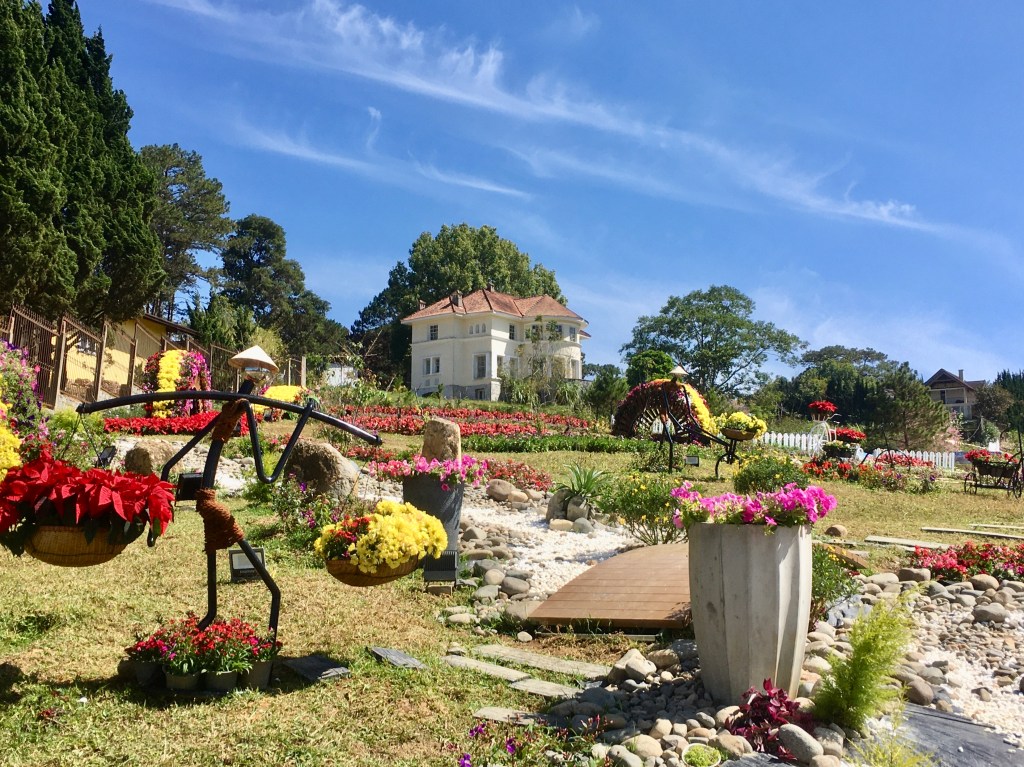
A city of flowers 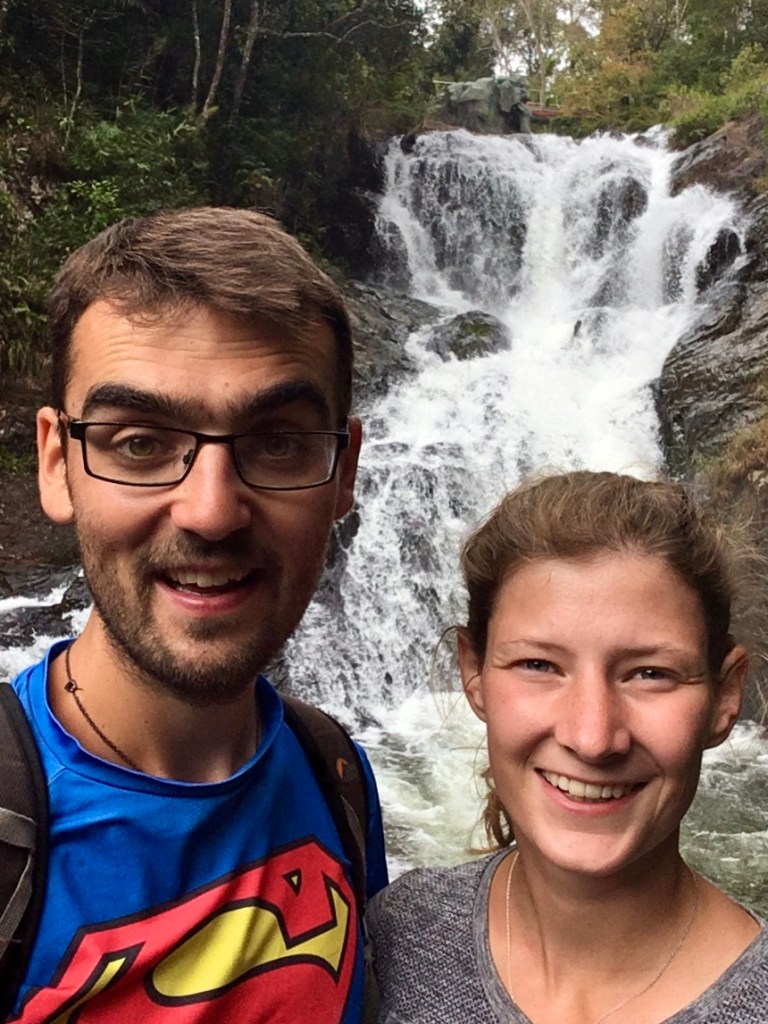
Falling for Da Lat 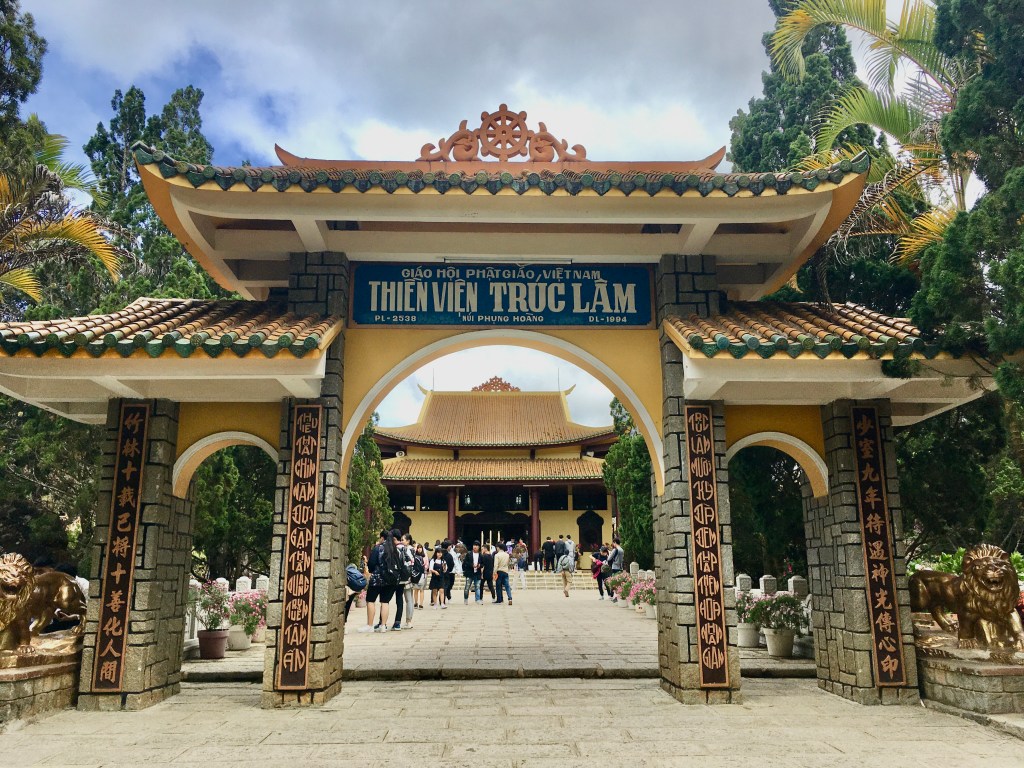
Another day, another temple
Vietnam travel tip #2: In Vietnam the local cuisine is amazing and it’s possible to get great vegetarian food for cheap prices. Sticky-rice with peanuts is a solid breakfast option!!
8th January-11th January (Hoi An)
Our next stop was the beautifully charismatic (although extremely touristy) Hoi An. Our flight from Da Lat arrived mid-afternoon and we shared a cab with a Brazilian chap to our hostel, before setting out to explore. The buildings and street plan of Hoi An reflect the influences (both indigenous and foreign) that have combined to produce this unique heritage site. The 21st-century curses of traffic and pollution are more (although not entirerly) absent, and we wandered through the lantern-lit streets, before having a take-away dinner (pumpkin and eggplant with rice) by the river. Hoi An owes its preserved state to the silting-up of the Thu Bon river in the 19th century, which put an end to its importance as a trading post, but (although it may not have seemed like it at the time), fortuitously helped it escape modern development and US bombing in the Vietnam war.
Whilst Hoi An deserves all its plaudits as a unique and beautiful city, the old town is incredibly crowded, especially at night. Therefore, on our first day we decided to head away from the city to the outskirts and we visited Tra Que Vegetable Village en route to An Bang and Hidden beach. The vegetable village was formed in the 16th century and the people living in the area continue to live and preserve the traditional values of the village. Due to the coastal climate, the area has good soil and temperatures and as such farmers (dating back from the communities of Sa Huynh, Cham Pa and Dai Viet) have cultivated the land for decades, growing many herbs including basil and mint. As I have been suffering from a cold (how can I have a cold… it’s like 30 degrees??), we had a nice rest over a basil seed, ginger and mint drink. The beaches were a little disappointing and like some other beaches in Asia have been slightly spoiled by litter. The evening and afternoon were spent exploring the old town again with a delicious dinner at the highly rated BUP café.
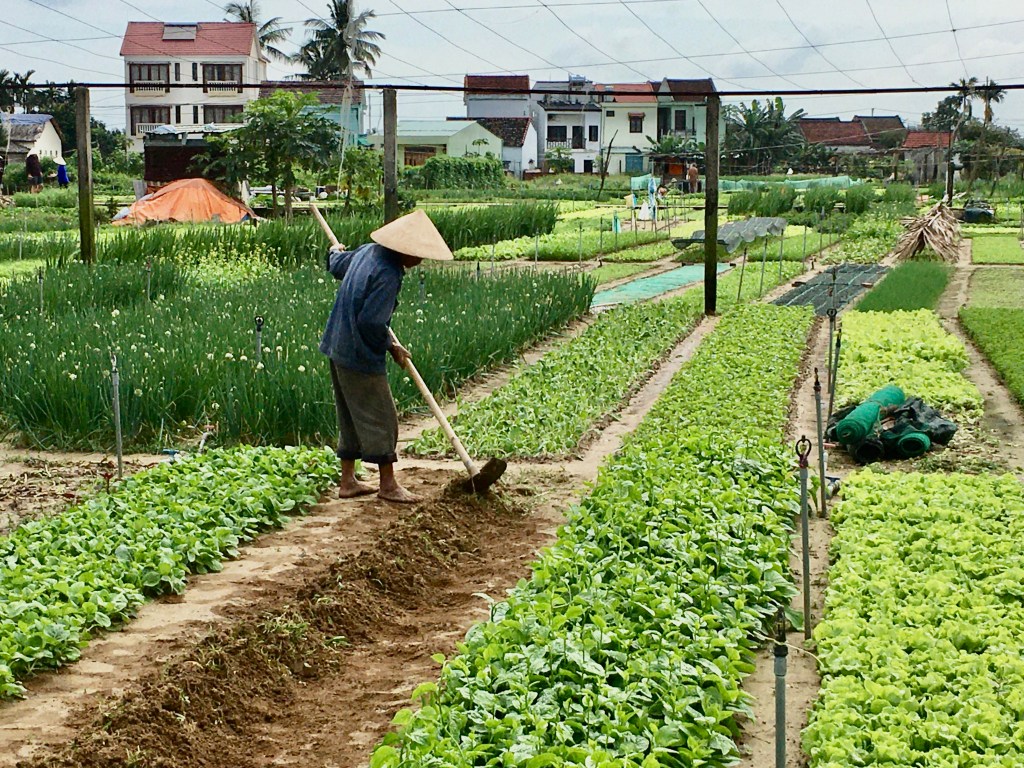
Some inspiration for Julie Edinburgh 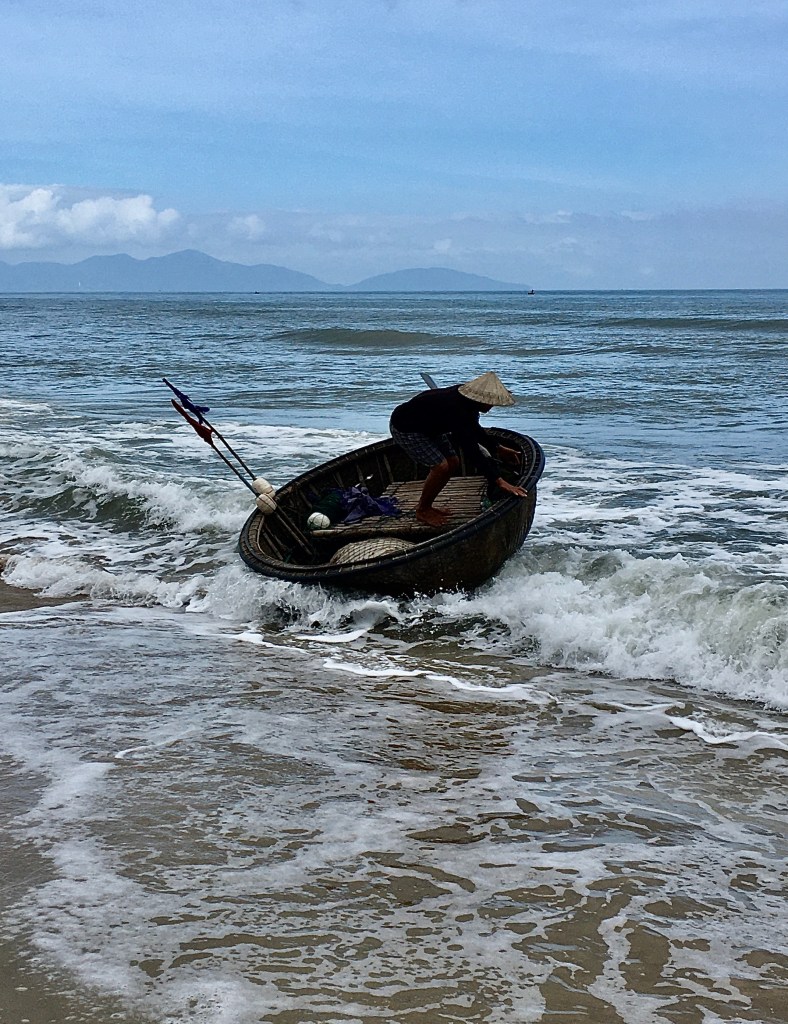
Water is he doing?
Vietnam travel tip #3: Say no to plastic if you can. In contrast to the UK where plastic bags have a cost to them, in Vietnam you are often given overwhelming amounts of plastic. Sometimes shops put your items in a plastic bag and then put that plastic bag in a plastic bag. We have now started to avoid take-away meals and always take our own bags to shops. We have also been guilty of buying a lot of plastic bottles (tap water is a no-go) but have started to look for safe re-filling options as well.
The Marble Mountains dominate the landscape along the coastal road between Hoi An and Da Nang. According to folklore, a dragon laid an egg after emerging from the water on Non Nuoc Beach and after a thousand days and nights, the egg hatched, revealing a beautiful girl. The fragments of the shell eventually grew into the Marble Mountains. In 1825, after the decline of the Cham Empire, the Vietnamese King (Minh Mang), named them ‘Ngu Hanh Son’ or ‘The Five Element Mountains’, one each for water, wood, fire, metal, earth. We had a marb-elous time biking to the mountains from Hoi An, before our ascent of Thuy Son (water mountain), took us past shrines, statues and temples and through a couple of old gates. Once at the top, we were bombarded with signs for caves and viewpoints, so we spent the next hour or two exploring and avoiding large amounts of tourists.
Our last day in Hoi An was spent exploring the old town in the early morning, when the hordes of tourists had yet to arrive. We first visited the old house of Tan Ky, a 200 year old trading house built by Vietnamese, but with strong Japanese and Chinese influences. The long and narrow house is the most visited in Hoi An, backing onto the river (reflecting it’s importance for trade) with a beautiful courtyard and intricate wood carvings. Amazingly, the bottom floor of the house frequently floods, forcing the family to move all the furniture to the top floor!! We also visited the Phuc Kien Chinese assembly hall, which was used for social gatherings and celebrations before later being transformed into a temple. However, my favourite was the museum of folklore, where we learnt about the history of silk production (an important trade product in the history of Hoi An), the unicorn dance, Ba Trao singing, the Bai Choi game (basically Vietnamese bingo) as well as fishing and farming. It was great to have some insights into the culture of daily life in Hoi An. We also had a traditional egg coffee (an experience in itself!!)
Overall Hoi An has been great. Our hotel was world class (ridiculously posh for ~£5 a night) and the area we were staying was outside of the main tourist attractions. The downside is that the old town has become a tourist hotspot and speaking to Joe (Fell) has highlighted just how much Hoi An changed in recent years. It has also been amazing to have a final day with Sarah, Patrick and Joe. A pho-bulous start to our time in Vietnam.

Hoi An without the hordes of tourists
 Rob Roams (around the world!!)