
28th February – 29th February (Kuala Lumpur)
We arrived back in Kuala Lumpur on the evening of the 28th and feeling tired we crashed early. In the morning we jumped on a commuter train to the Batu Caves. We walked on rainbow coloured steps up past the huge golden Lord of Murugan Statue and hundreds of monkeys to the main cave (Temple Cave). The temples were so colourful and bright and the cave was way bigger than we expected, housing multiple shrines. We then visited Ramayana Cave, which contained colourful statues showing the story of the Ramayana; Prince Rama’s quest to rescue his wife from Ravana with the help of an army of monkeys (this is a great read by the way). A picnic in KLCC Park followed admiring the PETRONAS Towers and trying to find a shady spot. We then set off for East Malaysia and the island of Borneo!!
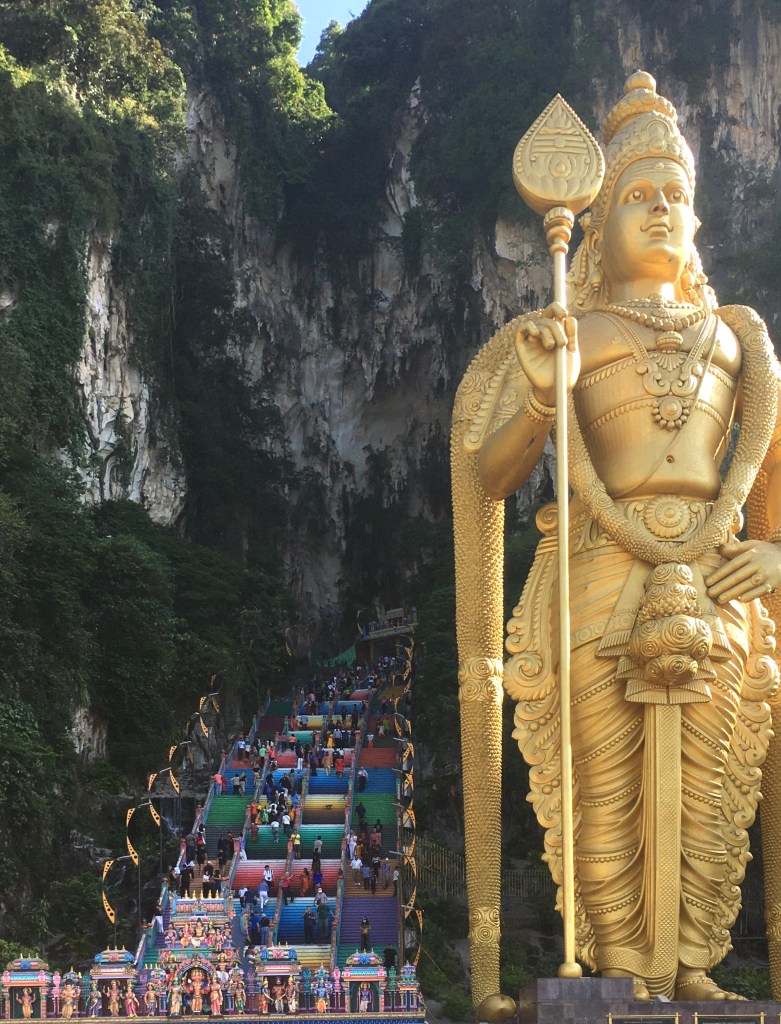
The rainbow steps to Batu Caves 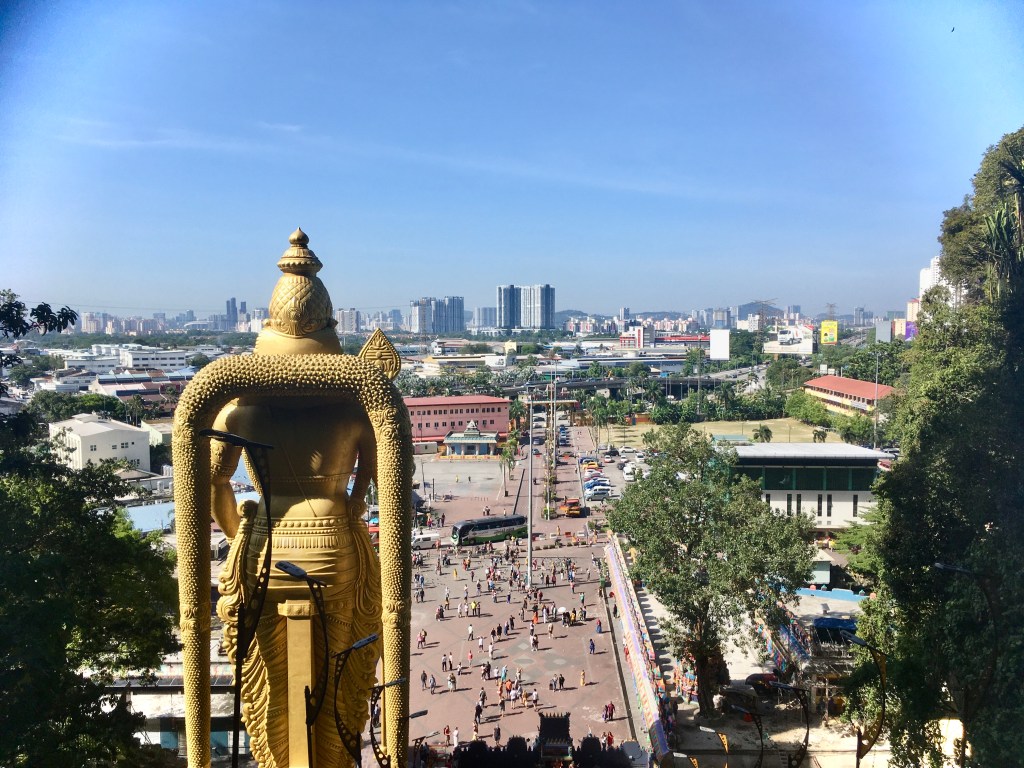
Not a Batu view for the Lord of Murugan
1st March – 3rd March (Sepilok and Sakau)
After a breakfast of scrambled eggs and beans at our nature lodge we walked to the Sepilok Orangutan Rehabilitation Centre. On arrival we learnt that an orangutan shares 96.4 % of its DNA with humans and the name translates as ‘man of the forest’. I also hadn’t realised that they are the only great ape species outside of Africa (gorillas, bonobos & chimpanzees being the others). They are solitary animals and females typically only produce 1 or 2 offspring across their lifetime. These behaviours coupled with deforestation means that their population is unfortunately declining.
The centre opened in 1964 and with support from Orangutan Appeal UK, has the aim of receiving, caring for, and eventually returning injured and/or orphaned orangutans back to the wild. It is now one of the best known orangutan rehabilitations centres in the world and has a 66% rehabilitation success rate for the 760 orangutans admitted since it opened. It costs the centre as much as £1500 per year to rehabilitate an orangutan, a long process that involves medical checks, nurturing, infant school (with games & play fighting to build social bonds) and outward bound school (restricted human contact to help them learn independence) before the animals can be released. This long process reflects the fact that a mother would spend up to eight years teaching their offspring skills such as climbing and foraging (this is one of the longest childhood dependence on the mother of any wild animal). The centre also developed a buddy system, whereby babies are paired with older orangutans to aid with skill development. One of the other great things is that the centre is built into protected forest, so the orangutans can live on their own without human contact. We walked through the forest, witnessing feeding platforms and the outward bound school, which was amazing. The orangutans jumped, did roly-polys, swung on ropes and had a wonderful time. It was an incredible experience and one of our best ‘nature moments’, since the Sri Lankan elephants.
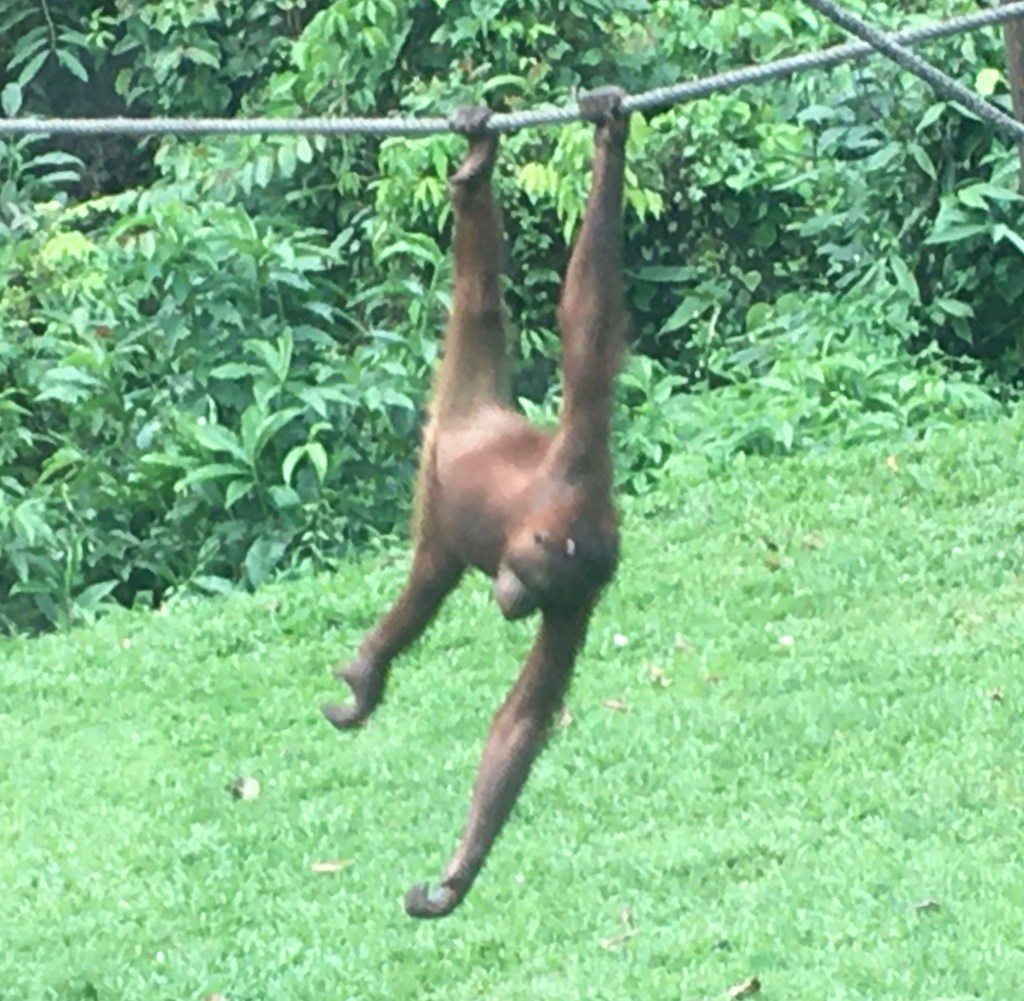
Hanging in there… 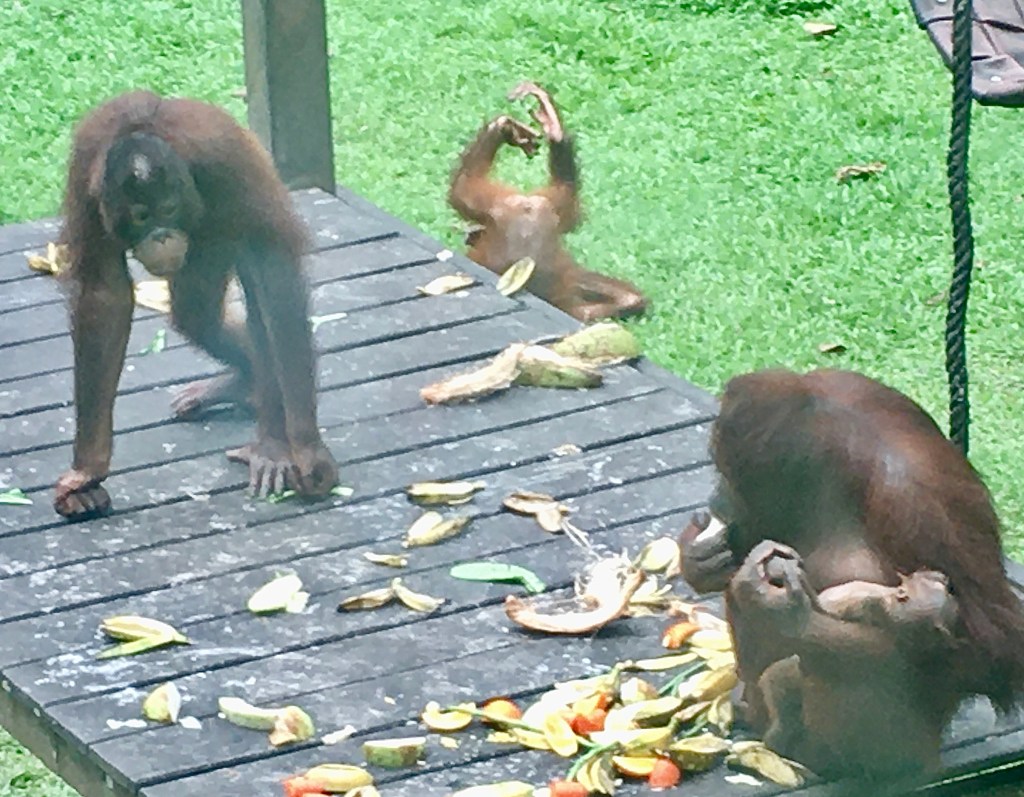
They see me rolling…
We then set off for a Kinabatangan river cruise, which was one of the main reasons we came to the area. The drive to the lodge (Sakau Backpackers Bed and Breakfast) was long, but as usual it was nice to escape from the heat. After a short break we jumped into a small boat and cruised along one of the tributaries of the river. On our first two hour excursion we saw; long tailed macaques (a whole family playing and grooming each other), an oriental pied hornbill, proboscis (long nosed) monkeys which looked hilarious, monitor lizards, silver leaf monkeys (i.e. the David Beckham monkey), pig tailed macaques and a grey tailed racer snake. The surrounding rainforest was just as impressive and we could have been on a movie set from Tarzan. After dinner at the lodge (rice with bean sprouts and squash, finished with watermelon) we were off for more. On the night cruise we saw: buffy fish owls, baby saltwater crocodiles, a pied fantail, blue-eared and stork billed kingfishers and a Bornean blue flycatcher. The colour of the birds was simply incredible and our guide was great at spotting them.
It was a 6 am start the next day for yet another river cruise. More kingfishers, monkeys (jumping, swinging and eating grass ride by the river bank), hornbills and baby crocodiles awaited us as we meandered along the river, dozing in the morning sun. After breakfast we then took a break from the boat and walked through the rainforest spotting the rare Bornean gibbon along the way. It was nice to chat with fellow travellers and I got some new ideas for later in the trip. One final sunset river cruise capped a great few days at the lodge (more animals were of course seen, but I’ve probably bored you to death already so I won’t list them again).
After transferring back to Sepilok in the morning we sorted some future travel bits and then explored the Rainforest Discovery Centre. It was awesome. Although we didn’t see many birds (the evening is a better time), we had a wonderful time exploring the forest and learning about different bird species including their migration patterns and evolution from dinosaurs. The only thing that was missing was any information/acknowledgement of the effects of palm oil plantations on the forests in this area. Just before leaving we spotted a giant tree squirrel and a Wallace’s hawk-eagle which was an excellent way to finish our experiences in Borneo.
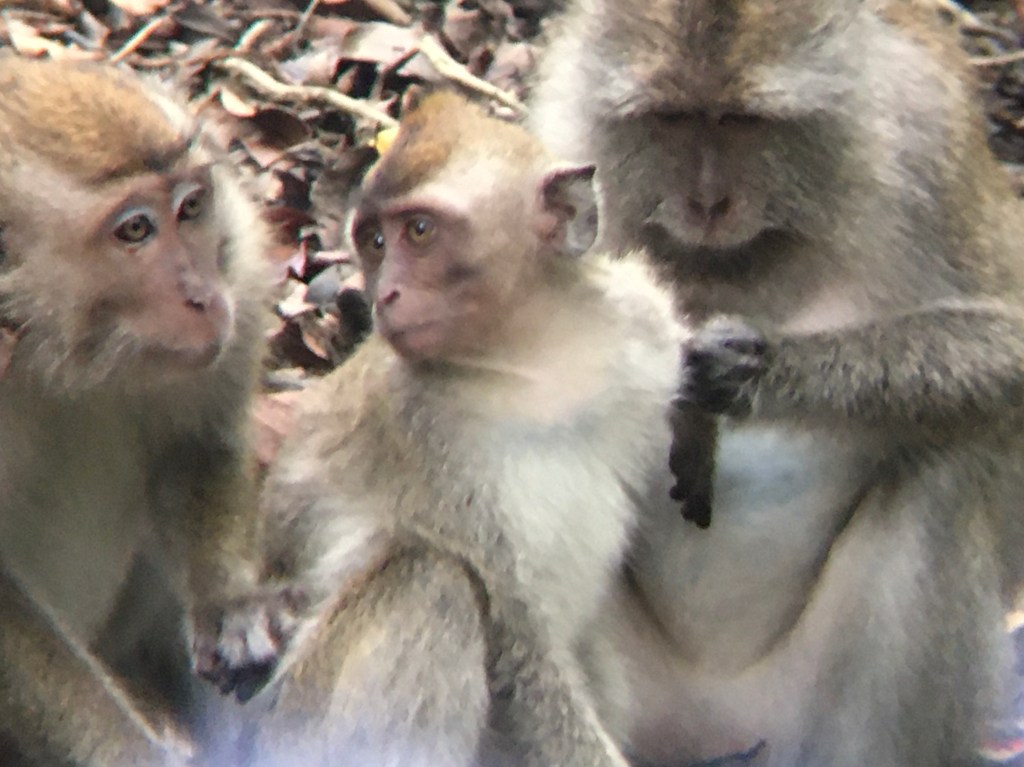
Cheeky chaps 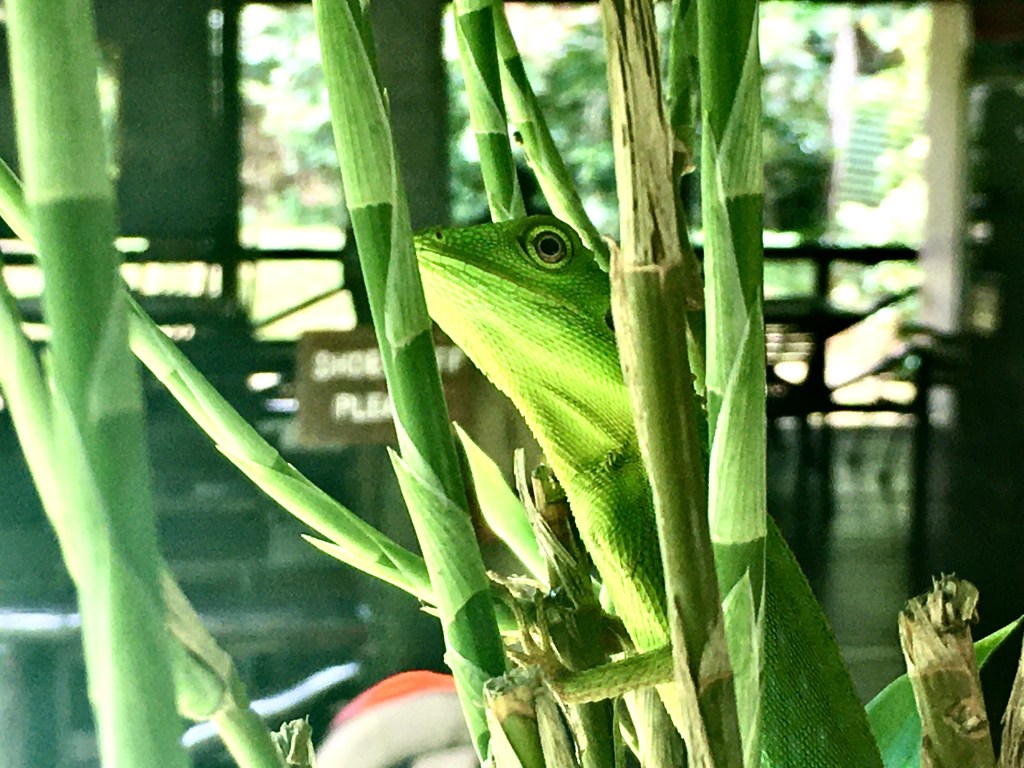
If I just stay really still…
4th March – 5th March (Kuala Lumpur)
After returning to Kuala Lumpur in the morning we checked into our most visited hostel (Dorms KL) one last time before I set out to explore the Perdana Botanical Gardens. Hidden within the city, the lake and surrounding gardens were peaceful and it was great to escape from the noise of the city. The gardens had huge dome structures (similar style to Singapore), beautiful flowers, a deer park and a hibiscus garden and made for wonderful walking. Across the road there was also a sculpture garden and the national monument/war memorial which I’m glad I managed to see. With the sun staring to drop we had one final explore of the old heritage area before dinner.
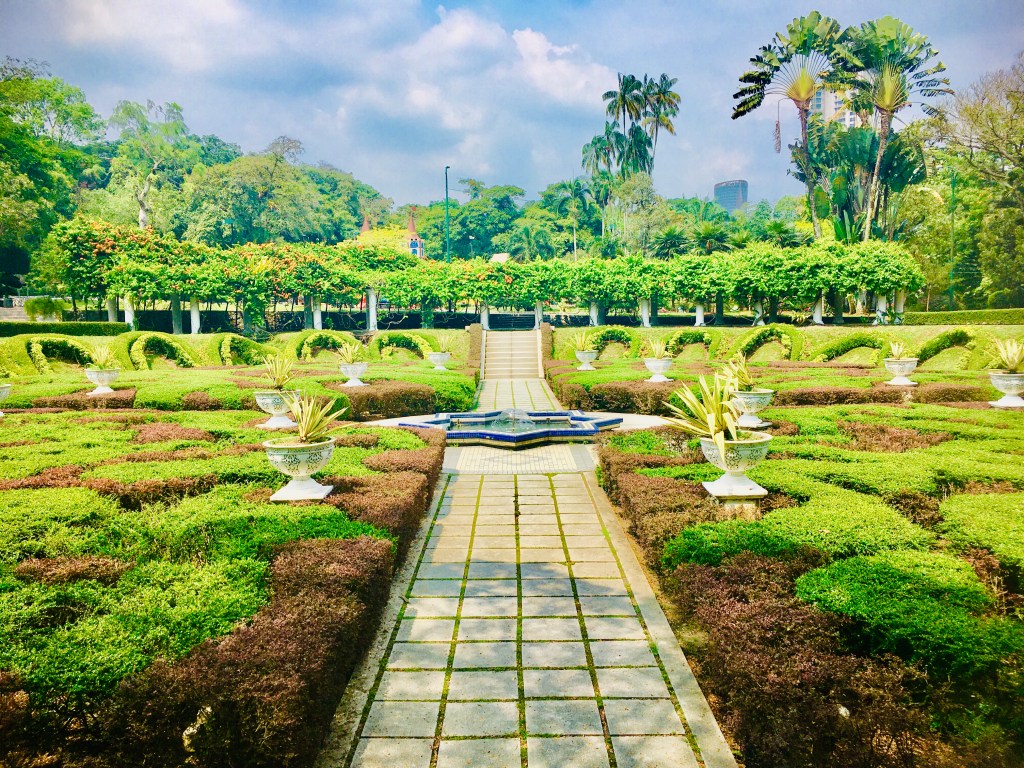
One for Bob French (a beautiful garden) 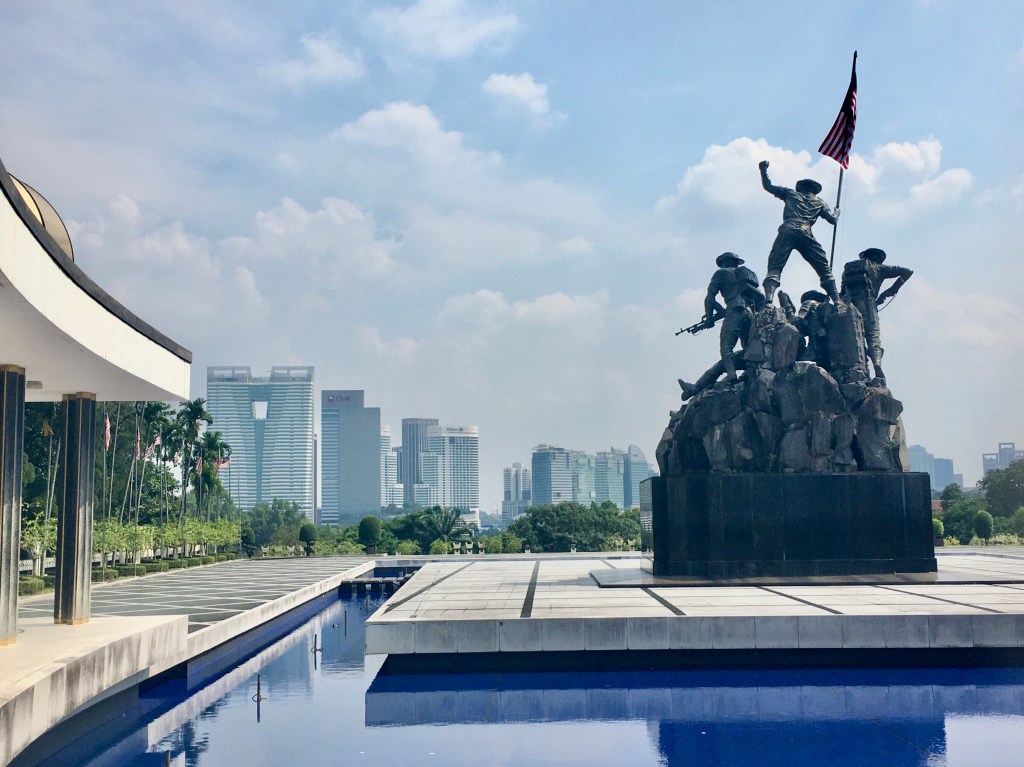
A fitting tribute
6th March – 7th March (Melaka)
We arrived at our last Malaysian stop, Melaka, at lunch (the 5th) and after a wild goose chase trying to find our homestay we visited the Melaka Straits (Masjid Selat) Mosque. It was located right on the waterfront and after attaining the appropriate gear we enjoyed exploring inside. Then it was back to the homestay to do laundry (no more smelly socks!!) before Poh San Teng Temple and Bukit China; the ancestral burial ground of Melaka’s Chinese community (with over 12,500 graves it is the largest and oldest Chinese graveyard outside of China). The area also contained moving monuments for the Chinese victims of the Japanese occupation during WW2. The evening activity was river walking, admiring the Old Dutch and Portuguese fortifications (Melaka used to be an important port town). A nice day was finished with a (spicy) dinner of eggplant masala and creamy spinach and potato.
On our second day we walked past the Independence Memorial before A Famosa; the Portuguese fortress. The leader of the Portuguese army that conquered Melaka in 1511 (from the Malay Sultanate), Alfonso de Albuquerque, started the construction in 1512 using forced labour. Many other buildings were also developed in this era including St Paul’s Church (the oldest church in Southeast Asia) and shop houses on Jonker Street and Heeren Street. The Dutch then captured the city in 1641, expanded the fortress and built other gates and bridges and there is still evidence of the Dutch East India Trading Company logo on the surviving gate. Then, in 1807, the British demolished most of the fortress in fear that it might be used against them after Melaka was given back to the Dutch. However, Porta de Santiago (one of the four main gates) and some surrounding houses survived as a few English lords intervened to stop the fort from being completely destroyed. Nonetheless, in 1819 when the city was returned to the Dutch, it was in such a state of disrepair that they focused instead on the islands of Java, with the British developing Penang and Singapore. In 1824, the Anglo-Dutch treaty was signed returning Melaka to British rule.
Next was Dutch Square; a group of terracotta-red colonial buildings constructed by the Dutch between 1660-1700 (this is one of the oldest surviving parts of Melaka). One of the most prominent features of the square was a Victorian marble fountain that was erected in 1904 to commemorate Queen Victoria’s Diamond Jubilee. Dutch Square’s other important buildings included the Stadthuys (the oldest-existing Dutch building in the East) and Christ Church. After Dutch Square we walked to Jonker Street and the Chinese area, including the impressive Cheng Hoon Teng Temple (built in 1673 this is the oldest functioning temple in the country) and a Chinese tea house, with intricate carvings and wall paintings. Then came the rain (it was torrential) so we took shelter and drank coffee. In the afternoon we visited Villa Sentosa, a Malay living museum. Our guide Abraham was fantastic and he told us how the Malaysian King and Queen had visited and showed us the various rooms of the traditional Malay house. A very unique experience and one of the highlights of the day. Melaka was such a fun place to visit and with it’s interesting history and architecture, as well as street art, and relaxed vibes it became one of our favourite cities of the trip. We are sad to be leaving Malaysia.
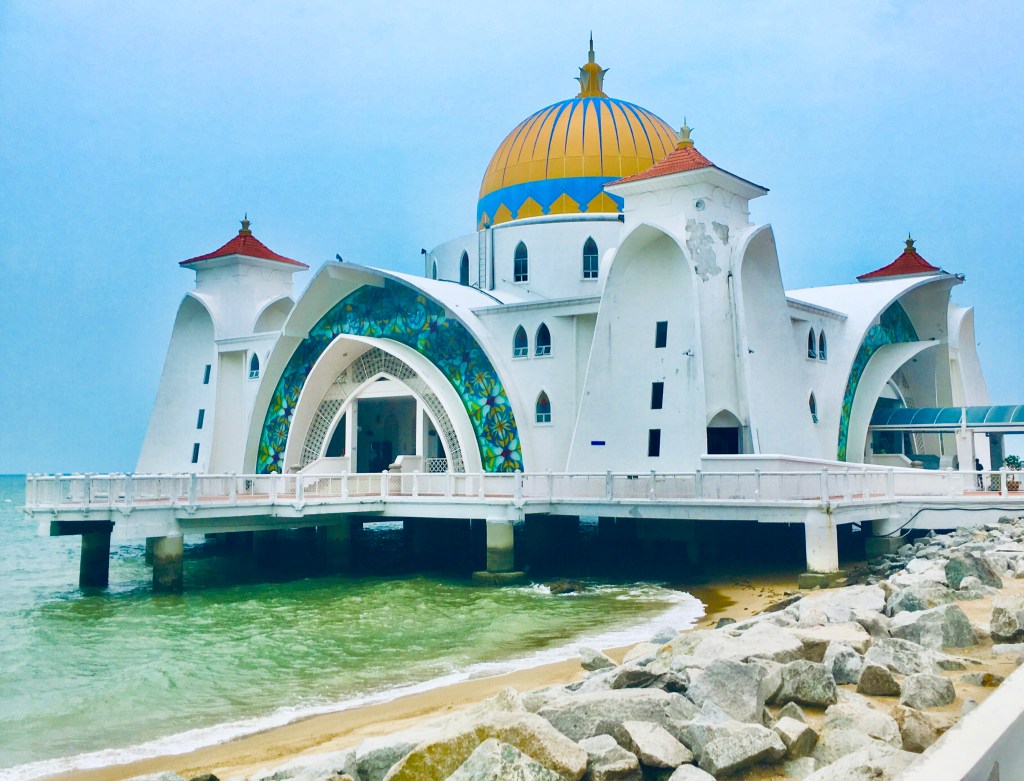
Sail away, sail away (please don’t) 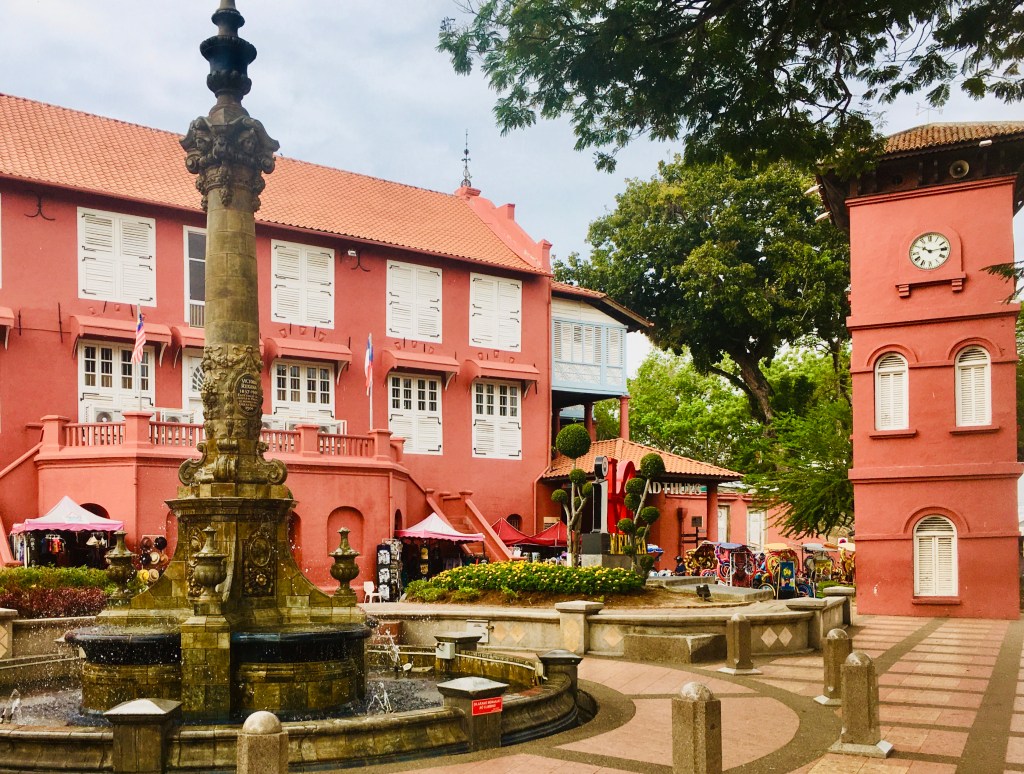
Double Dutch
 Rob Roams (around the world!!)