
Another special addition blog post for you…
I have slipped into a regular routine here in the outbacks of New Zealand, so don’t have too many grand adventures to report on. We celebrated 2-weeks of lockdown last Wednesday with a few drinks, nachos and a movie and the virus situation here seems (touch wood) relatively under control. My plan to become a chess master isn’t happening (thanks for killing morale Tom) and today I failed (in style) to make a loaf of gluten free bread, so perhaps a career as a baker is also off the cards… However, I am still on the way to becoming the next Robin Hood, have discovered a passion for Kauri gum, froze my nuts swimming in the river, am giving the future some thought and have become an avid admirer of the night sky. It is that last point that has given me some writing inspiration…
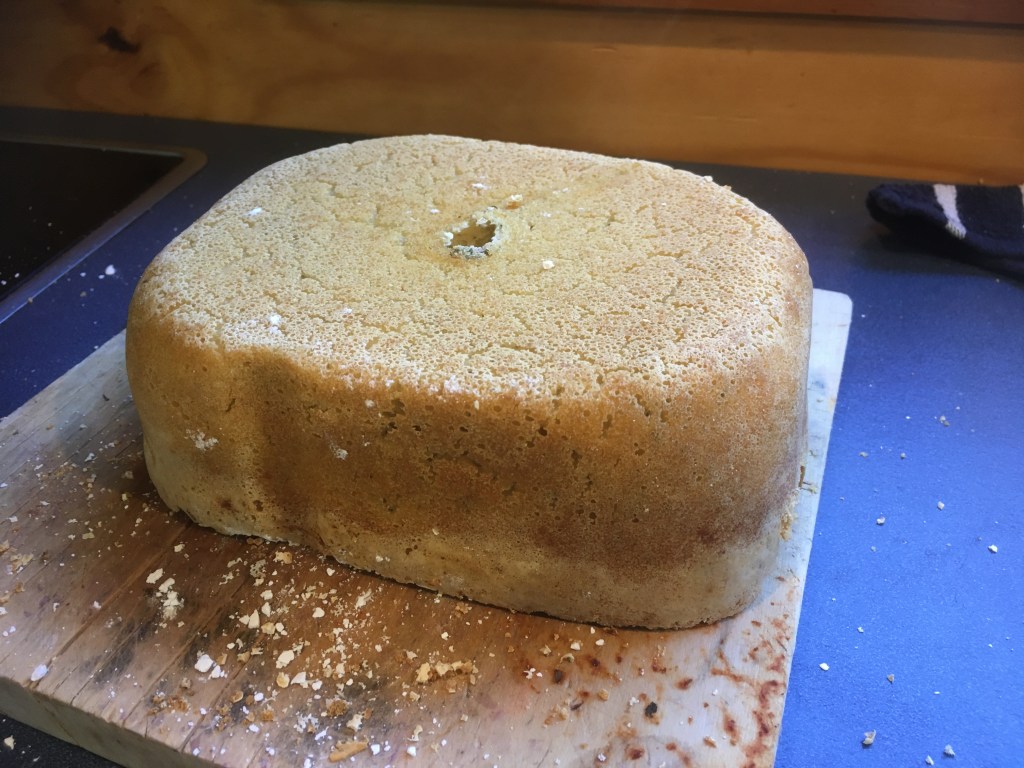
The start… 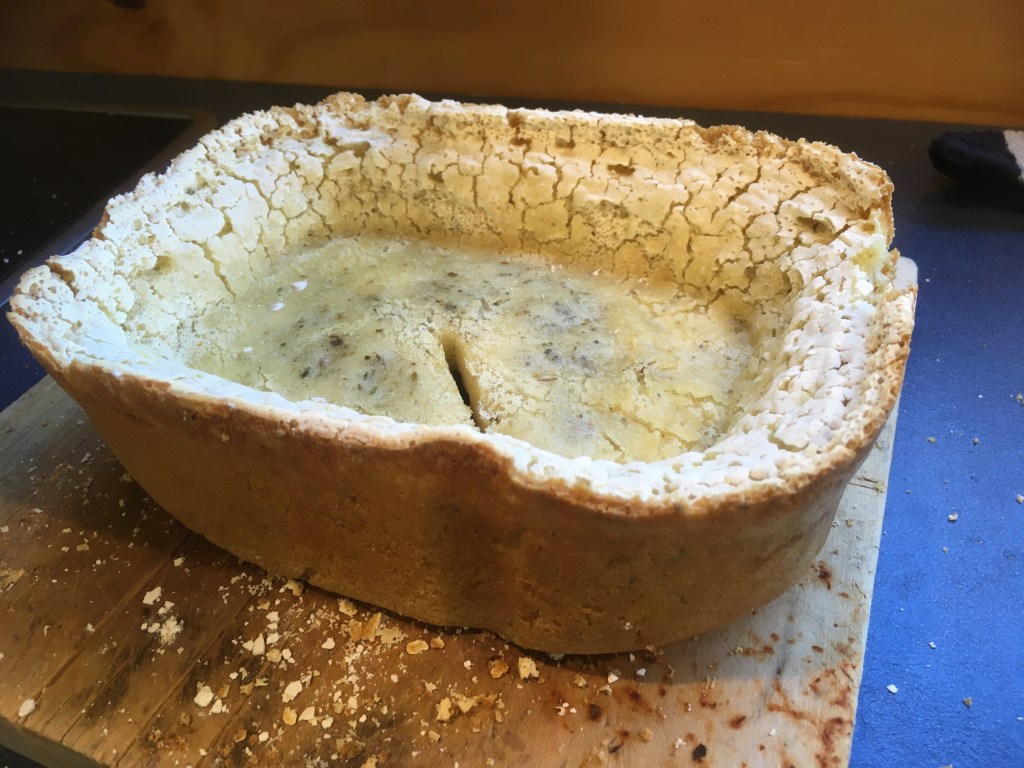
and end of my baking career…
Just a few nights ago we witnessed the remarkable pink supermoon. First of all, what a great name! Apart from the fact that the moon was in no way pink… Anyway, let’s start at the beginning.
How was the moon formed? The most widely accepted theory (there are a few) is the giant impact hypothesis, which states that the moon formed when an object smashed into Earth in its very early days. The Earth was formed from the leftover cloud of dust and gas orbiting the young sun. The early solar system was a crazy time to be alive, with huge collisions including a Mars-sized body that collided with Earth (known as Theia) which threw chunks of the young planets crust into space. Mixed with a healthy dose of gravity and Voilà… we have a moon. This theory also explains why the moon is made up predominantly of lighter elements, (making it less dense than Earth) as the material that formed it came from the Earth’s crust instead of its core. Our moon is the biggest in the solar system in relation to its host planet and moderates the wobble Earth has on its axis, giving us a more stable climate and amongst other things, our tides. So in essence…we really like the moon…
What is a supermoon? This is a full moon that occurs when the moon is within 90 % of its closest approach to Earth (the moon doesn’t orbit the earth in a perfect circle, but rather in an elliptical path as it’s affected by the sun’s gravity). This is still a mind-boggling 225,000 miles away, but compared to its further point of ~250,000 miles away, this can make all the difference. A supermoon can appear up to ~15 % larger and ~30 % brighter than a full moon at its furthest point from Earth, and ~7 % larger and ~15% brighter than a ‘regular’ full moon. A few times a year, the sun, moon and Earth line up just right, so that a perigee (when the moon is at its closest point to earth) coincides with the most picturesque moon phases: 1) the new moon (when the orb is just a sliver) or 2) the full moon. This year will have up to four supermoons, with the next one occurring on the 7th of May.
Why was it pink? For those of you who saw the great moon, you would have noticed it was not pink… in fact it looked like the moon. Big and bright…but definitely moon-like…The name is actually specific to April’s full moon and is associated with the appearance of moss pink (one of the first spring flowers). The full list of moon names includes January’s wolf moon and June’s strawberry moon and come from Native American tribes, Colonial Americans, or traditional North American names passed down through generations (listed in the Old Farmer’s Almanac). I have to admit I was slightly disappointed when I went outside and didn’t see a big pink marshmallow in the sky.
Why do I even care? Finally, we come to the burning question. Why have I bothered to read the last two paragraphs of text? Well, the effect of the moon at its closest versus furthest point from Earth is actually extremely minimal. When it comes to gravity, for example, the effect of a full moon at perigee (the close point) is only ~110 milligrams greater than at apogee (the furthest point). That is approximately the mass of 1/9th of a paper clip. In my eyes this gives another perspective of the vast distances we are talking about when it comes to space. The moon can be 25,000 miles closer to us (more than twice the distance from the UK to New Zealand) and yet this distance still makes such a small gravitational difference. The more I learn about space the more interested I have become. It truly blows my mind. Instead, the real reason you might care (and the reason I did) was because it was beautiful. We had a gloriously clear night for moon-gazing and the light emitted was enough to illuminate the valley. Another treat coming up (mid-April) is the grouping of Jupiter, Saturn, Mars and the moon in what should be a beautiful and bright alignment. This might be one I have to set a middle-of-the-night alarm for…
Anyway, that’s enough moon fun for now. I am off for a self-isolation doze in the sun with my new friend (see below)… but I will leave you with my favourite moon joke.
I suspect the moon wasn’t very hungry last night… why? Well, it looked pretty…
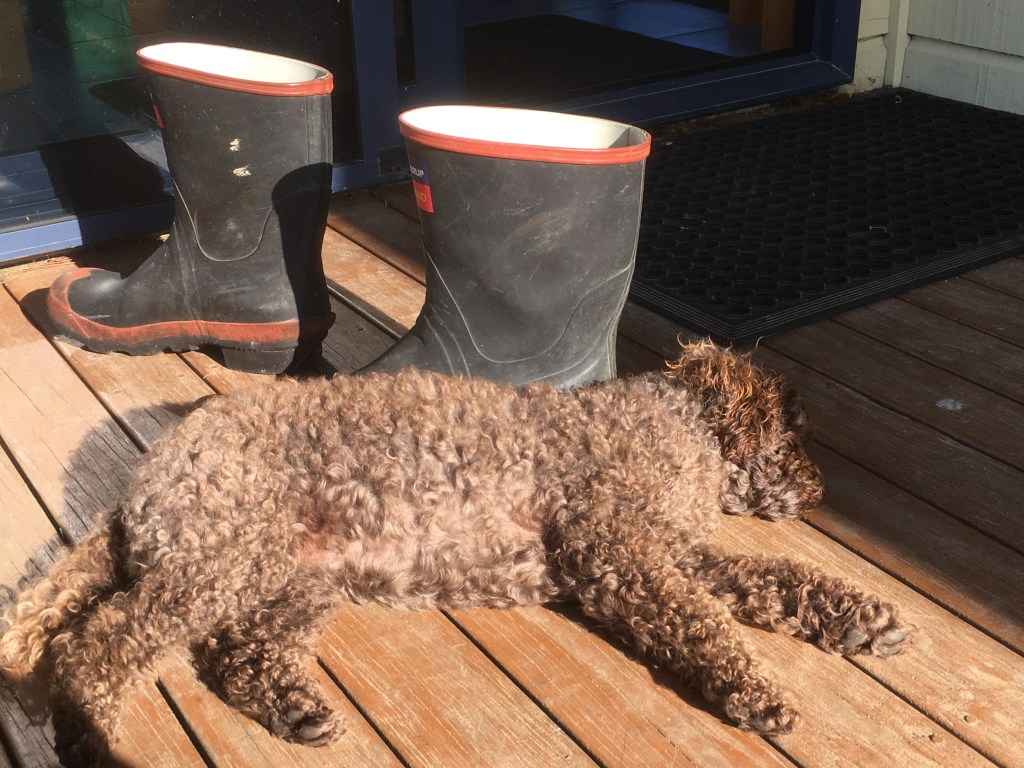
Living the good life
 Rob Roams (around the world!!)