Hikes, heat and smelly feet

20th February – 21st February (Kuala Lumpur)

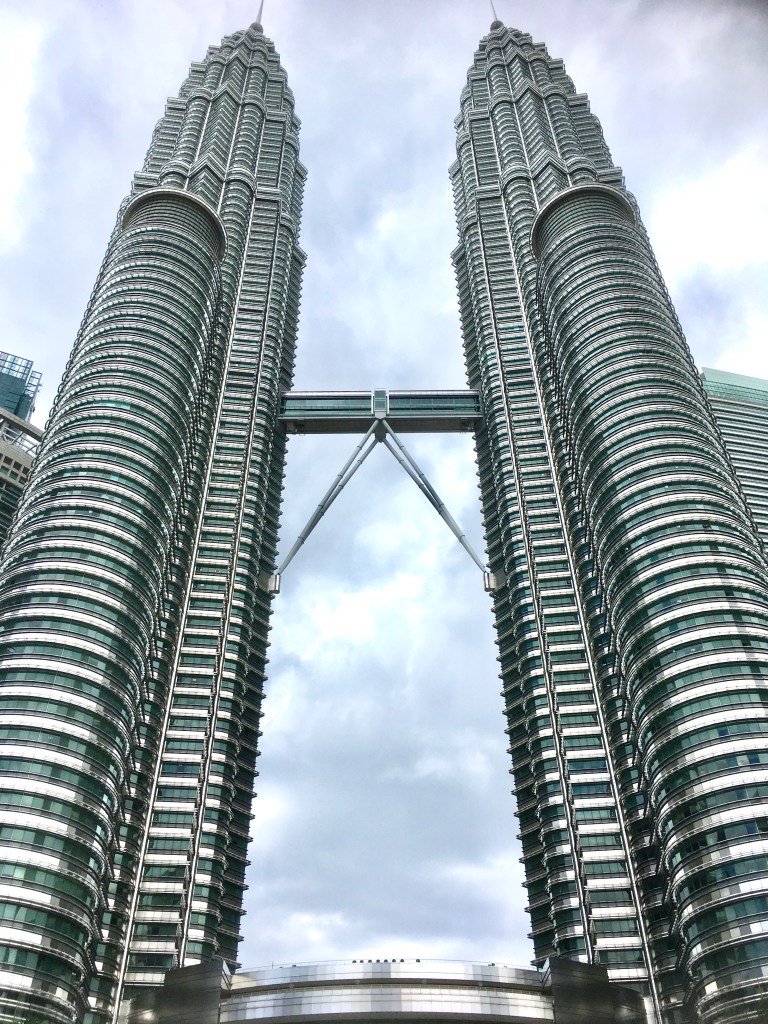
After an early start we arrived in Kuala Lumpur around lunch, sorted a SIM card and cash (more efficiently than in Chiang Mai) and went for a walk. We visited the famous Petronas twin towers, picked up a McFlurry (also a highlight) before exploring the peaceful KLCC Park. We then dropped our stuff at our great hostel called Dorms KL, before heading for the Sri Maha Mariamman Temple (Hindu), which was founded in 1873. The highlight was the beautiful entrance tower (gopuram) which was added in 1972 and set it apart from the surrounding streets. The temple is also the starting point for an annual procession to the Batu Caves as part of the Thaipusam festival. We then walked up Petaling Street, which was bustling with street vendors selling bits and bobs (Del Boy would have loved it). We got great vibes from Kuala Lumpur which reminded us of New York. One final treat? Gluten free pasta (home cooked) topped with veg and rotisserie chicken. Life’s a dream.

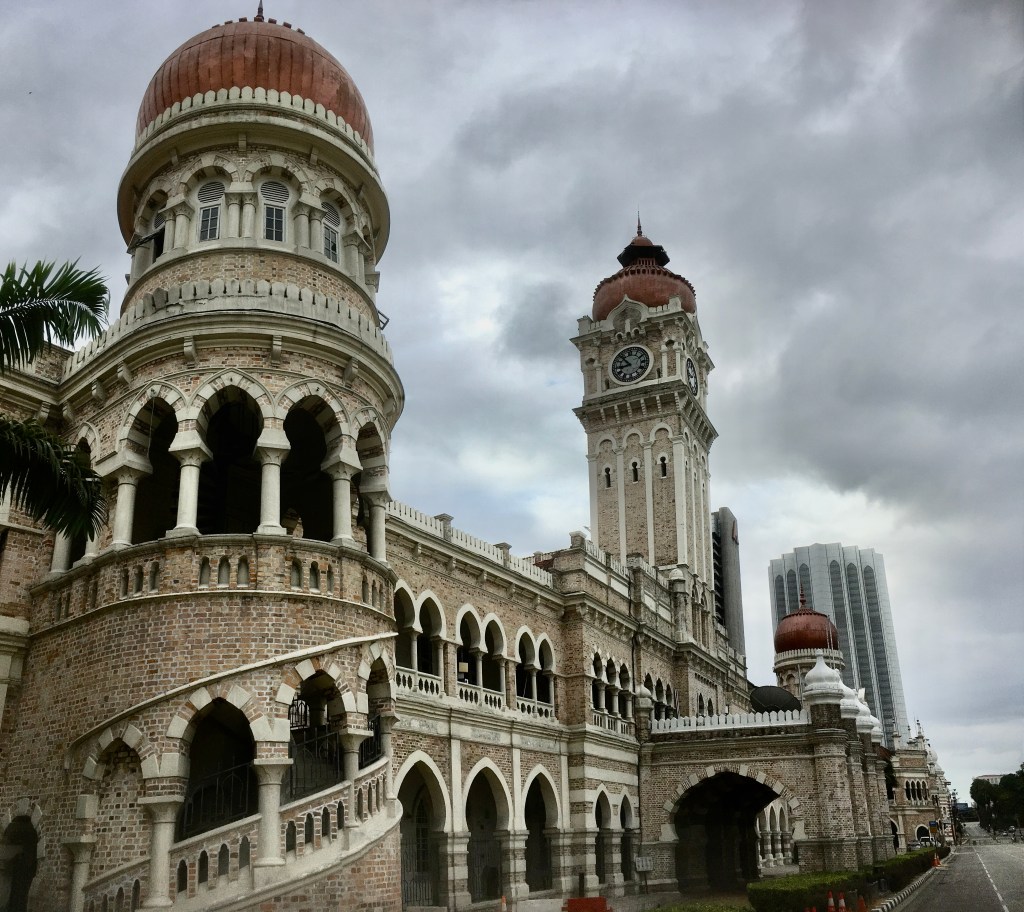
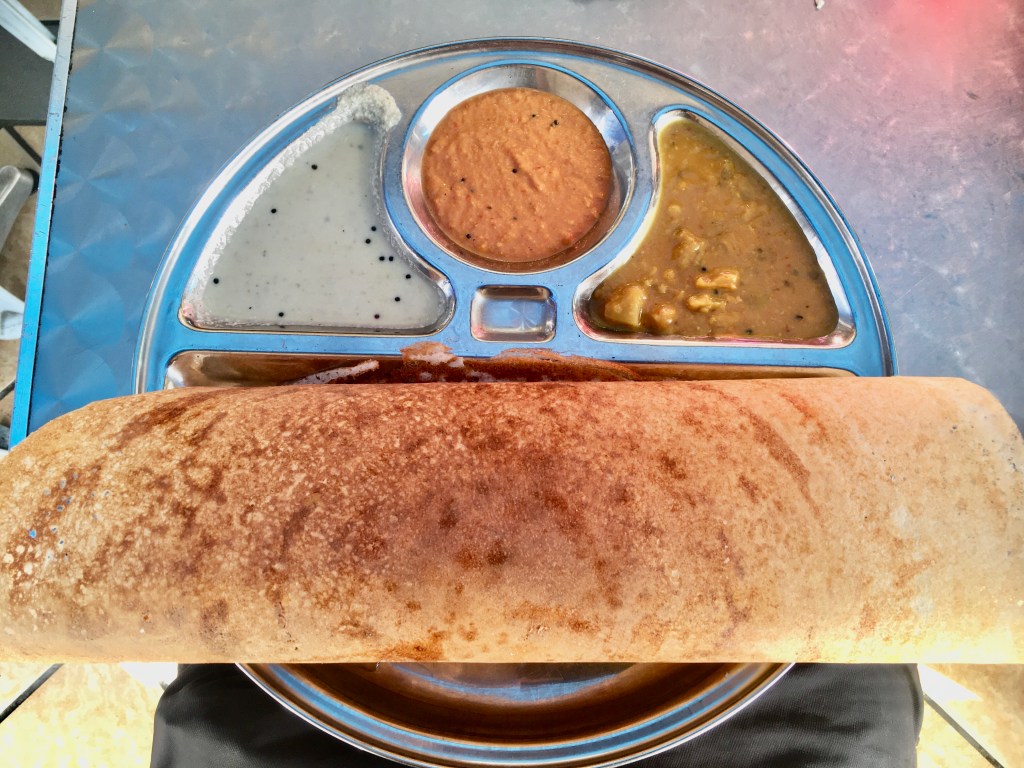
In the morning (after an excellent breakfast of Masala Tosai) we did the Kuala Lumpur Heritage walk, a self-guided tour of some of the old buildings in the city. We started with central market square (a former trading hub) which had a clock tower to honour the coronation of King George VI. Next, the Jamek Mosque, built in 1907 and the first brick mosque in the city. We then passed the old magistrates building and city hall, but the highlight was the beautiful Sultan Abdul Samad building. This was also the point where, on the 30th August 1957, the British flag was lowered and the (now independent) Malaysian flag was raised. We also visited the old post office, textiles museum and the chartered bank where after severe flooding in 1926, millions of dollars were dried out at a neighbouring cricket ground!! The walk was signed, the pavements were clean and the city felt closer to cities in Europe than others we have visited in Asia. We then returned to central market and St. John’s cathedral. As a side note we found Kuala Lumpur to be multicultural, with Indian, Chinese and Malay presences, but we mainly noticed the Indian influence, especially with food (curries, roti etc.). Finally in the afternoon we took a four hour bus to the Cameron Highlands, winding through green mountains towards temperatures of about 25 degrees. Helen couldn’t wait.
22nd February – 23rd February (Cameron Highlands)

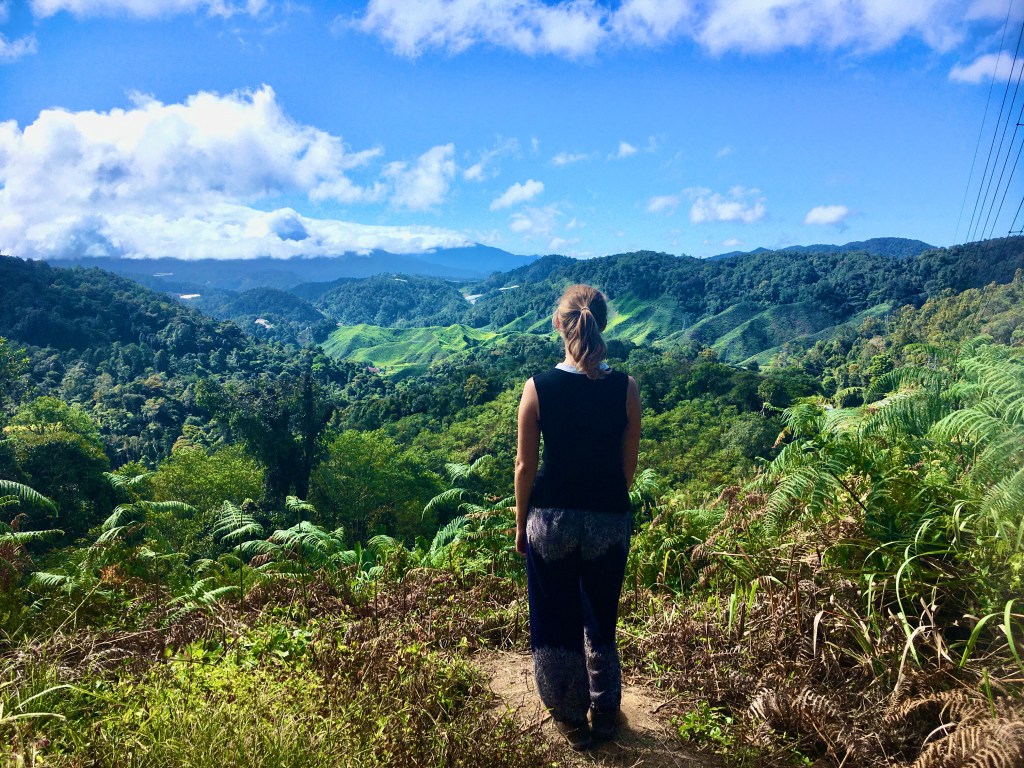
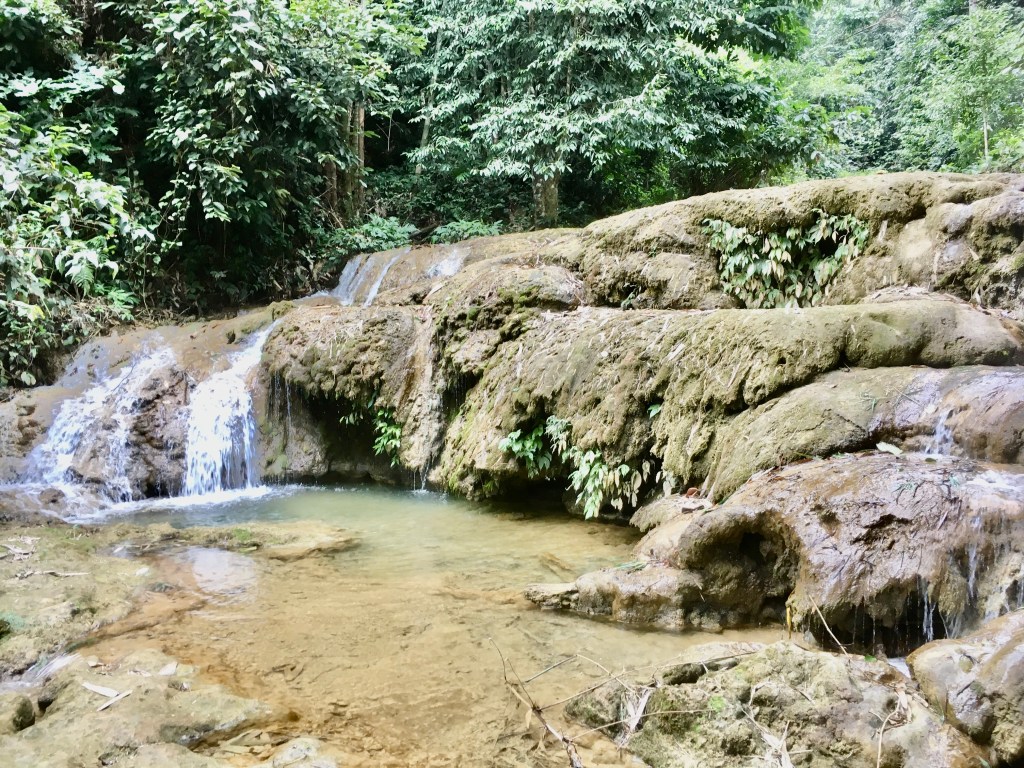
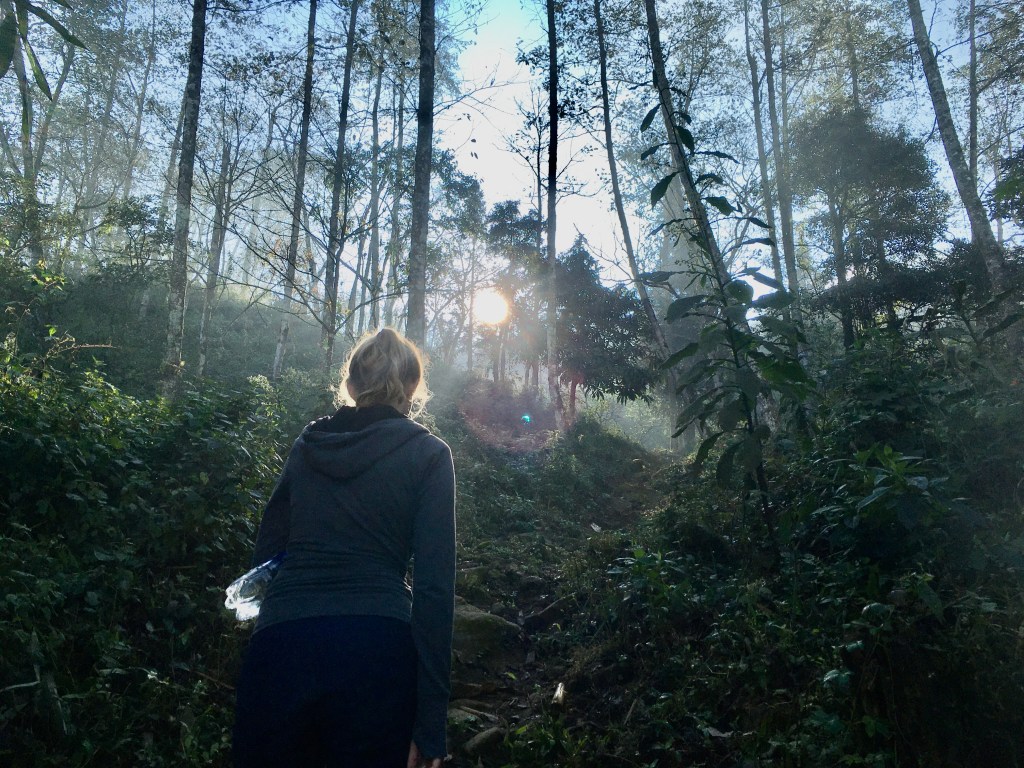
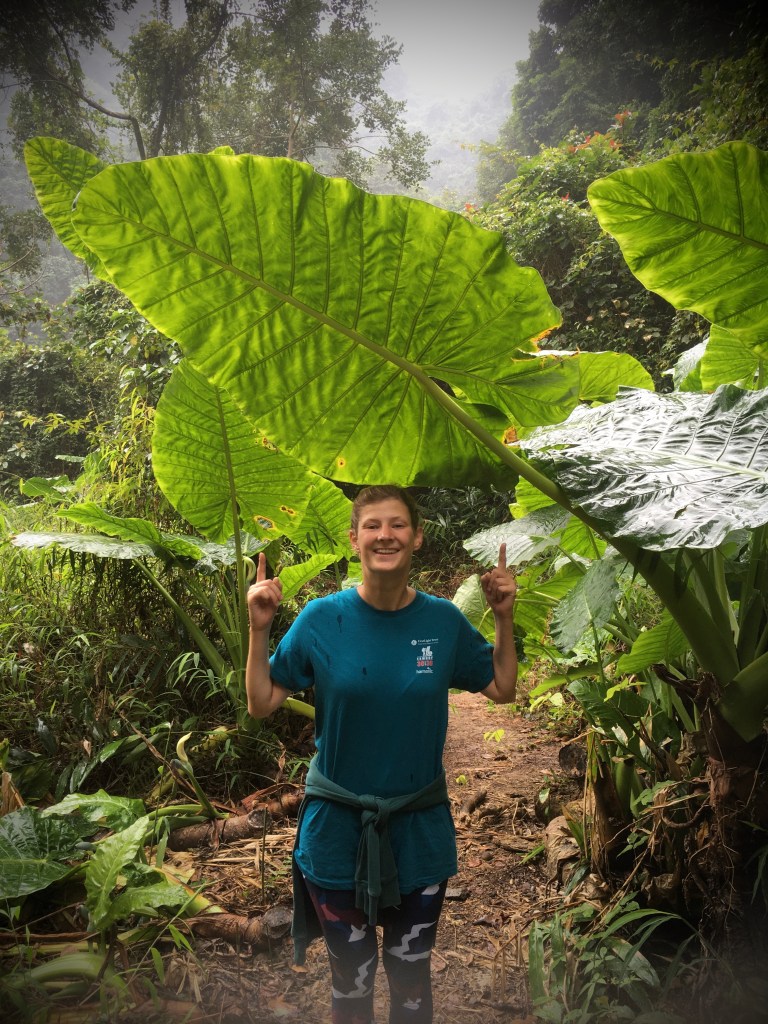
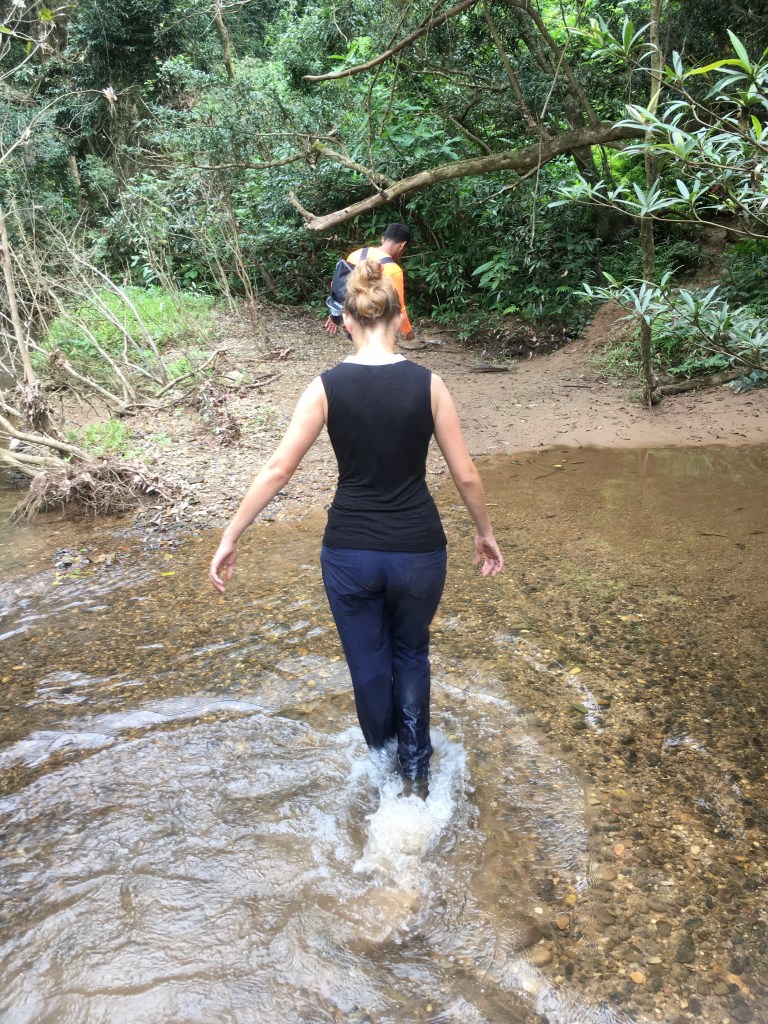
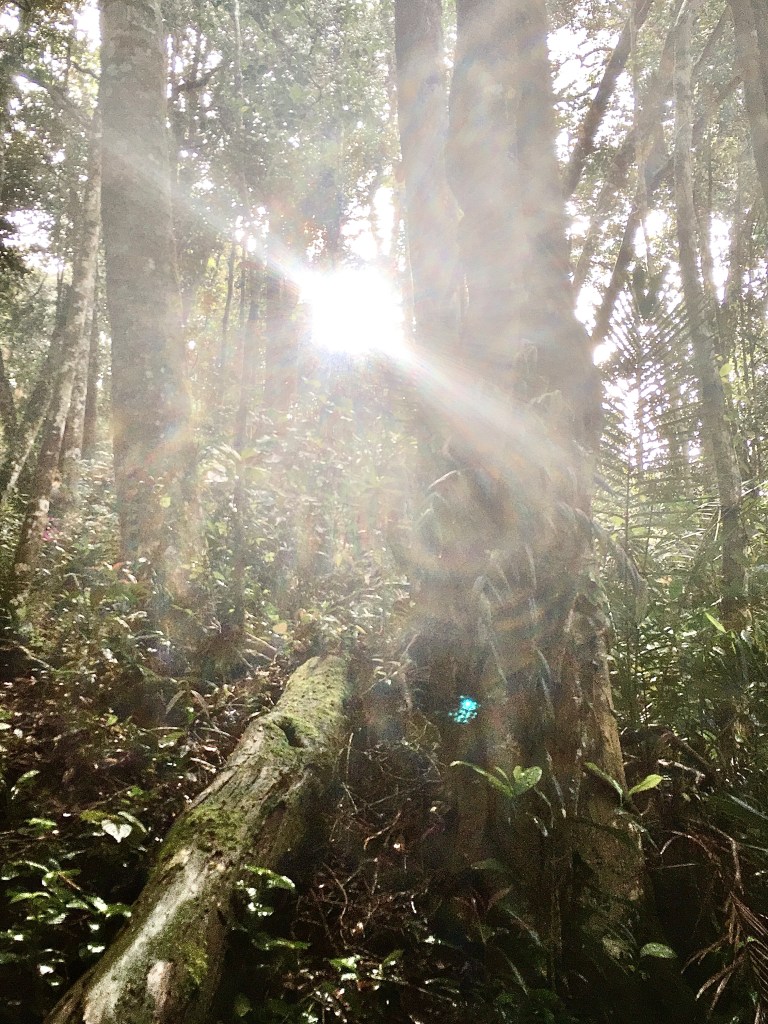
The highlands are very comparable to Nuwara Eliya in Sri Lanka. Their name originates from the British explorer, William Cameron, who came across the area during an expedition in 1885. Since then the highlands have remained a haven for tea plantations (due to the cooler temperatures) and colonial influences are evident in the architecture of the buildings. The area was gorgeous. Vibrantly green, dotted with peaks and connected by windy roads. After another breakfast of Tosai we headed into the forest for some hiking. We started at the Robinson waterfalls, before taking trail number 8 (lots of trails run out from Tanah Rata where we are staying) to Gunung Berembum (1840 m). The forest walking was wonderful, albeit VERY wet and wild (a proper rainforest). We trekked for about three hours before returning for a hot coffee, lunch and a much needed warm up (yes… a warm up). Then we walked down to Cameron Highlands Tea, a tea shop/plantation that was very busy due to the unreal views of the valley. Our final stop, Parit falls, capped a solid day of naturing.

On our second morning we hiked to the top of Gunung Jasar on route number 10 (1704 m). The walk wasn’t anywhere near as wild as day one, but with the sun shining the views were great. We then walked down route number 6, past farms, tea plantations and forests, loving the cool temperatures. It was another wonderful morning in the Cameron Highlands, which has become one of our favourite spots. Lunch was Tosai (yes breakfast was also Tosai) because when you’ve eaten a LOT of rice over the last three months, rice flour pancakes sound (and taste) simply divine. In the afternoon we travelled by bus (~4 hours) to Butterworth and then caught the ferry to George Town.
24th February – 25th February (George Town)

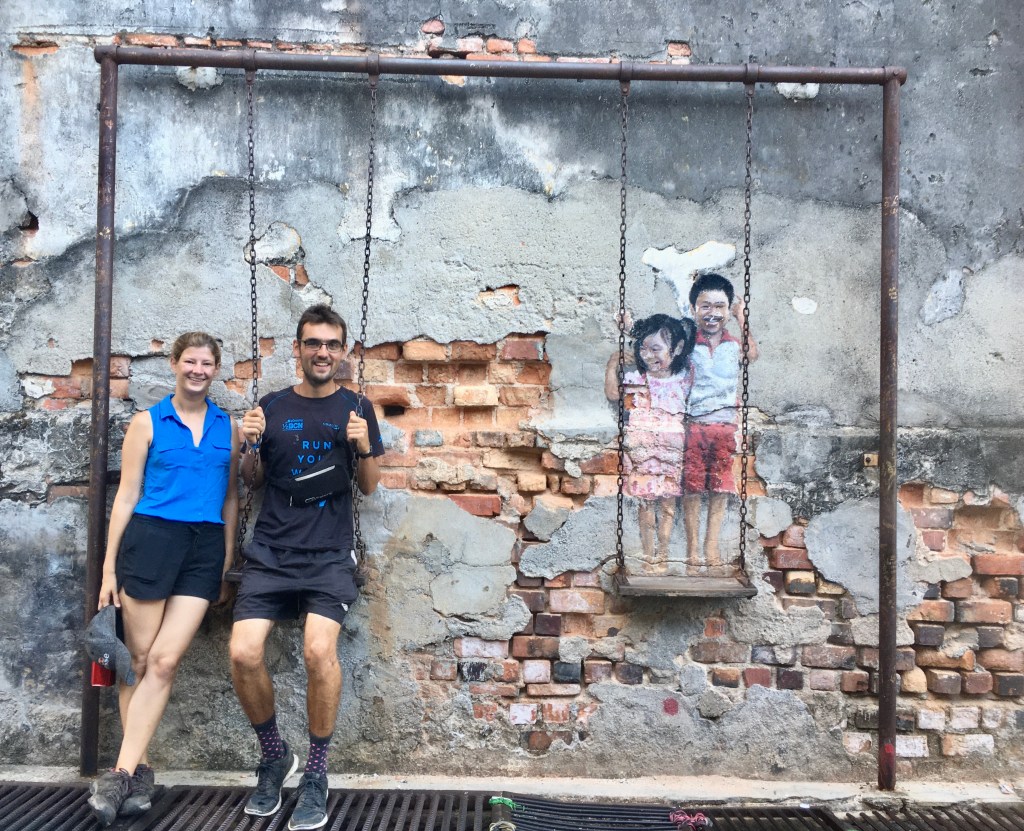
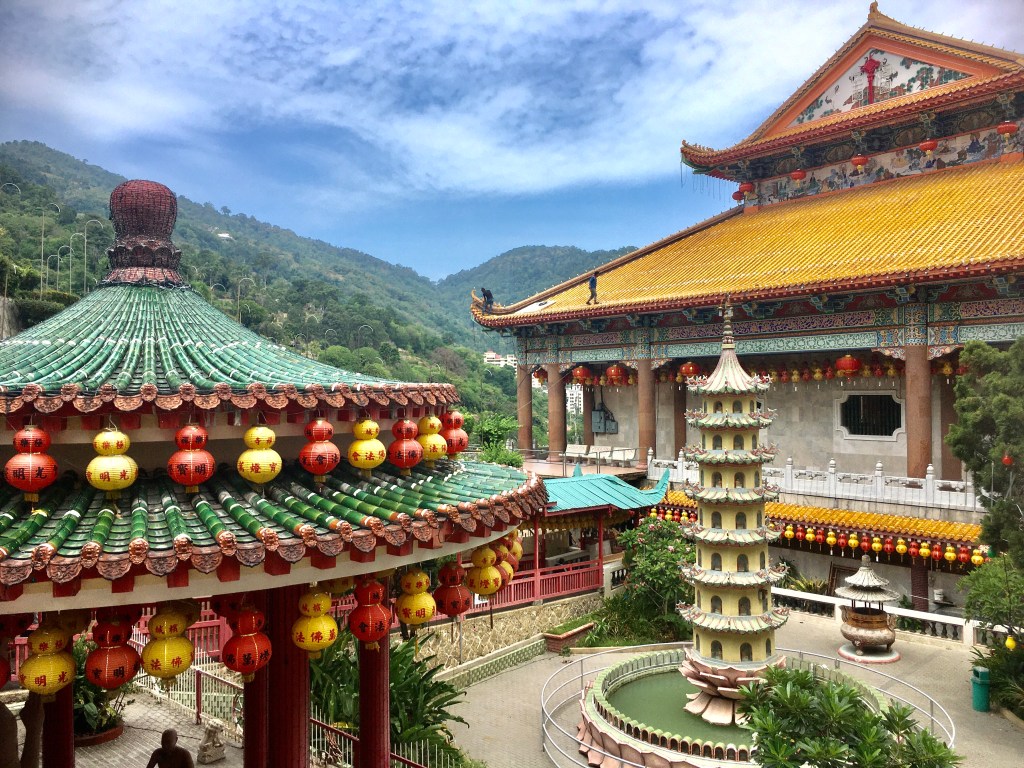
George Town = back to mega-hot temperatures. We woke early and caught a bus to Penang Hill, before I started a one and a half hour trek to the top (Helen got the train and sat at the top eating ice cream). The trek was straight out of sweat city but the views of George Town and Butterworth were worth it. In the afternoon (in the same area) we visited the Kek Lok Si temple, which was also wonderful. It is the largest Buddhist complex in Malaysia and its temples and pagodas were awash with colour, with peaceful music playing in the background. After sorting some supplies for dinner (we did a picnic in our room), we cruised around the streets of George Town, taking in the wonderful artwork. In 2012 Penang’s council hired London-trained Lithuanian artist, Ernest Zacharevic and his quirky work is now on show throughout the city. It was a lovely way to spend the evening, even though it was still around 30 degrees.

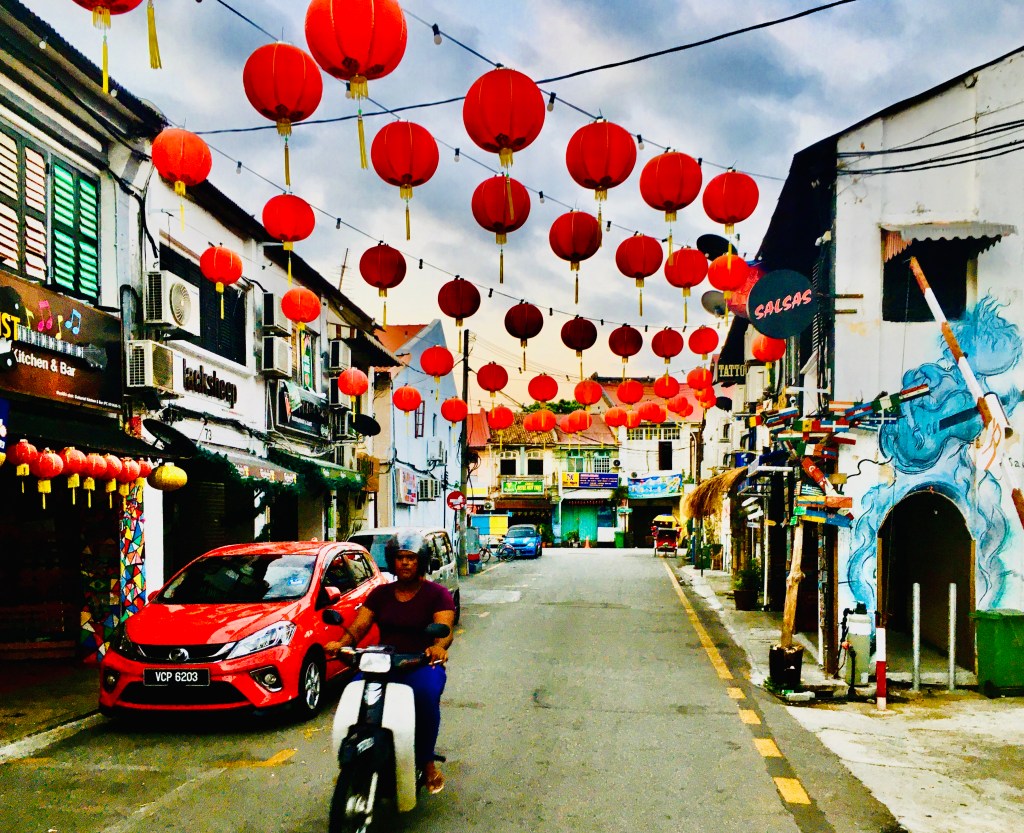
On our second day in George Town we walked around the city. We passed town hall, Fort Cornwallis, the Queen Victoria memorial clock, Chew Jetty, Khoo Kongsi (a Chinese clan temple from 1810) and Kuan Yin Temple to name a few. It was a fun morning exploring as George Town has a friendly and quirky vibe. With street art on every corner, colonial architecture, street vendors and a coastal breeze, we wished we could have stayed for longer (except perhaps for the heat). In the afternoon we journeyed to Langkawi and after swapping accommodation (let’s not get into that) we booked a day tour and tucked into a very spicy dinner.
26th February – 27th February (Langkawi)

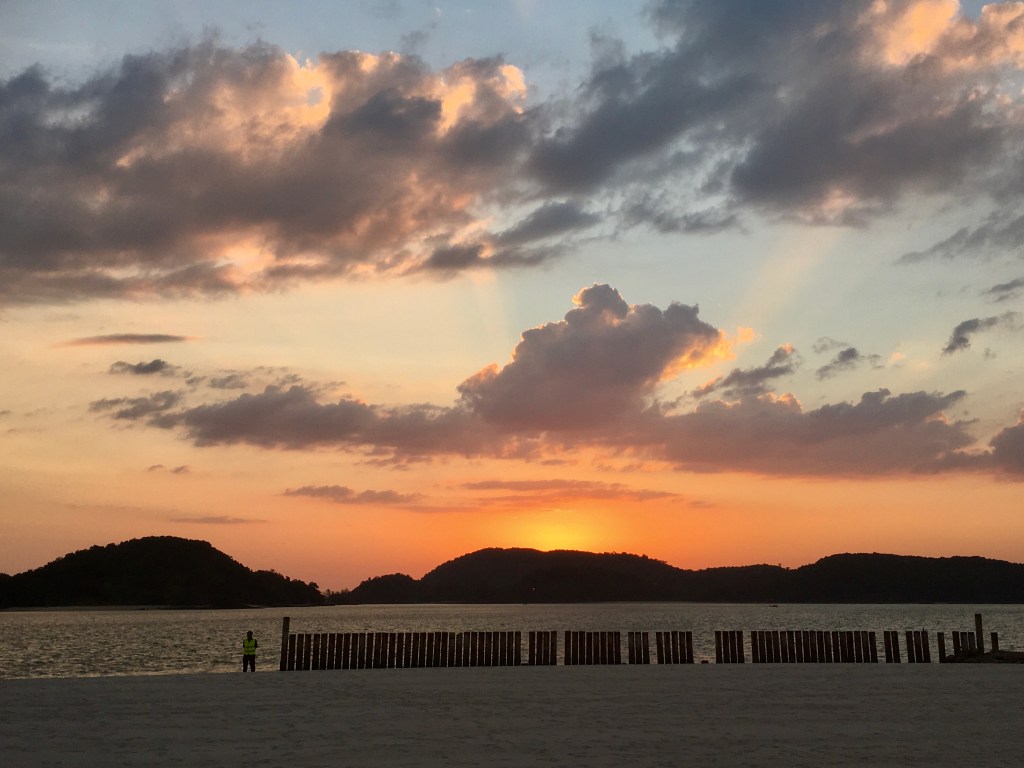
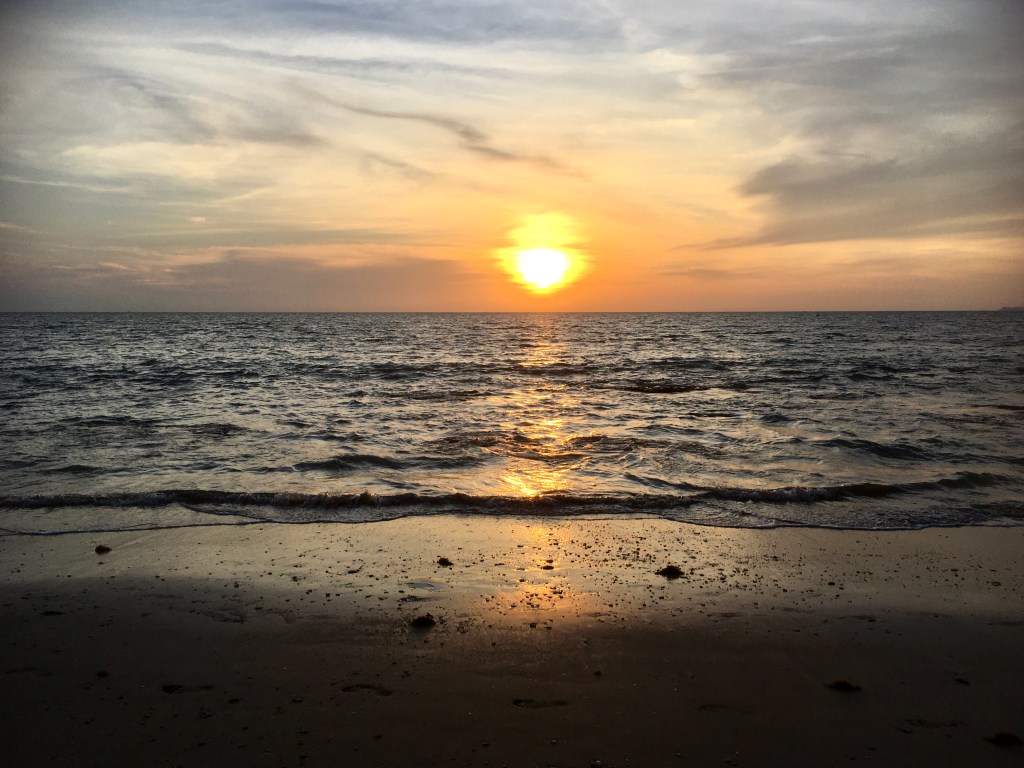
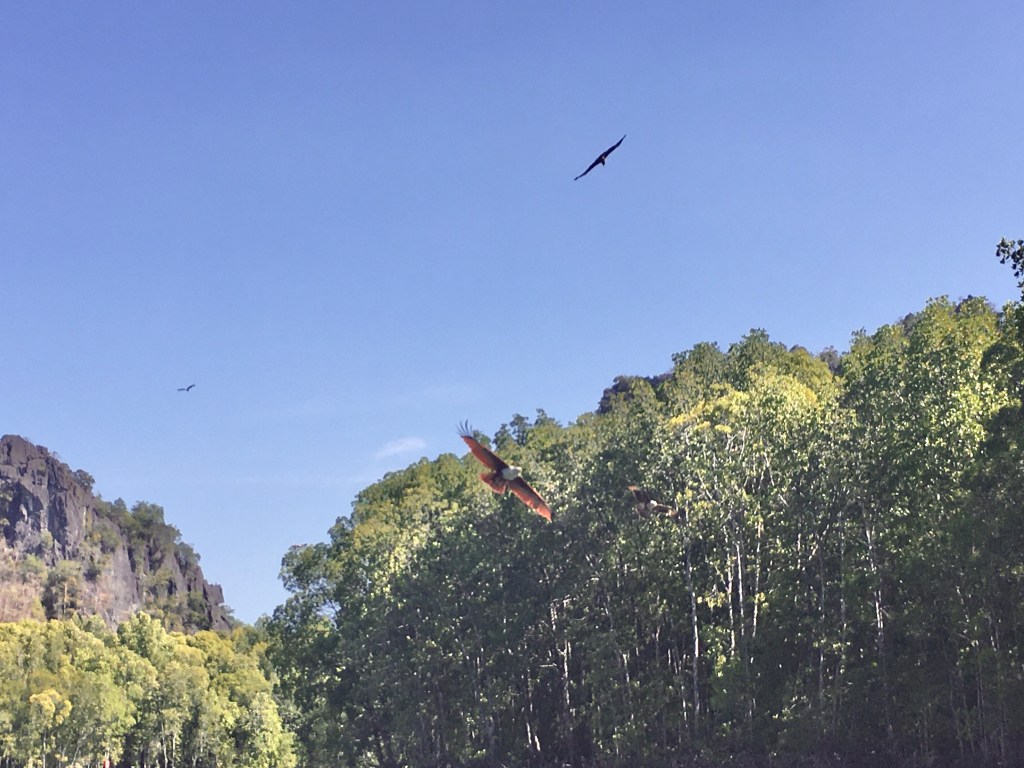
We woke in Langkawi and set out for a mangrove tour. We travelled by van to the Kilim Karst Geoforest park, located in the northeast of the island. The Tanjung Rhu river runs through the area and along with the many karsts and lush mangrove forests it made for stunning views as we zipped along in a speedboat. The park contains some of the oldest limestone (~500 million) in Malaysia and is brimming with life. We saw two species of eagle (White bellied sea eagle and Brahminy kite), fish farms (with tiger grouper, stingrays, a species of tuna fish and sea bass) and monkeys as well as many caves and karsts. One cave in particular (Kelawar) stood out because we got to walk inside and admire hundreds of bats sleeping just above our heads. After a relaxing afternoon we walked along the beach before dinner at the Thursday night market (luck was on our side with the dates). Two boxes of potato wedges, some tofu and chocolate coconut pancakes later we felt energised enough to catch the sunset (although we did miss the best bit…we may have got distracted by the food…). Nonetheless, with the temperatures dropping the evening beach walk was so peaceful with the sound of the waves lapping against the sand.  The fire dancers also made for interesting viewing. Today (the 27th) more beach fun awaits. It has been an amazing first week in Malaysia and we are looking forward to more adventures.
You may be wandering about the title for this blog post? We decided to leave our big rucksacks in Kuala Lumpur and travel with day bags to make things easier. The down side… we have a limited capacity for clothes and it’s very sweaty. Hence the increasingly smelly feet…

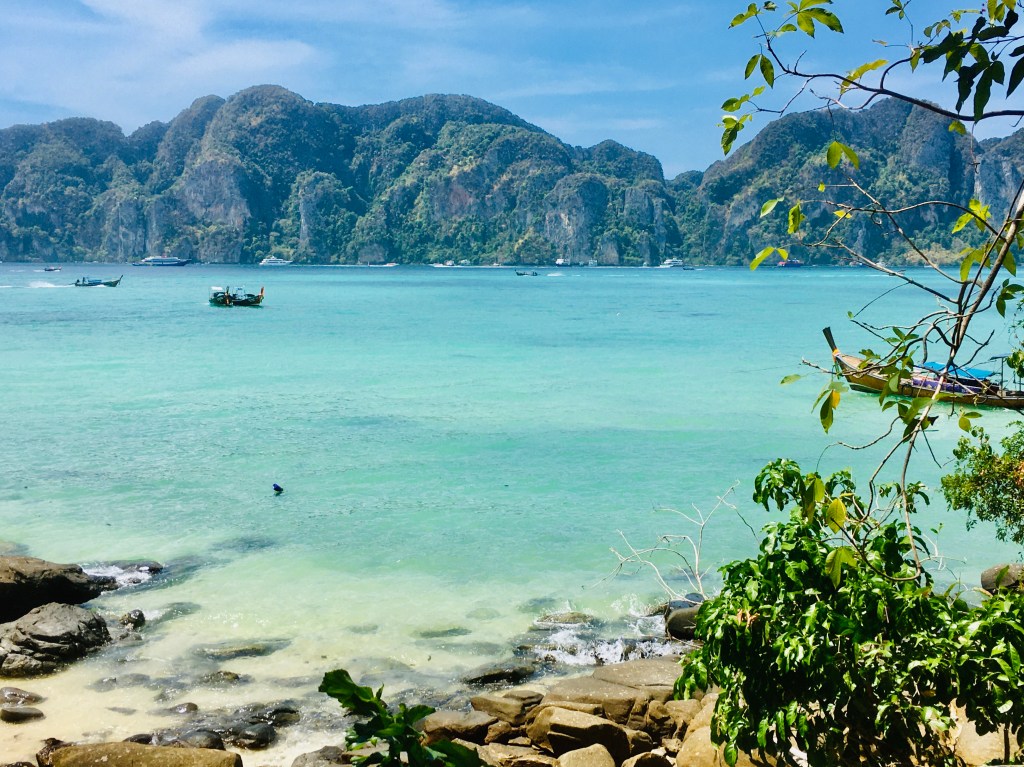
Feeling HOT HOT HOT

Never has this song been more appropriate: https://www.youtube.com/watch?v=rbc_LxfhSoY

14th-15th February (Ko Phi Phi)

After a night near Phuket airport we caught the bus to town and then a ferry to Ko Phi Phi (after a bit of a nightmare arranging the tickets). The ferry journey was scenic, although we mostly hid inside as it was HOT HOT HOT outside. After arriving on the island we found a hostel to spend the night and then set out to explore the island, walking through the streets before spending some time on the beaches surrounding the main pier. The island is miles apart from other places we have visited in Thailand, especially in terms of the tourist-to-local ratio but the beaches were beautiful nonetheless.

After a classic travel breakfast of yoghurt and bananas, we set out for Long Beach. Golden sands and a brilliantly blue sea awaited us. We rented some snorkelling gear and took turns swimming, spotting a vast array of beautiful fish and also a reef shark!! The sun was belting down again so the water was really refreshing. I then set out for a nearby viewpoint…. but alas, it was not as nearby as I had hoped. It took ages in the sweltering heat, which was unfortunate as I had left my shoes, t-shirt and water at the beach. Rookie Rob (view was bay-utiful though). After lunch we ferried to Ko Lanta, another (less touristy) island. We immediately got great vibes from Ko Lanta, with its local markets, cooler temperatures and more real-life feel. After being picked up from the pier, we had an evening walking along the beach (on our doorstep) before dinner and a relaxing evening in our island bungalow. Both feeling a tad burnt though (the walk I mentioned earlier… I also forgot sun cream).

16th February-19th February (Ko Lanta)

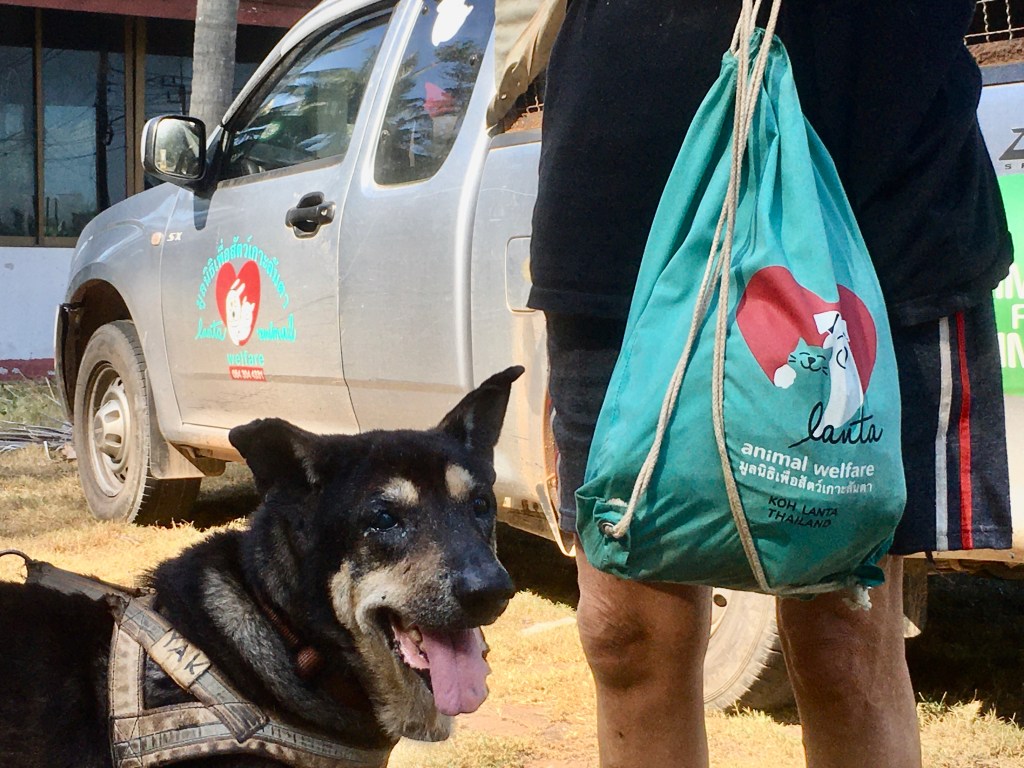
After a night in a bamboo bungalow (500 metres from the beach) we had breakfast in bed before walking to Phra Ae beach. The beach was also divine, with golden sands stretching into the distance (although slightly less charismatic as the beach on night one). On the way to the beach we visited the Lanta animal welfare centre, which rescues and provides medical care for cats and dogs, mainly on Ko Lanta but increasingly on nearby islands. The centre has been in operation for 15 years and has vets, dog catchers and mobile clinics to give treatment. We liked it so much we decided to go with them to the beach in the afternoon. We picked up two dogs, Sanchez (10.5 years) and Yak (14), and went with the founder of the charity and some volunteers for a few hours, learning about the charity and giving the dogs a leg stretch. It was a great way to spend the afternoon. A take-away dinner of Pad Thai (one of the best so far) in our bungalow capped a wonderful day. Talking of liking things so much… today we extended our stay on Ko Lanta by an extra two nights!!

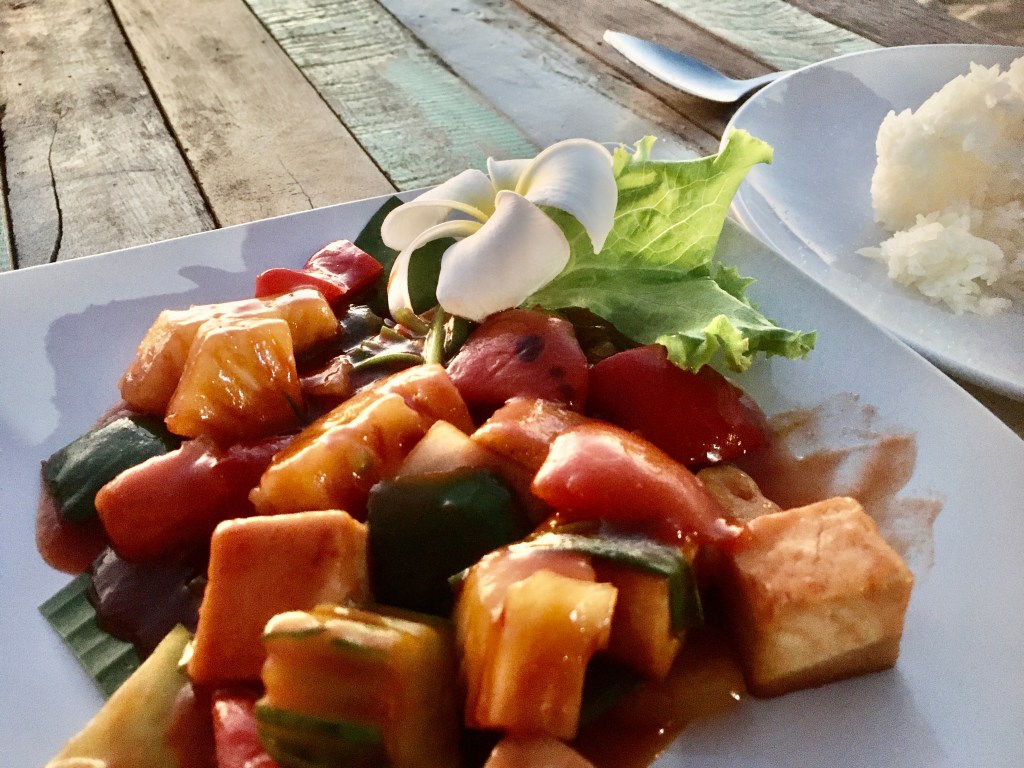
The nice thing about staying longer in places is it increases the capacity to get things done (e.g. laundry and life admin). Monday morning was great because we just did a few odd jobs, including moving from our bungalow (which was sadly fully booked) to a hostel down the road. We felt no pressure to see or do anything in particular, which was nice after a travel heavy period. I suffer from ‘travel guilt’ meaning that if I’m not doing or seeing something all the time I feel like I’m missing out on the action. Having longer in places like Ko Lanta certainly eases that pressure and is a much needed break. It helped that a glorious beach was right on our doorstep. I also shaved after realising that having a good few inches of fluff on my face didn’t help internal temperature control. In the afternoon we did a tour of the animal welfare centre as we didn’t do that on the dog walk day. The tour was excellent and we learned about the main sponsors including Dog Trust Worldwide and Lush (bath bombs) who have helped fund x-ray machines, an operating theatre and the on site animal hospital. We then walked along the beach watching the sun set before a top dinner of sweet and sour tofu on the beach listening to live music. Life content-ness? 10/10.

Day three was more of the same. We woke and walked to a different beach, although towards midday the clouds rolled in and it felt really stormy. Then came the rain… so we took some time to do some planning, which was useful. After a mess up with flight bookings (Rob being a plonker) we enjoyed more beach walks and book reading before dinner at Yawee restaurant (tofu curries). Ko Lanta is wonderful. Our final morning? Same same, but different. Beaches, walks, books, picnics… I’m sure you’ve got the gist of island life now.

19th February-21st February (Krabi)

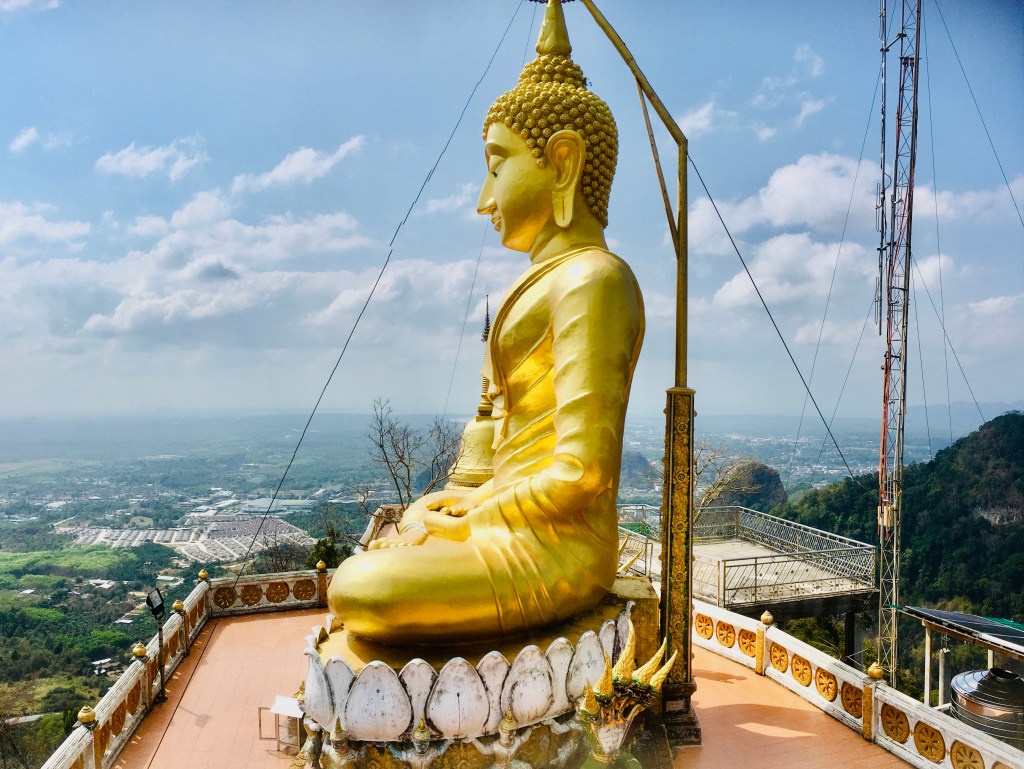
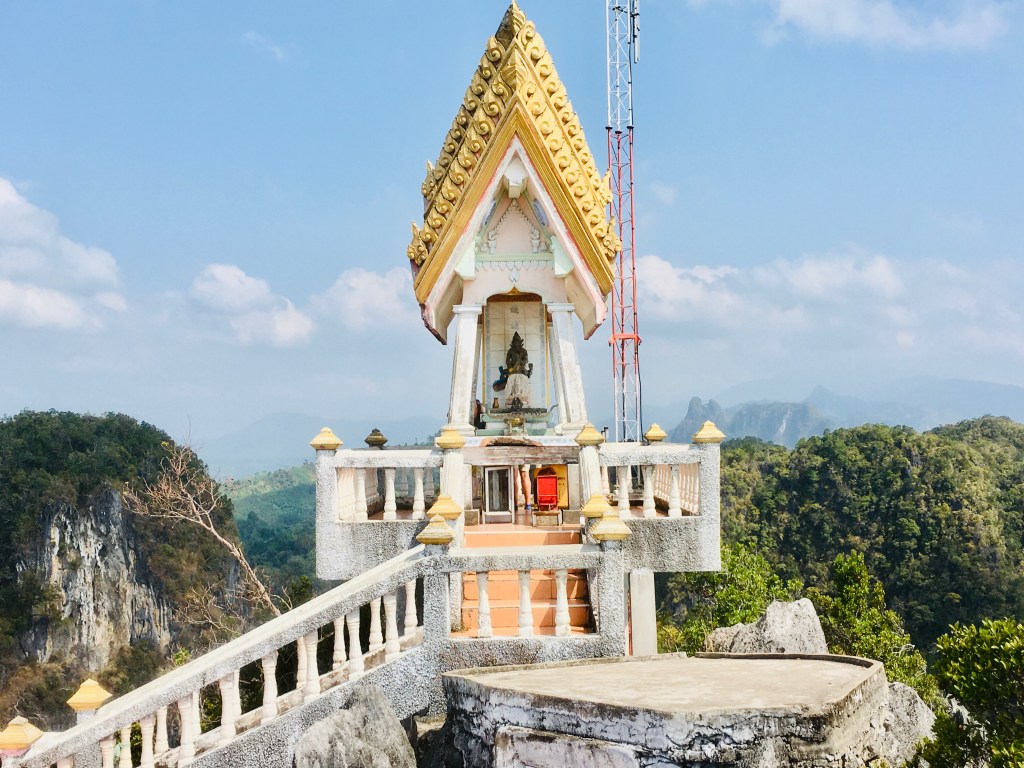
On the afternoon of the 19th we travelled by bus to Krabi before planning some bits for New Zealand (VERY excited), taking a stroll by the river and having dinner in a local food market. We didn’t have very high expectations for Krabi town, but it proved to be pleasant. On our last day in Thailand we went to Wat Thum Sua (Tiger Temple), which is located in a valley and surrounded by forests and caves that used to be a natural habitat for tigers. It took us about an hour and a half from Krabi (walking) and we then ascended to the golden Buddha statue on a hill (>1,200 steep steps). As you can imagine it was blooming hot. Absolutely worth it though, as the views from the top were stunning. We then took a stroll through some old forests, with caves, wall paintings and statues (appropriately they named it wonderland). The complex was beautiful, lots of temples, monkeys, and people worshiping. We also visited the caves where tigers used to live (although thankfully not now).

I also managed to go for a few runs on Ko Lanta, which has been a treat over the last three months. So as a special edition blog post these are my main thoughts for running in South East Asia:

1. Don’t run in South East Asia. It’s so hot and humid and quite often the traffic is a nightmare (pesky motorbikes). Did I mention the heat? Yep it’s like 35 degrees the whole time!!

2. Joking aside, the best time to do anything active is early (6 am or as close as possible) or late in the evening. Unsurprisingly the locals know this and parks and beaches are busy with people exercising in the early hours. This is often badminton, group games and/or open air exercise and dance classes.

3. Drink lots of water (although ice coffee is a top alternative) as you sweat bucket loads!!

4. Stay longer in places as you get to know the area better. My favourite runs have all been when we’ve stayed somewhere for more than two nights.

5. Go slow and enjoy the scenery. I’ve run on beaches, through national parks and past wild elephants (yep that happened whilst we were in Sri Lanka).

6. Ignore point 1. Running is awesome, you’ve just got to pick your moments carefully.

It was Thaime to go back

I don’t want to make you jealous or anything but it’s a Thursday afternoon and I am sat in a cafe by a waterfall in a national park in Thailand. Travelling life ain’t bad you know…

9th February-10th February (Chiang Mai)

After a final morning in Laos we journeyed to Chiang Mai (8th Feb). The flight was short and sweet, with Laos airlines getting a thumbs up. Although we arrived in Chiang Mai in the early afternoon, we ended up spending the rest of the day doing jobs (getting cash out and sorting a SIM took FOREVER) before a Pad Thai, some more planning (for Thailand part 2) and an early night.

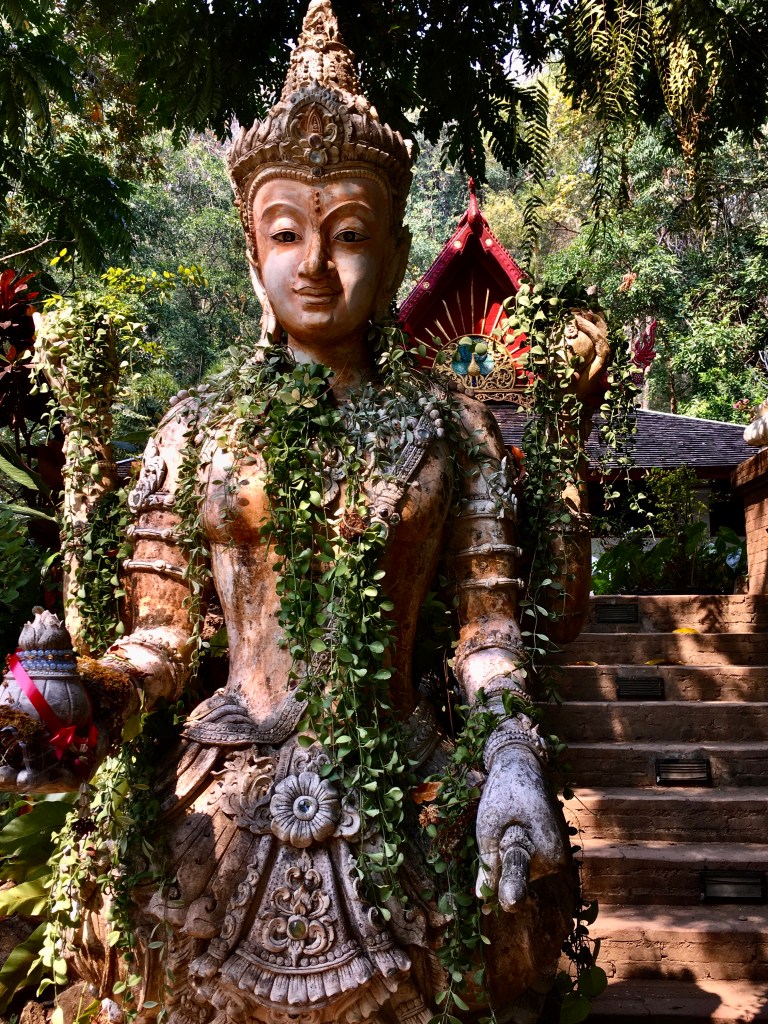
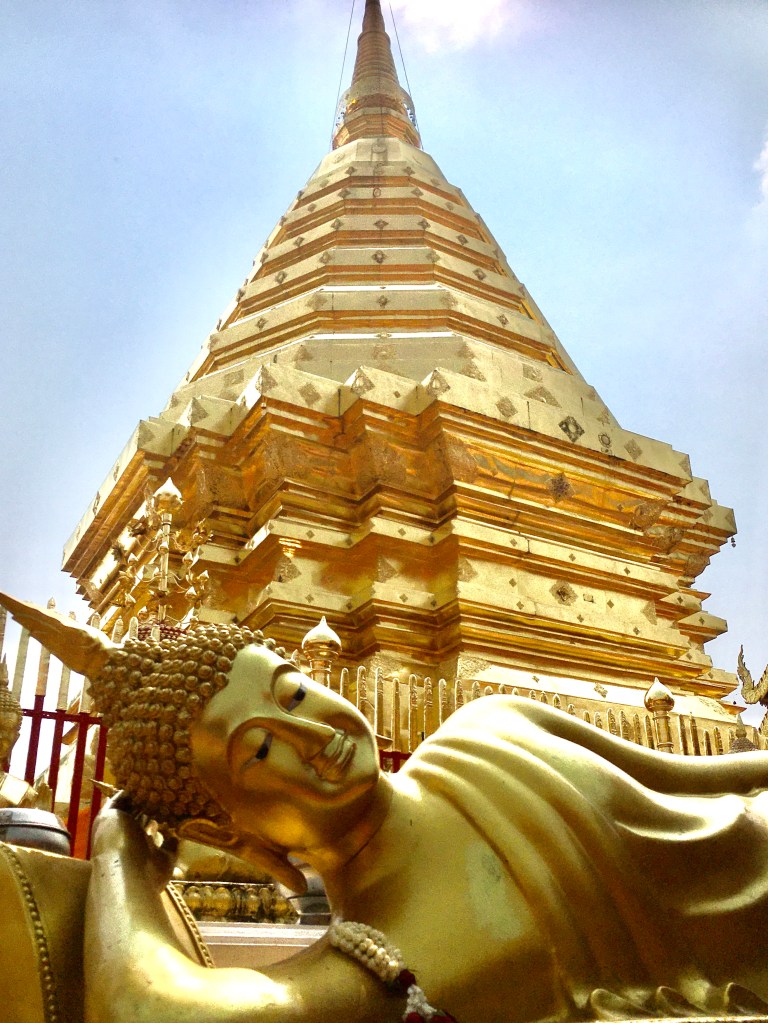
The first stop upon waking was the Jing Jai Farmer’s market. The market is only open at weekends and was already busy with locals having breakfast or shopping. It was one of my favourite markets in Asia so far and I got some bananas for our breakfast. We then set out for the monk’s trail, a pilgrimage route up a nearly mountain. To get to the start we had to walk through a University campus and (looking a bit lost) we were scooped up by a lovely Thai man who deposited us at the hike’s entrance!! We then set off, passing Wat Pha Lat on our way. The temple had an Indiana Jones feel, hidden in the forest and beautifully decorated, with an array of stone carvings. Then up some more… it was HOT and soon we were sweating buckets (again). Definite type 2 fun according to Helen!! Why did we bother? The impressive Wat Phra That Doi Suthep. The temple was built in the 14th century by King Kue Na in honour of his white elephant who died on the spot. The golden stupa was the highlight of the complex, but it also featured intricate wooden carvings and an array of small side temples. Worth the 30 Baht (~ 75 p) and three litres of sweat to get there. A detour to Huay Keaw waterfall capped a peaceful walk home. In the evening we explored the Sunday market, which was a healthy mix of food (Helen was happy), clothes and nick-nacks for tourists. It was huge, sprawling throughout the old town. Pad Thai for dinner? G’wan then.

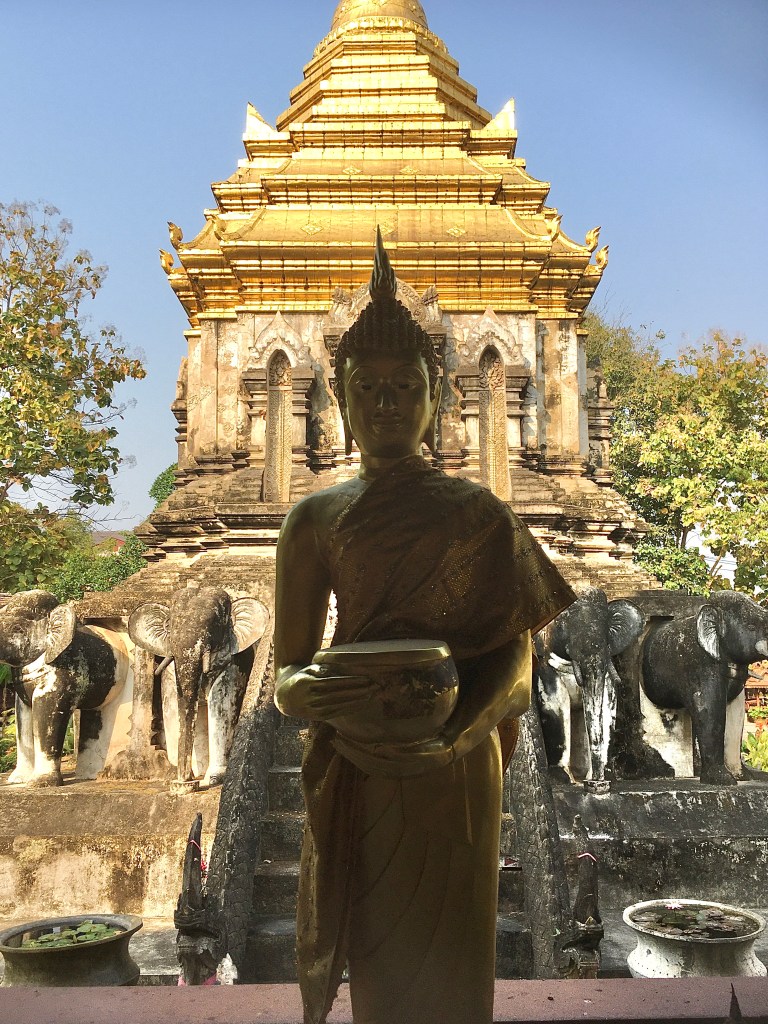
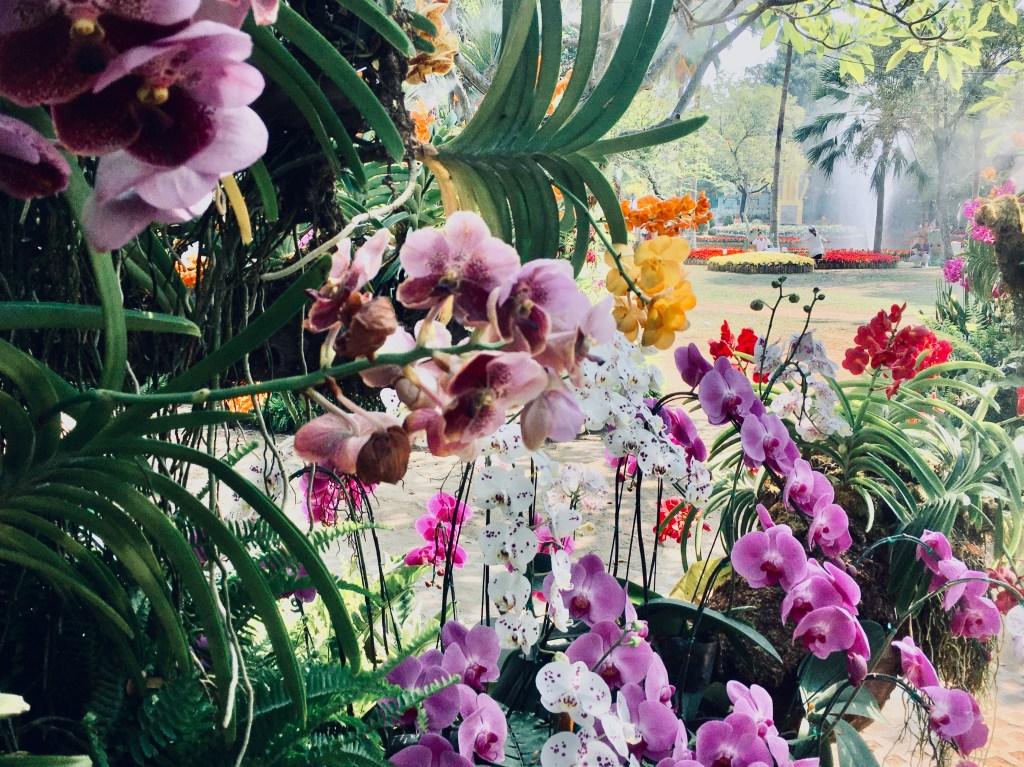
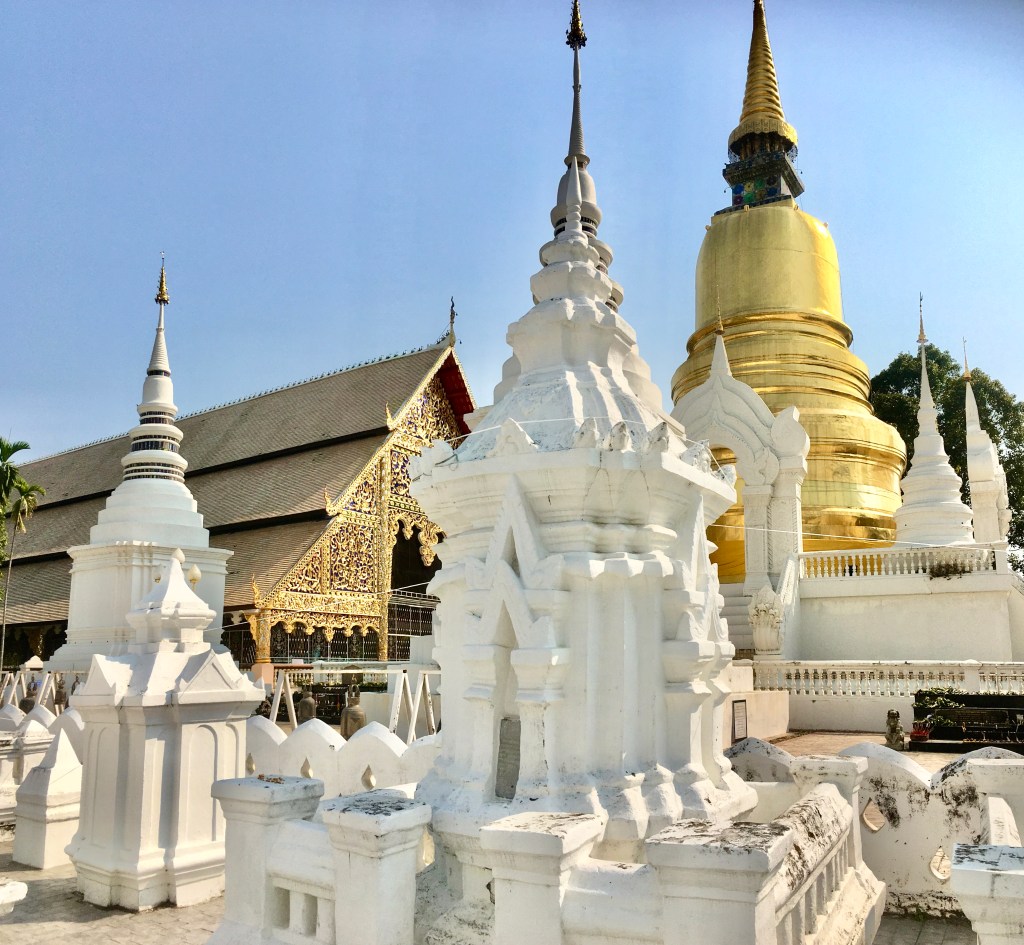
After an atrocious night’s sleep (thanks to snoring roommates and a poor decision to turn off the air conditioning) we set out to explore Chiang Mai old town. We first visited Wat Chiang Mun, which was the first temple built in the ancient city square (1296-1297). The temple contained a crystal Buddha (made ~1800 years ago) and a marble Buddha (made ~2500 years ago) which have been kept in the complex since it was built in the 13th century. Up next was Wat Jed Yod (or Chet Yot) located a short walk from town. Passing more temples en route we joked that with Luang Prabang and Chiang Mai we should design our own ‘Temples of South East Asia’ Top Trumps. The temple was built in 1455-1456 and contained a stupa with seven spires, reflecting the period over which Buddha gained enlightenment. Whilst Helen got her haircut I walked to the Huay Keaw arboretum. Whilst not a scratch on Westonbirt, the park was pleasant and the seedling leaning centre made me think of mum and her allotment (we are both starting to miss home lately). After a break we relaxed for a while in the Buak Hat Park in the old town. We timed our stay with the Chiang Mai flower festival and the park was beautifully flowerful (yes I made that word up) as a consequence. Wat Suan Dok was the obligatory temple of the afternoon. With a pristine golden stupa surrounded by blindingly white tombs the site was also incredible.

11th February-13th February (Chiang Mai road trip)

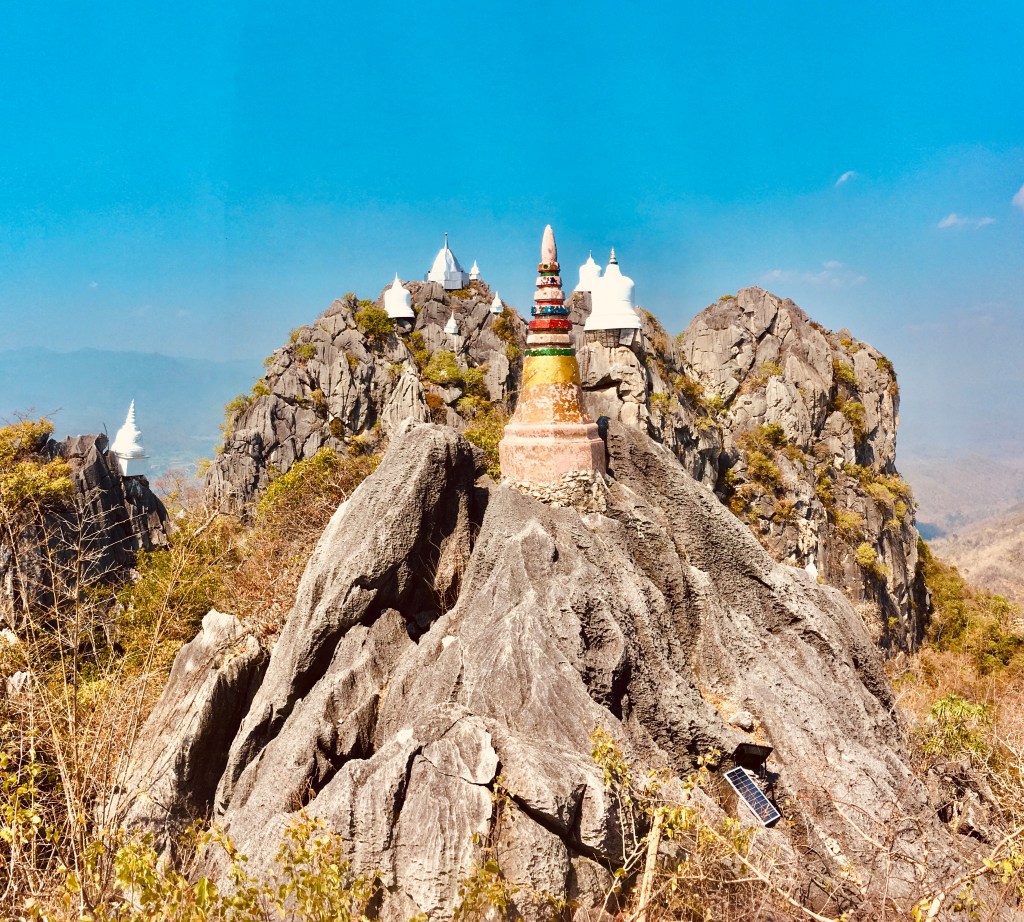
After some successes in Thailand Part 1, we picked up a car from the airport and set out to explore North Thailand. Our main stop for the day was Wat Chaleom Phra Kiat; amazing white pagodas perched atop a mountain (carried up in pieces by a monk and a team of workers around a decade ago). We drove for just under three hours to reach the site and although very long, the drive took us through scenic windy hills. We then paid our entrance fee before taking a tuk-tuk up the first part of the hill. A steep 500 metre walk finished the job. The pagodas were absolutely stunning, set against blue skies and nestled throughout the mountains. The site was a bit smaller than we expected however and didn’t quite fill the day like we hoped (i.e. a great stop but a long time getting there). We set up camp for the night in a town called Lamphun, which had a(nother) nice temple, food market, river complete with floating lanterns and a Mickey Mouse museum (super random I know).

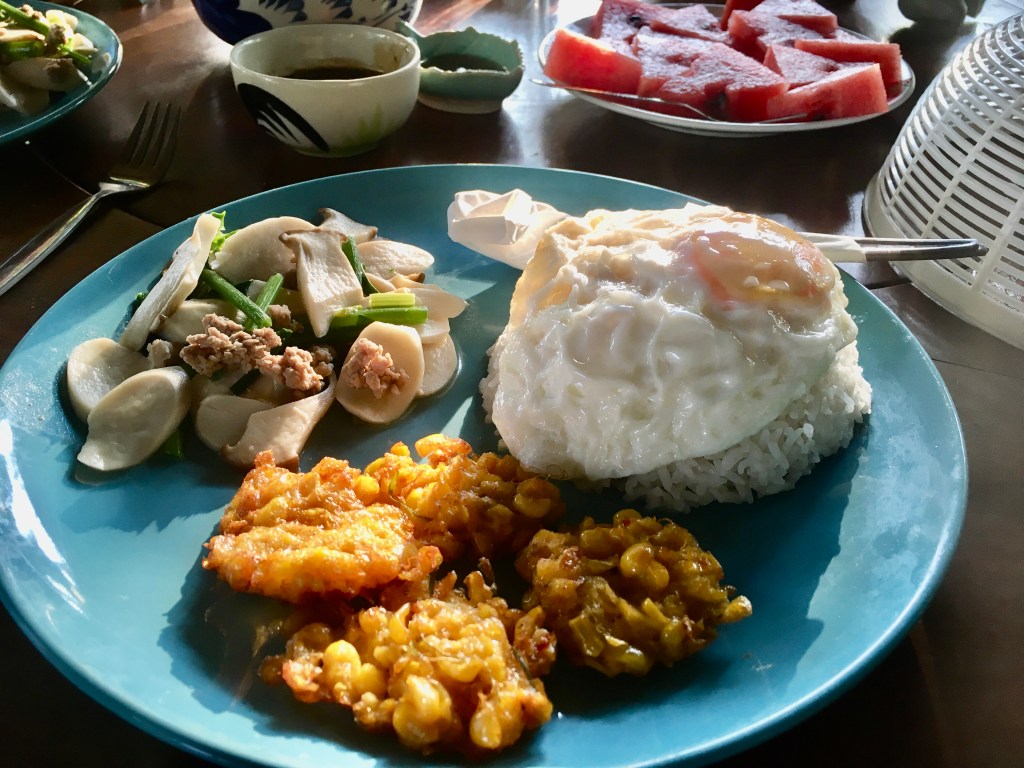
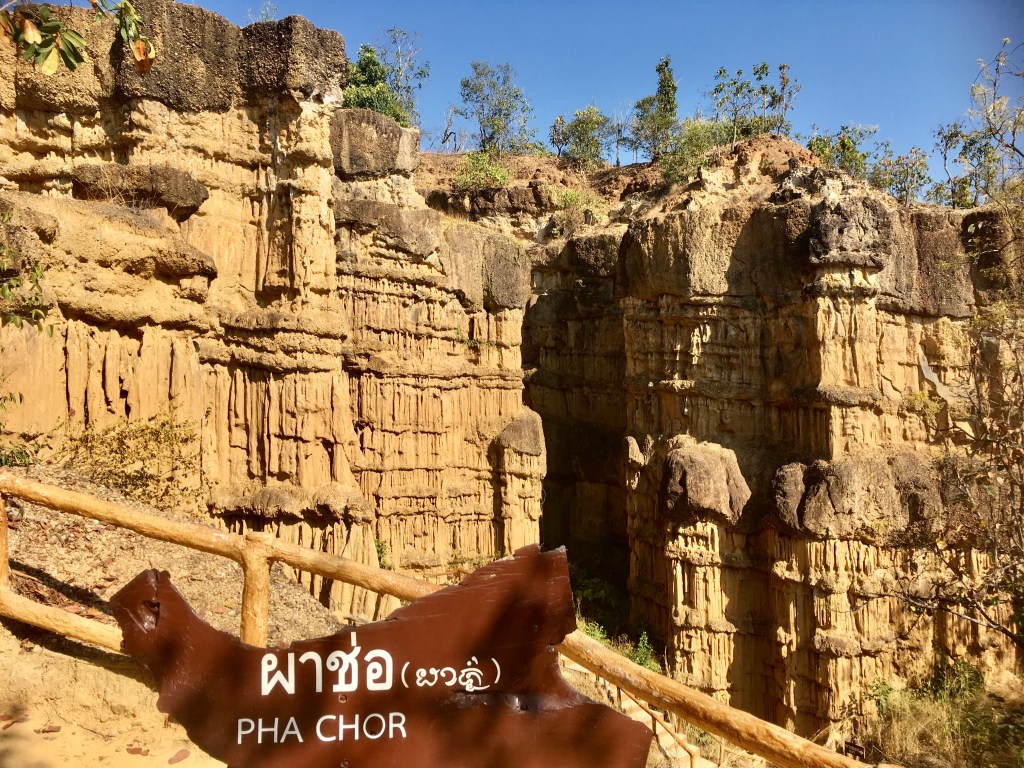
We woke in our homestay after the best night’s sleep we’ve had in ages. The misty sunrise view over the neighbouring rice fields was incredible and we were treated to a brilliant breakfast of rice with a fried egg, corn, tofu soup, mushrooms and a tasty homemade fish sauce. The old couple we stayed with were so friendly and accommodating and we both wished we could have stayed with them for longer. Our first stop on day two was Pha Chor canyon in Mae Wang National Park. The canyon was formed over five million ages ago and was very impressive. We enjoyed walking in the trail of the old Ping river (which has now relocated its water path about 10 km from Pha Chor) but were careful not to pick up any stones, as the punishment was a mind-boggling 5-20 years in prison. The next stop for us was Mae Ya waterfall, just inside Doi Inthanon National Park. At 280 metres it is the highest waterfall in the park and I had a fun 30 mins scrambling up to the top. As we drove into the park we also passed Wachirathan waterfall, which was pretty majestic (although much more touristy). After parking we visited a small market (delicious strawberries) and walked a short way to Mae Klong village, enjoying the temperatures which were a breezy 28 degrees. Glorious. It’s been a great day.

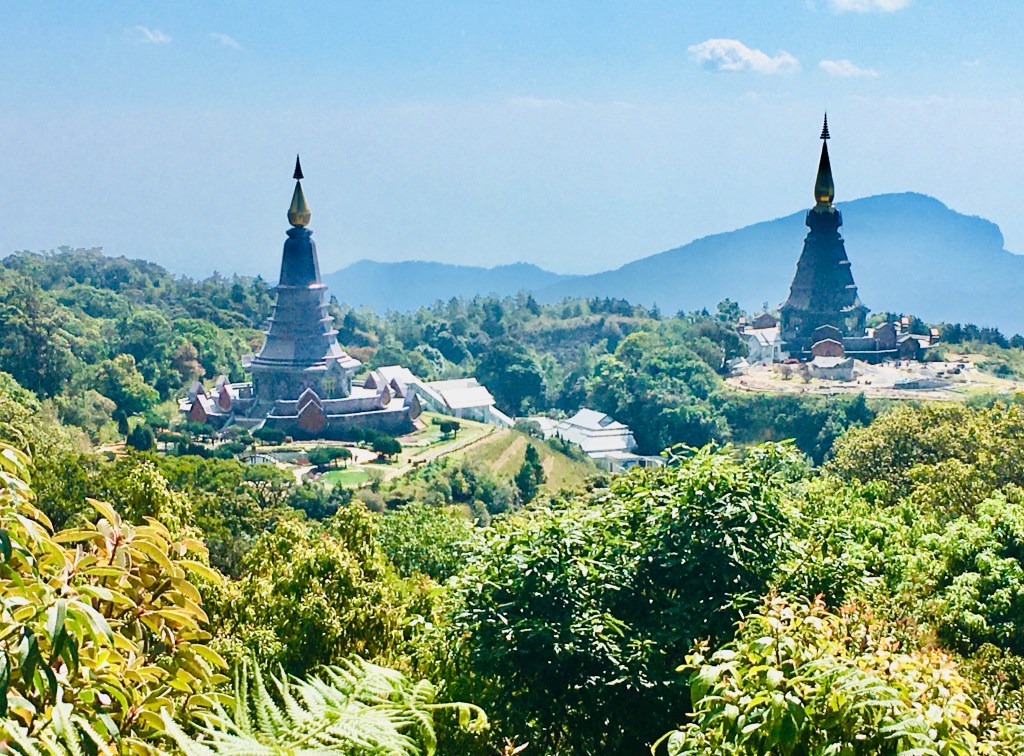
After a night within the national park (in a tent!!) we drove to the highest point in Thailand at 2,565 metres (Doi Inthanon summit) to watch the sunrise. It was bloody freezing. After a break in the car to warm up we did the Ang Ka Luang nature trail, a short walk at the summit. The trail took us through evergreen and cloud forests and detailed plants that adapt to the climates in the dry and wet seasons. We then visited stupas built in the late 20th century by the Royal Thai Air Force in commemoration of the former king and queen’s sixtieth birthdays. More modern than others we have visited, the stupas had carvings of famous landmarks around the world and the history of the Buddha, as well as top gardens and panoramic views. Next up was the Kew Mae Pan trail, which took us through alpine style meadows and more forests. The views from various peaks were phenomenal, with shaded blue skies set against the forest below. We then visited the Royal Inthanon Project, which does research on flowers and crop species, promoting and developing careers for highland farmers. Next to the site the Siriphum waterfall cascades down a mountain in an area surrounded by fern trees and pink blossom (although just out of season for our visit). A final stop at Mae Klang waterfall finished our national park experience. Thailand, yet again you’ve been marvelous.

I won’t give you any spoilers…but there is also more to come!!

Laos(t) in Paradise

30th January – 1st February (Vientiane)

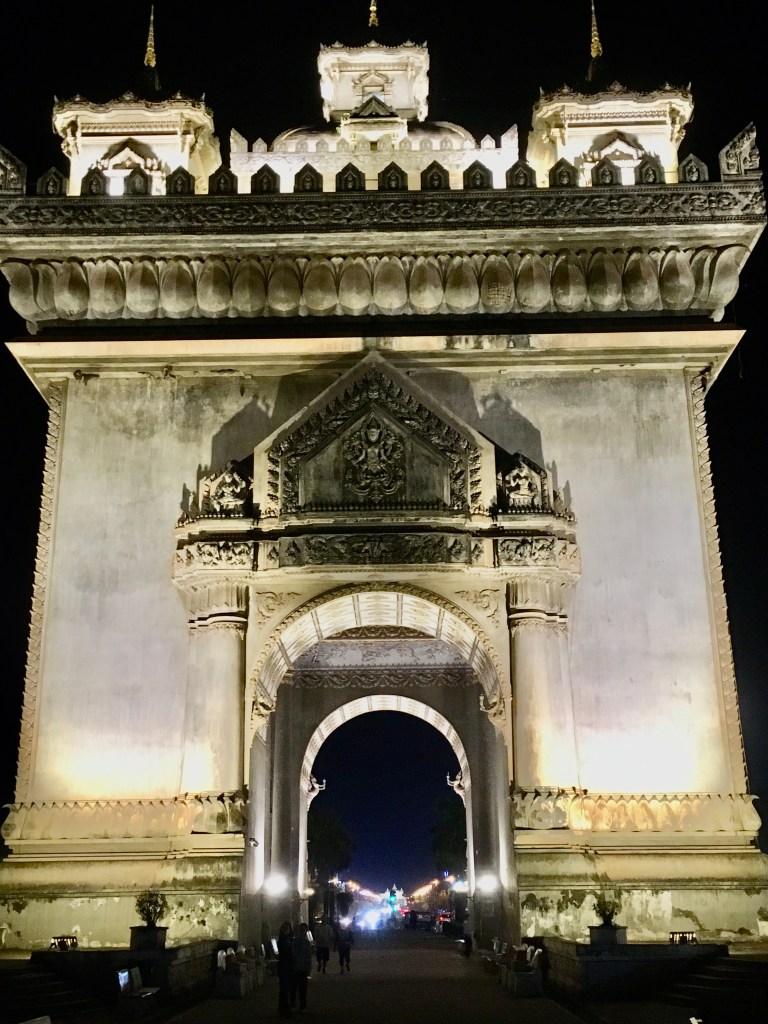
I know right… that title pun is pretty Laosy. Anyway…on our last morning in Vietnam Helen did some writing and I went shopping, got a haircut and organised lunch.  Almost like being back in Bath…just with a million motorbikes!! The afternoon was spent travelling, so not much to report apart from an encounter with an awful tourist. We arrived in Vientiane at 7 pm and visited the Patuxai Monument, which (loosely) resembled the Arc de Triomphe. It was built in 1962 but was never completed and an official sign outside read ‘from a closer distance it appears even less impressive, like a monster of concrete’. We thought this was a tad harsh and enjoyed our evening stroll.
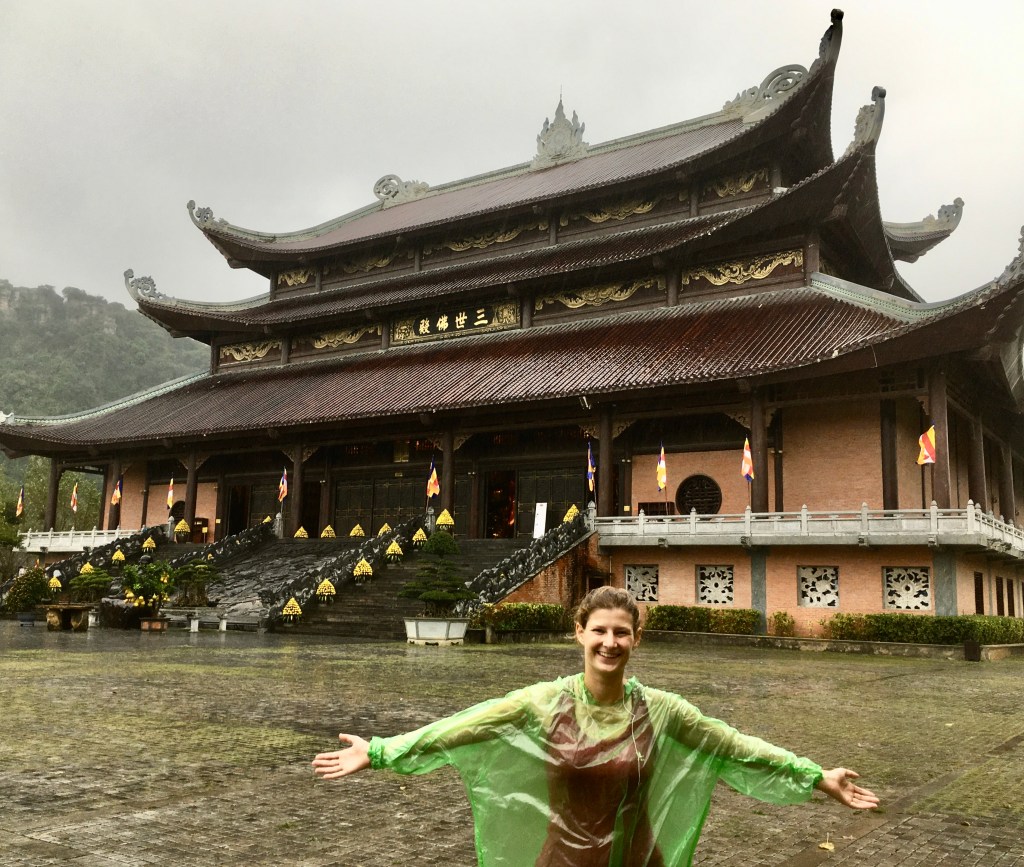
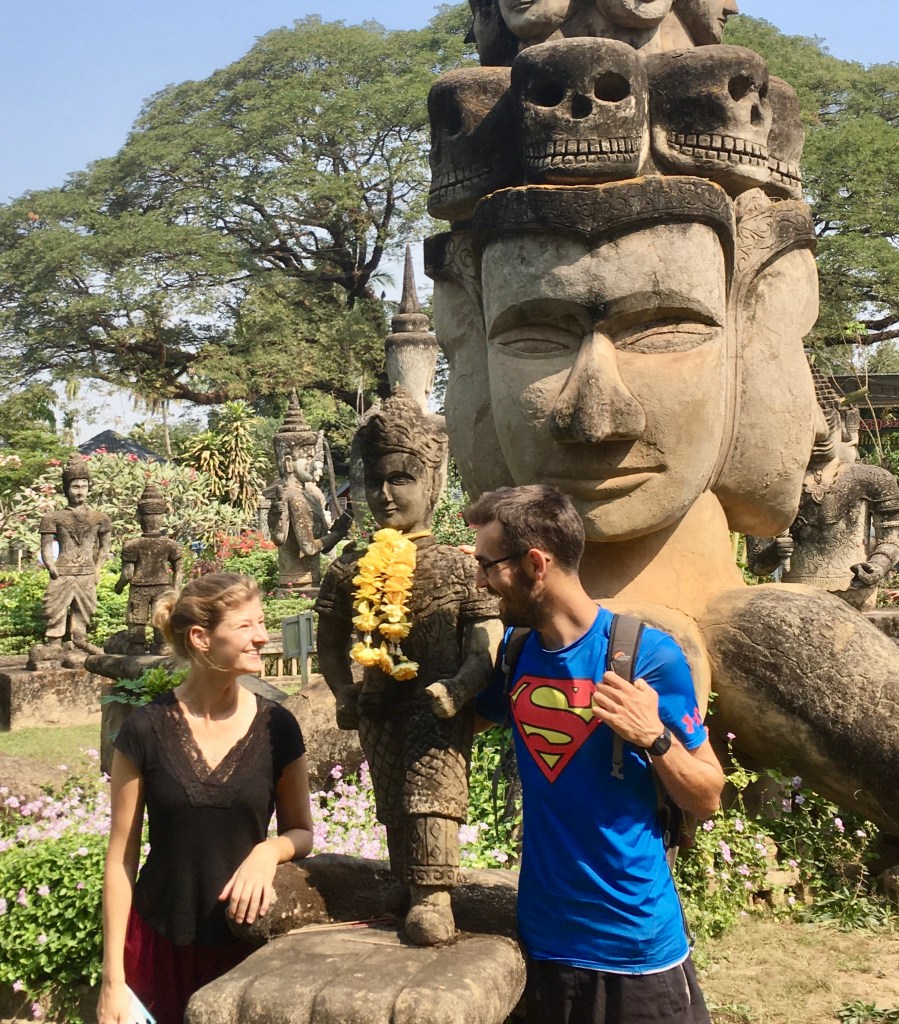
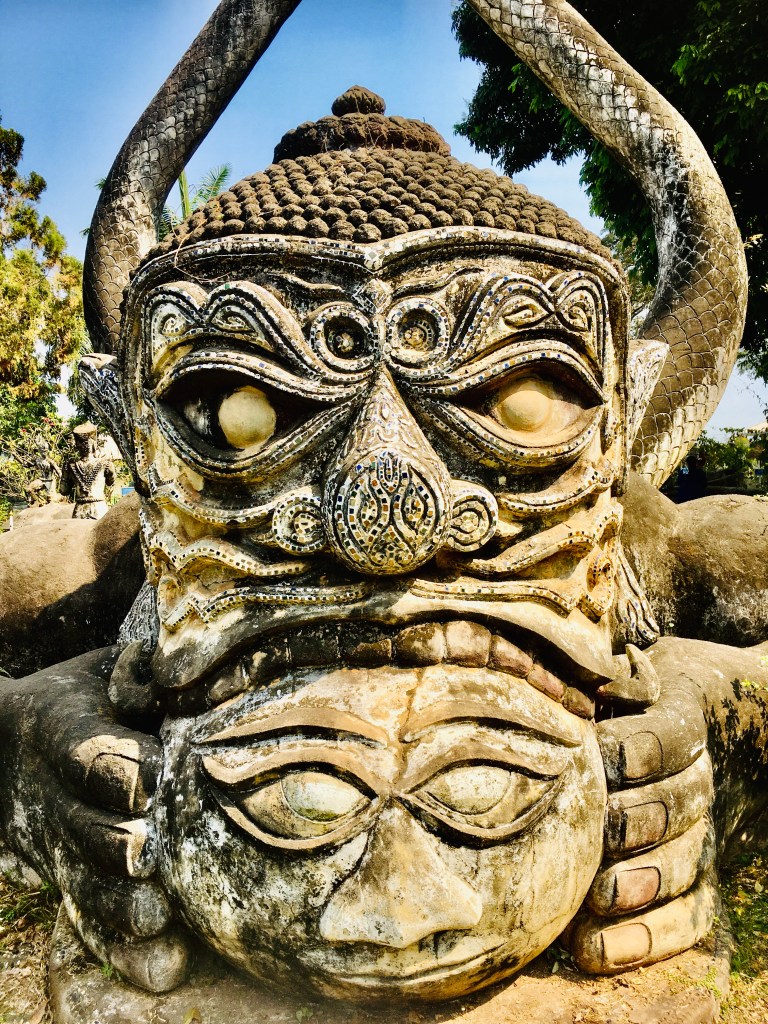
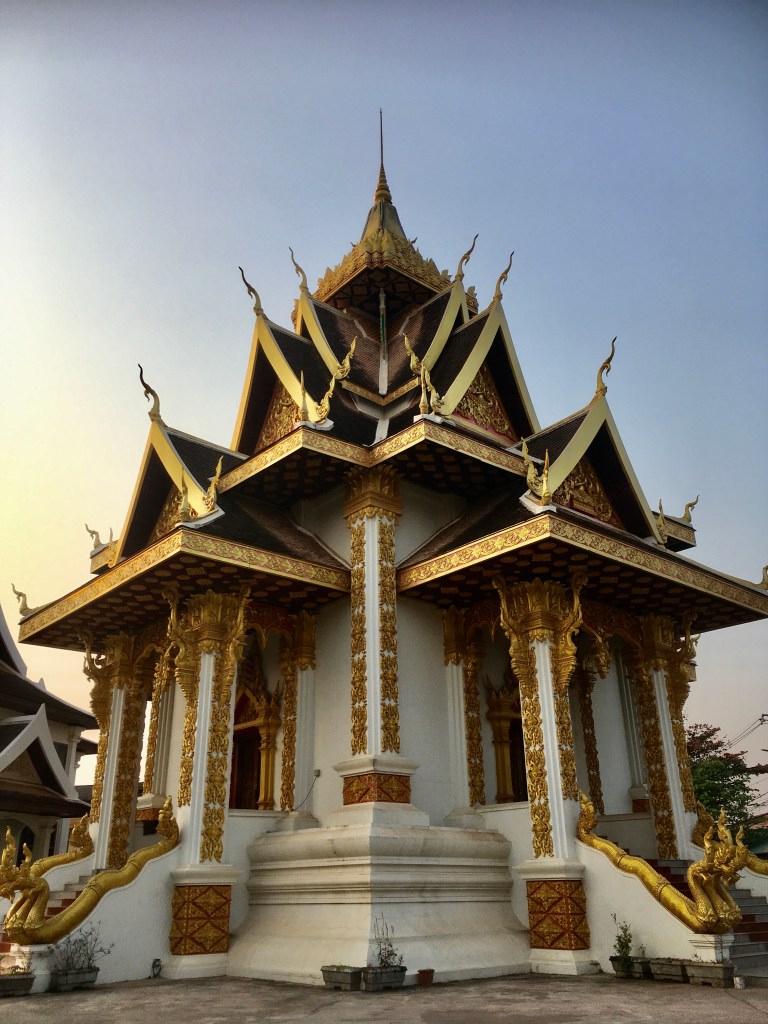
Our first stop on day one of Vientiane was That Dam. Although visually unimpressive, legend has it that the black stupa was home to a seven headed Naga (a serpent from Buddhist mythology) which protected Vientiane’s inhabitants when the town was invaded by the Siamese in 1827. We then visited the Presidential Palace before stopping at the morning market to buy a local SIM card. The next stop was Xieng Buddha Park which contained sculpted Buddhas, ranging from enormous statues to smaller carvings in a peaceful garden. Although a trek from town (45-60 min by bus) we enjoyed exploring. After lunch, we visited the COPE (Cooperative Orthotic and Prosthetic Enterprise) centre, which was founded in 1997. From 1964-1973 the US dropped ~2 million tons of bombs on Laos, the equivalent of a planeload every 8 mins, 24 hours a day for 9 years, making Laos the most heavily bombed country in the world per capita. The COPE centre provides services for people with disabilities (from the war but also non-war accidents). These include prosthetics and psychological and social support, including training them to adapt to life with their injuries. Work also includes land clearance as 10-30 % (~80 million) of the bombs failed to detonate and now explode when farmers hit them, when children discover and play with them or when they are removed for scrap metal (a source of income). Since the war ~70,000 people have been killed or injured by unexploded bombs, of which 40% are children. The museum was OUTSTANDING and contained photographs, example prosthetics, drawings showing the terrors of war (very moving), videos, real life stories and an abundance of information. We then headed to Wat Sok Pa, which hosts mediation sessions on a Saturday. We enjoyed walking in the city as the traffic is less crazy than Vietnam (and less beeping) and the vibe is closer to Thailand. After buying some incredibly expensive smoked cheese (but YAY for cheese) we stumbled across the City Pillar Shrine, before walking alongside the Mekong river, looking out to Thailand (sounds better than it was…). We then stumbled across Laos food festival and got a free cider, before I got to cook for the first time in months!! What a time to be alive…

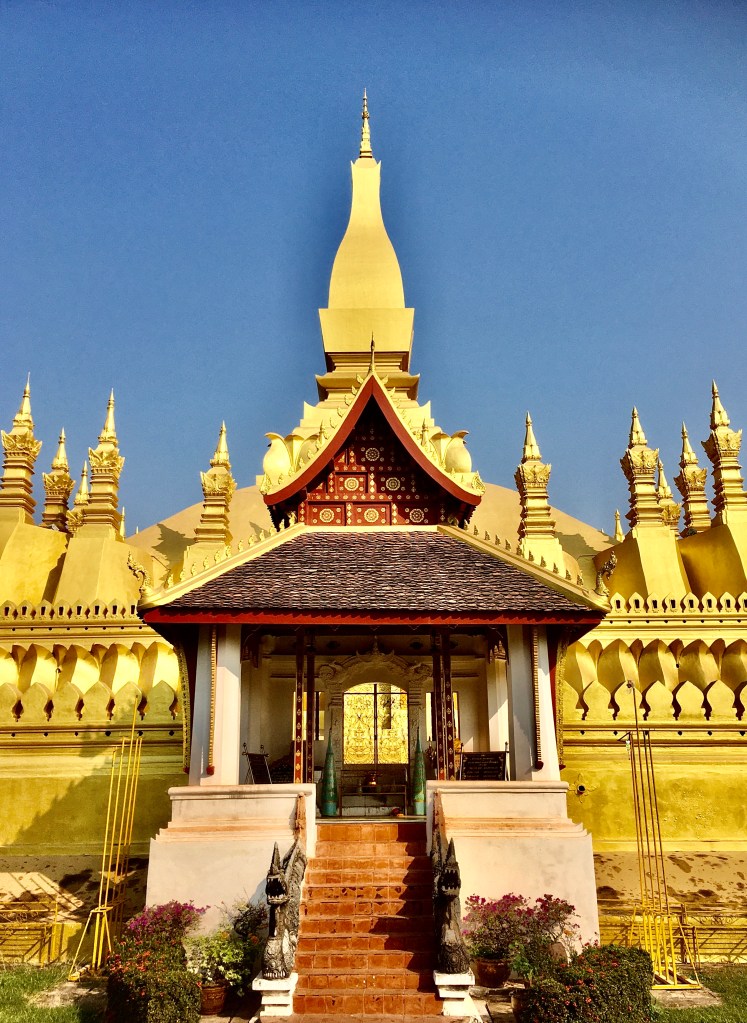
On our second morning we walked to Phra That Luang, which is an important Buddhist monument as it is believed to contain a breastbone of Buddha and it is also painted gold. In 1566 the stupa was covered in gold leaf but with the looting of the city by the Siamese, it was damaged and abandoned, before being rebuilt in the 1930s by the French. In the afternoon we travelled to the rebranded ‘adventure town’ of Laos, Vang Vieng. The minivan journey was cramped, bumpy (roads in Laos need a bit of work) and hot, but we made it through with some magic from Harry.

2nd February – 5th February (Vang Vieng)

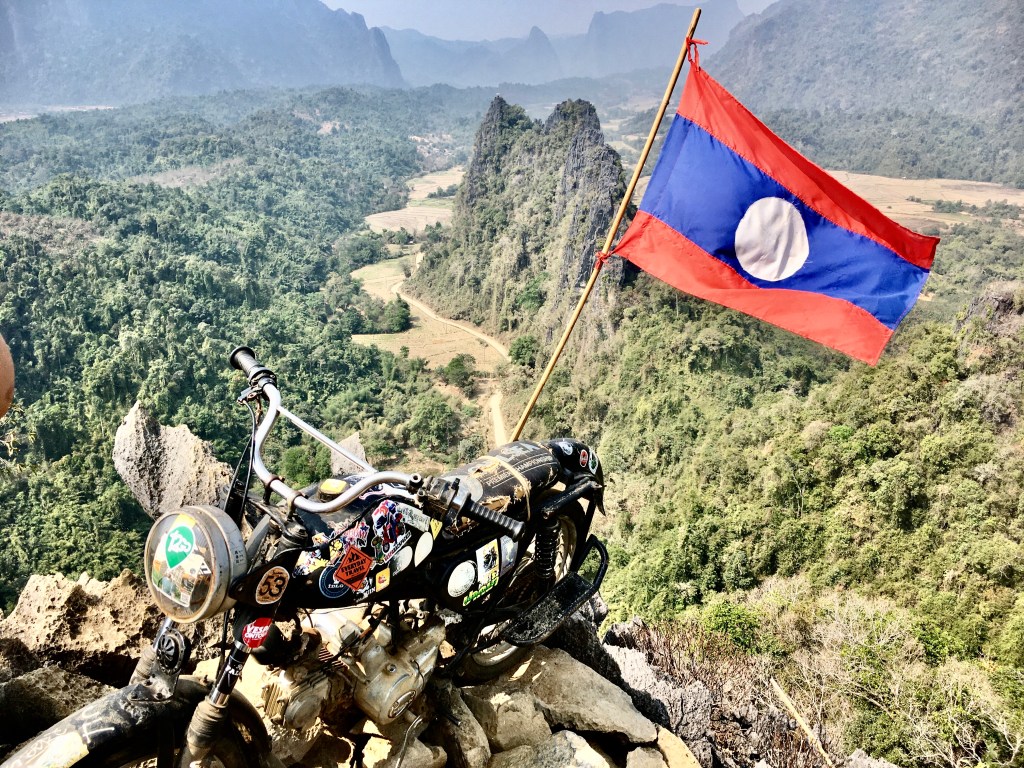
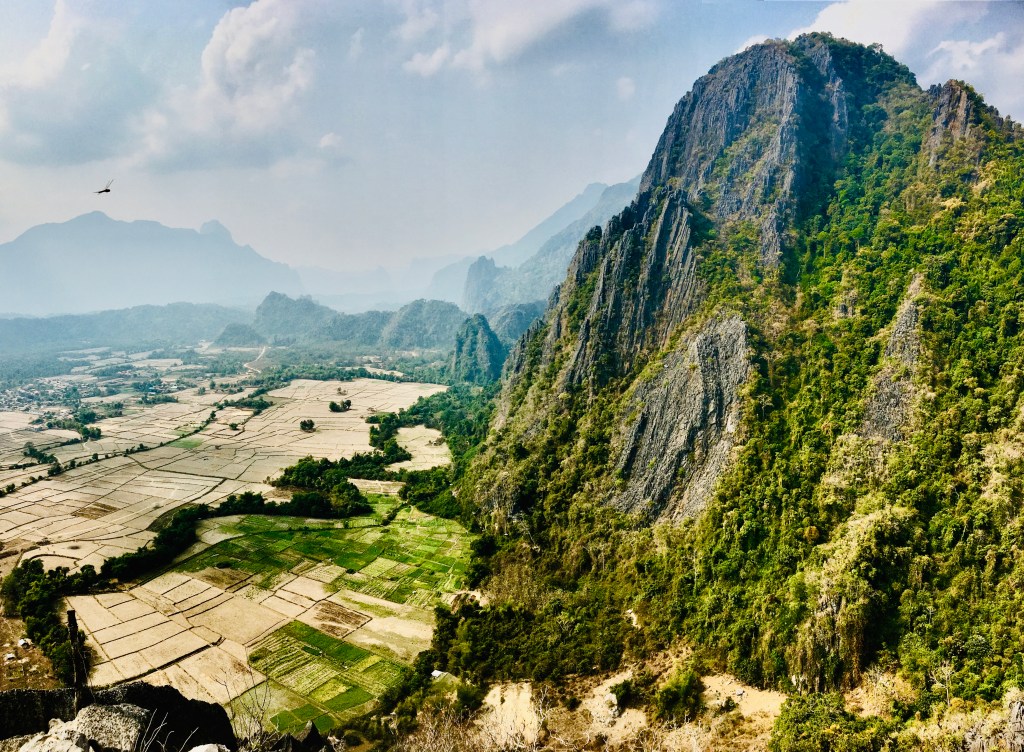
Day one in Vang Vieng started with a lovely breakfast of fruit (including delicious mango), eggs and rice before we set out to explore. The town is very dusty compared to Vientiane and a good few degrees hotter. An hour or so later we were at the top of a small mountain and were both sweating pretty hard. That being said the three viewpoints were spectacular and worth the climb (Phupha Daeng viewpoint for anyone who cares). We then set out for the equally hot Namxay viewpoint, which was even better. At the peak there are also motorbikes which made for an interesting photo!! Not bad for a morning’s work… Then, in a stroke of luck we discovered the Sae Lao restaurant, which is affiliated with the EEFA scheme (Equal Education For All). It’s a non-profit organisation dedicated to education (teaching English in four villages to ~500 students) health and sustainable development in Vang Vieng. A wonderful cause that we were able to support by using their restaurant.

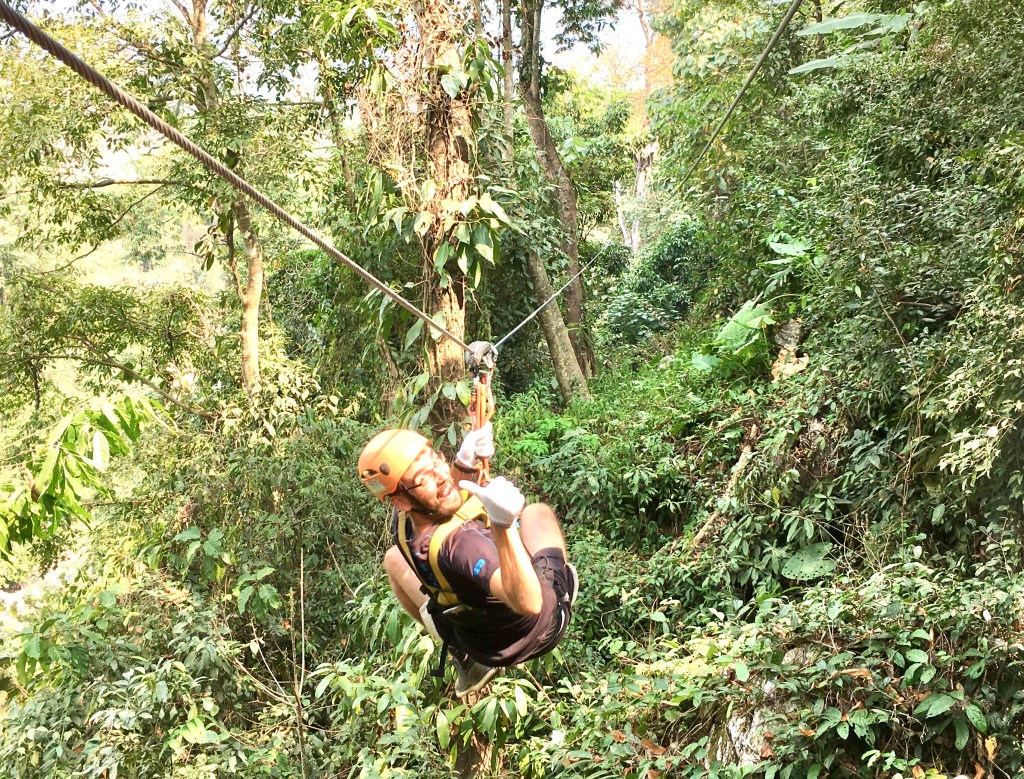
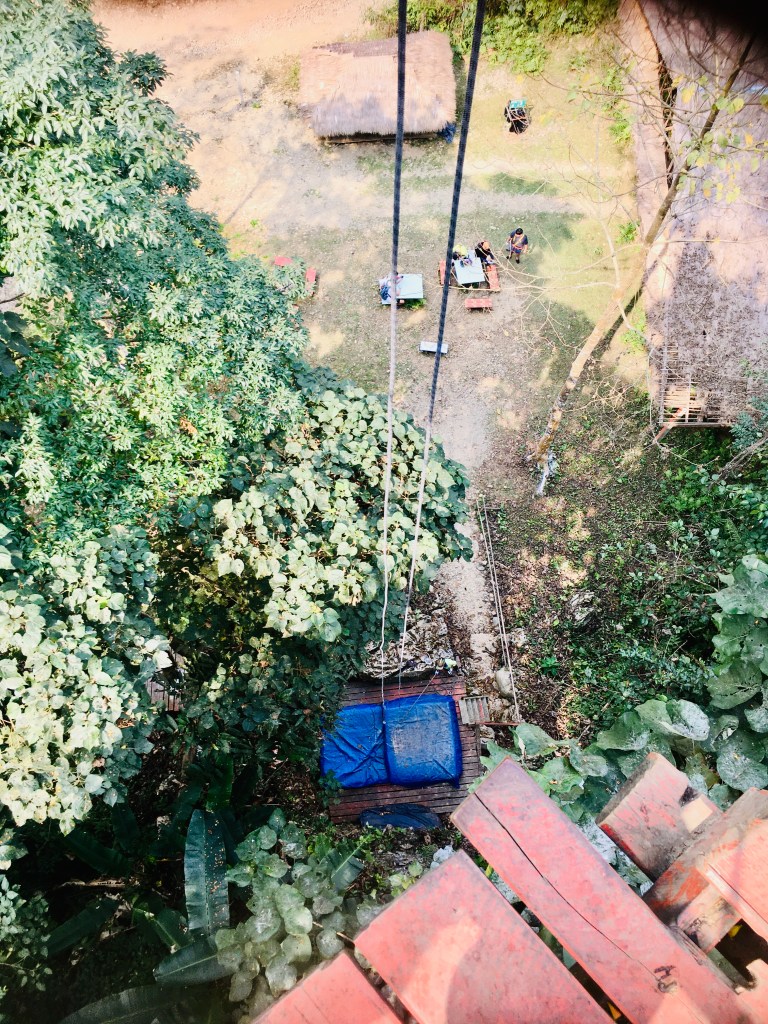
We have mixed feelings about doing tours, but after some successes in Vietnam on day two we signed up for an adventure day with TCK amazing tours (not known for their modesty). Our first stop was the Elephant Xayyalam Cave Temple, a cave that has a piece of rock that looked very loosely like an elephant. Luckily things picked up after that and we arrived at Tham Nam cave, where we jumped into inflatable tubes and floated inside the water cave pulling ourselves along with the aid of a rope. The water level was quite low when we visited but it was still a fun 20 mins! After lunch we took on a zip lining course and we sped over the treetops for an exhilarating hour, finishing with a terrifying plummet to the forest floor. Then to the Kayaks! We meandered down the river for an hour (Helen adopting her normal lady of leisure role), even navigating a few small rapids before finishing the day at Blue Lagoon (number 1) for rope swings and jumps. Another day in paradise.

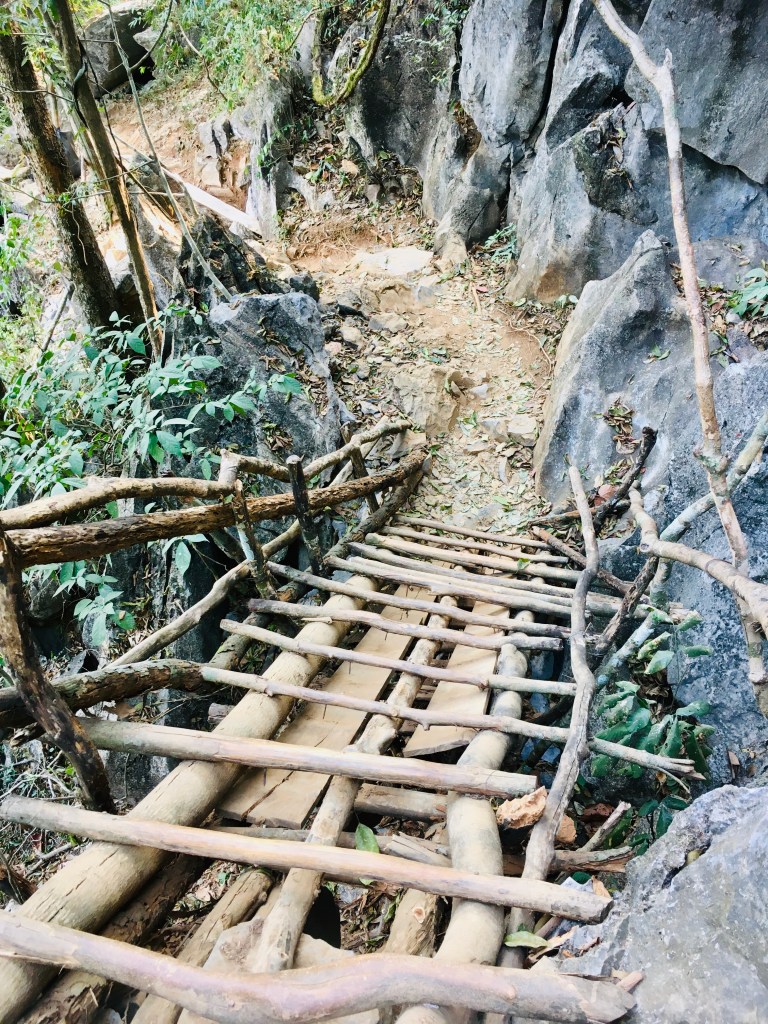
On Vang Vieng day three, Helen took some time out to do writing, so I set out to conquer Pha Ngern viewpoint after another delicious breakfast, this time with scrambled eggs!! The climb was tough in the heat and I hiked through humid forest, scrambling over boulders and tree trunks. The view from the top was pretty awesome and as the highest viewpoint in the valley, I could soak up the scenery (and wring out my T-shirt), without another tourist in sight. I returned to the Sae Lao restaurant for lunch, feasting on tasty stir fry. In Vang Vieng I got the impression that each viewpoint was owned by a separate community (same with the caves) so I decided to visit then all in order to share the love, especially as each point only costs 10,000 KIP (~90 p). This had nothing to do with me being a hiking maniac of course… So with my T-shirt only just beginning to feel dry (yes that’s gross) I ascended the silver cliff viewpoint in the company of a couple from Switzerland. It was also glorious. Starting to think I should have done a PhD titled ‘Views of Vang Vieng’.

Overall, Vang Vieng hasn’t been as ‘party, party’ as we thought it might have been, with the exception of the river kayaking when we saw lots of boozy bars catering for tubing tourists. The town itself was geared more towards adventure days and restaurants and a reasonable number of the tourists were families or older travellers. After three days it’s a big tick for Vang Vieng.

6th February – 8th February (Luang Prabang)

On our last morning in Vang Vieng we visited Kaeng Yui Waterfall. As it is the dry season the falls were far from their best, but the walk took us through rural villages and towards the end, a jungle. We then returned to Laboring Vang Vieng restaurant (for the third time) for a well-earned Pad Thai with tofu. Yummy!! Then came another minivan journey, this time to Luang Prabang. The roads were windy, very mountainous and at times extremely foggy but we made it with the aid of magic, this time with Merlin helping Harry. A big bag of banana crisps helped… We arrived in Luang Prabang and briefly explored the extremely colourful and bustling night market before having a dinner of coconut pancakes and sticky rice mixed with coconut. Both gloriously gluten free. Although tempted by Buffet Street (where you pay for a bowl and help yourself to a variety of different dishes) we didn’t want to risk it with gluten (lots of soy sauce). We loved exploring the small town which is a charming mix of Lao and French culture, with the French influence clear in the colonial architecture, the baguettes and croissants and many French restaurants. It was a great start to our time in the town.

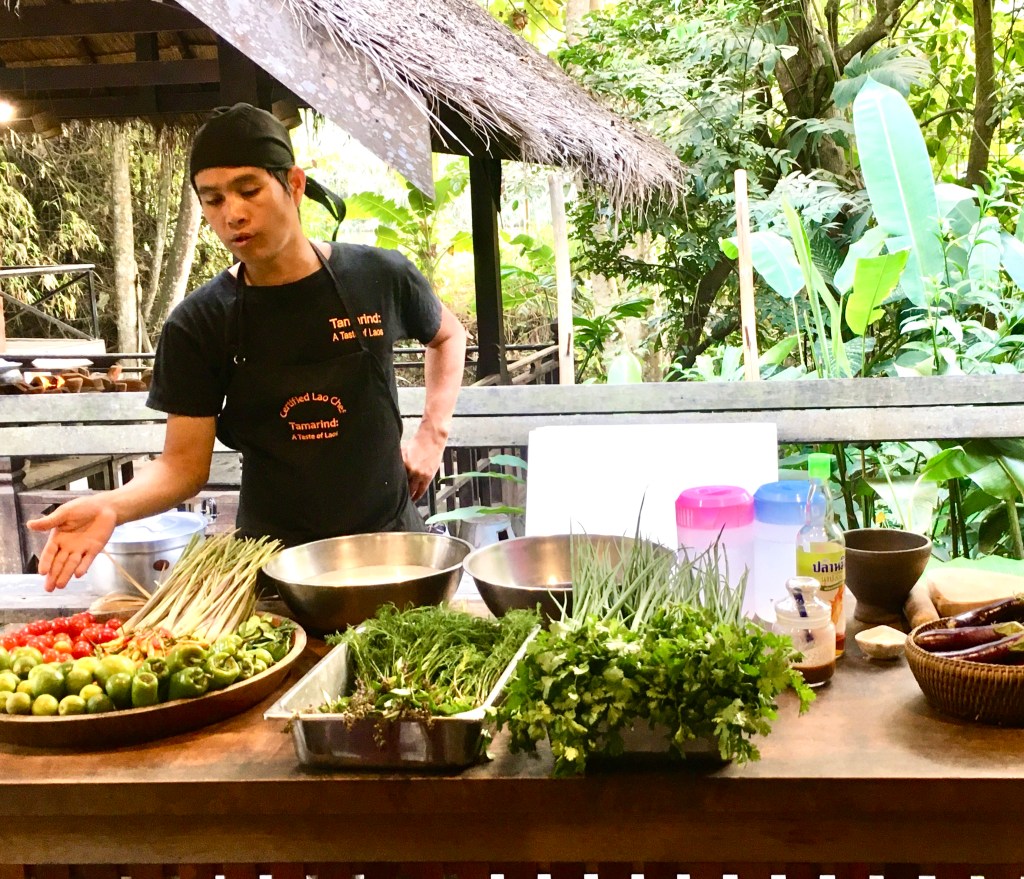
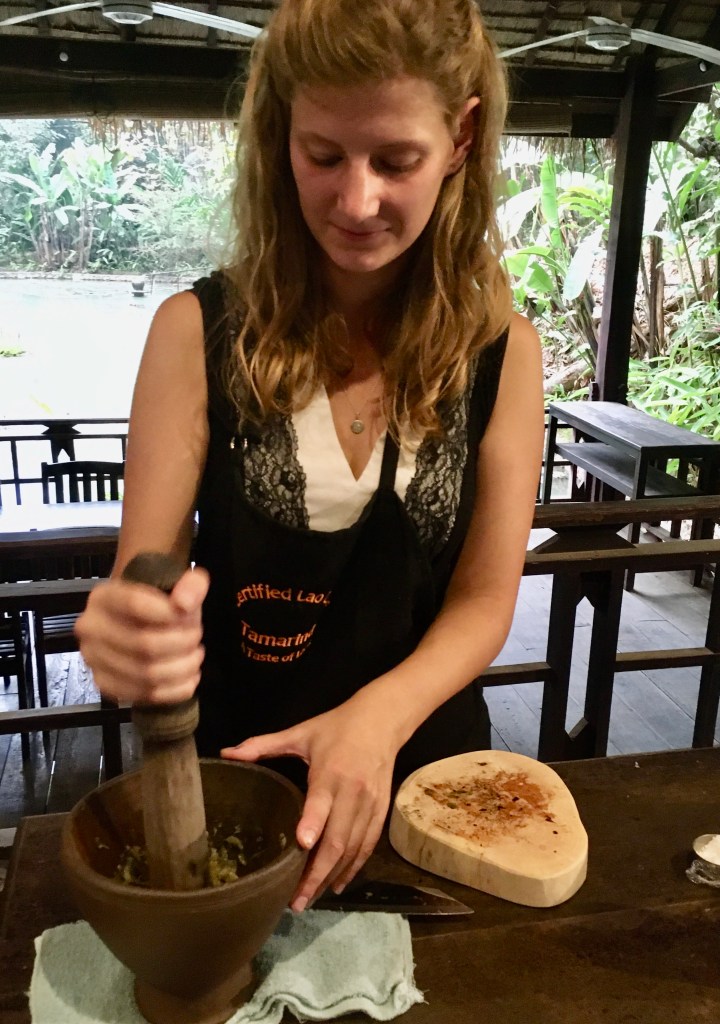
Even for South East Asia, there are A LOT of temples in Luang Prabang. On an early morning walk I first passed the ornate Wat May Souvannapoumaram and then the beautiful national museum. After breakfast we again walked through the town without a real aim, stumbling upon more temples as we went. The Mekong river flows alongside the town and also made for pleasant walking, although some sections were quite littered. After lunch we climbed to the top of Mount Phousi, a popular spot for the sunset. We decided to avoid the crowds and ascend during the day, meaning that we could enjoy the panoramic view (and yet another temple) at the top in relative peace. Then in the evening we took part in a cooking course attached to Tamarind Restaurant. We had wanted to do at least one cooking course during our trip and a few blogs had rated this as one of the best across all of South East Asia. It did not disappoint. We cooked a variety of traditional Lao dishes in a scenic jungle location (website: https://www.tamarindlaos.com/cookingschool).

Our master chef Sit first taught us how to make sticky rice. To start with you wash it, massaging it softly and refreshing the water two or three times, before leaving it on a bamboo steamer for 30-40 mins. Next up was a spicy dipping sauce called Jeow, which was made with either eggplant or tomato and onion, garlic and chilli cooked over an open flame. We tasted our Jeow with small sticky rice balls. Even with one chilli we were struggling! Next up? Mok Pa, which is fish steamed in a banana leaf. We first made a paste from lemongrass, spring onion, basil, dill, a pinch of salt and a chilli, all mixed with a pestle and mortar. With Sit prowling and inspecting our attempts it was like potions class at Hogwarts!! We then wrapped our fish in a banana leaf and dropped it onto a steamer. Dish number 3 was stuffed chicken in lemongrass. We ground garlic, spring onions, coriander, kaffir lime leaves and salt before mixing with minced chicken. We then split the stems of some lemongrass, before packing the chicken into the newly made baskets (brushed with egg and fried later). Finally, we made the dessert. An Asian classic… purple sticky rice with coconut milk. We mixed decimated coconut with hot water and squeezed (to make coconut milk), slowly simmered and then added pre-boiled sticky rice. Topped with seeds, fruit and a dash of Tamarind jam. Yummy. We then feasted and it was glorious. We left with a recipe book and full tummies.

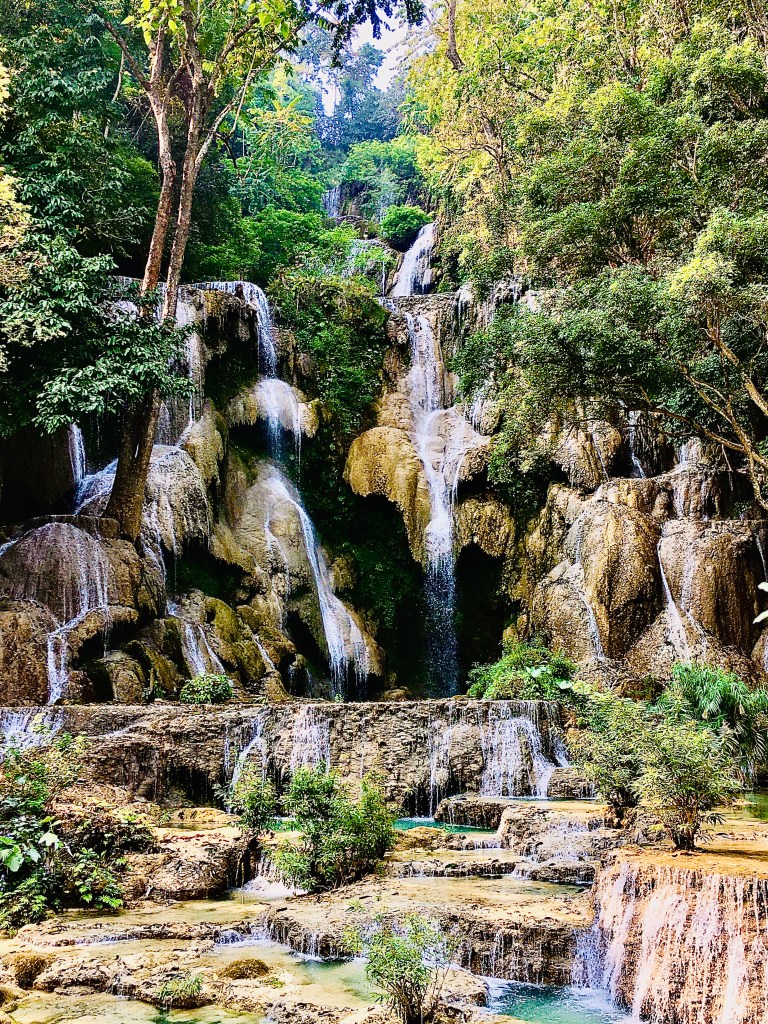
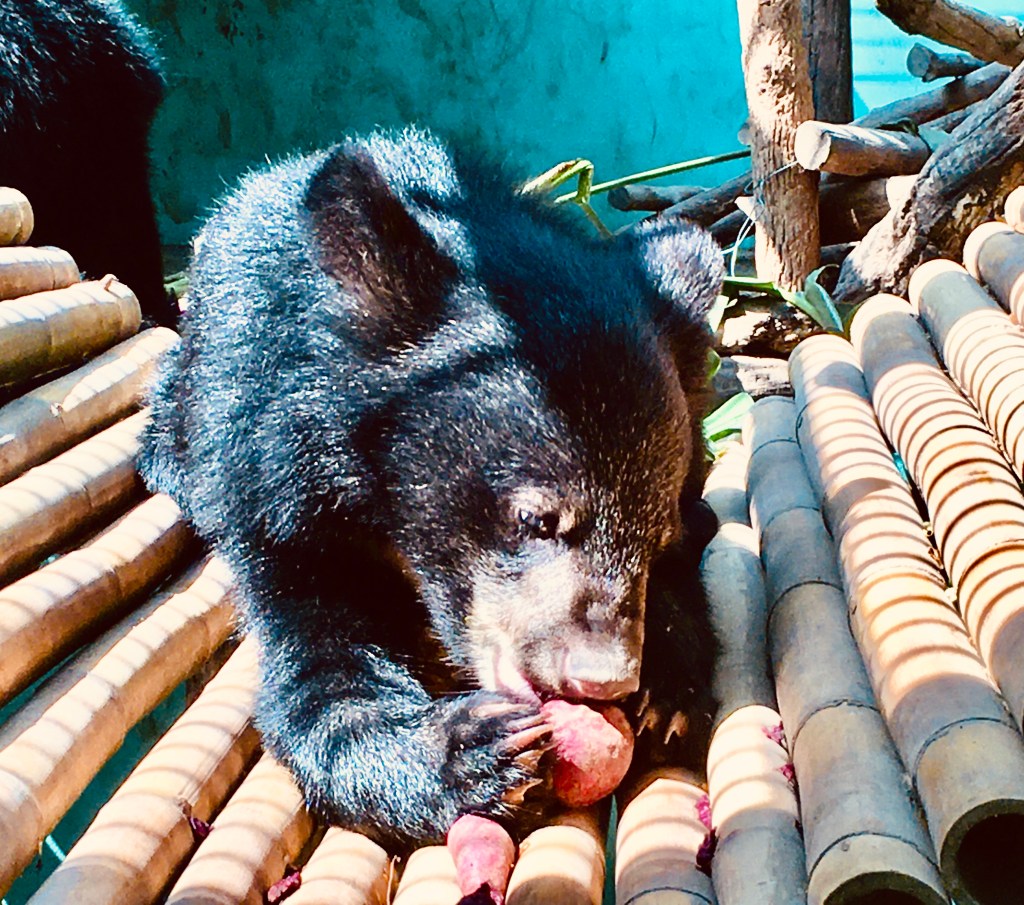
This morning we headed out to the Kuang Si waterfalls which are about 30 km from town. With pools to swim in and tiers of cascading falls they strongly reminded us of Erawan waterfalls in Thailand. They were stunning. We hiked up to the top of the falls, marvelling at their beauty. Whilst in the park we also visited the Tat Kuang Si Bear Rescue Centre (opened in 2003) which rescues Laos Moon bears from illegal wildlife trade and bear bile farms. There are currently 43 bears at the centre and they are now expanding. It was fantastic to hear about the work they are doing as part of the free the bears charity (which was founded in 1995 by an Australian, Mary Hutton). This afternoon? In all likelihood more temples beckon.

Our time in Laos has flown by and it has been awesome. We think the tourism slogan has it spot on when it states ‘Laos. Simply Beautiful’. Next up? Thailand. ‘Thailand? I thought you’d already been there?’ I understand your confusion as I know you’ve read an excellent Thailand blog post… We simply liked it so much we’re going back.

A gold star for Vietnam

Vietnam has been awesome. We’ve had a month here and we wish we could have stayed for longer. The people are SO warm and welcoming (everyone always says hello), the culture is fascinating, the food is incredible, the history is rich and the scenery… well the scenery is out of this world. For a country that has seen so much recent suffering, it’s fresh, full of life and is incredibly beautiful. It’s up there with the best countries we’ve ever been too. All in all, a gold star on the flag is fitting.

24th January – 27th January (Ninh Binh/Tam Coc)

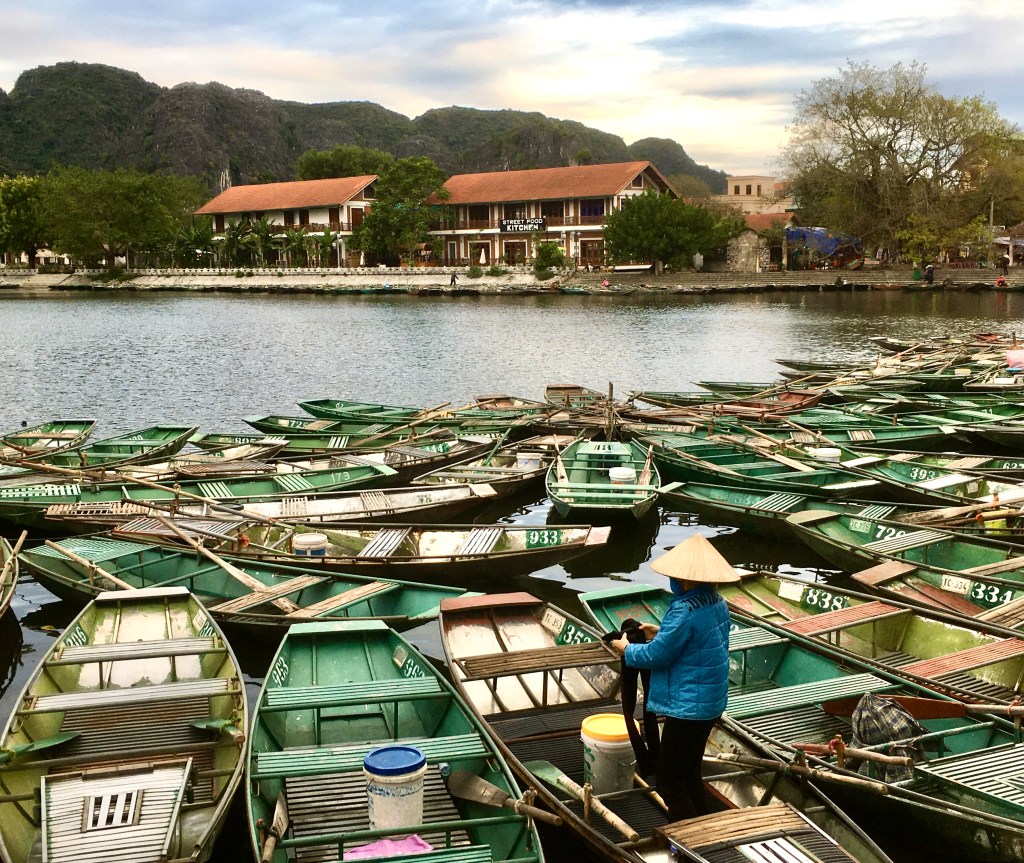
After arriving by bus from Cat Ba we set out to explore Ninh Binh, or specifically the Tam Coc area. Whilst the main street in Tam Coc was quite touristy and for want of a better phrase ‘a bit naff’, the surrounding countryside made up for it. After a disappointing lunch (overly fried tofu) our first stop was the Bich Dong Pagoda, a small temple about thirty minutes from town on foot. The temple is built into the rock and we were treated to great valley views from the peak. The area is similar to Phong Nha, but with more rivers and lakes. Then came one of the most weird but wonderful of our experiences in Vietnam. Helen had downloaded the app called maps.me (a great shout for anyone travelling) and marked just past the temple was a small privately owned cave… Being intrepid explorers, we couldn’t resist. We were led around the cave by the owner. English = 0/10. Love of his cave = 10/10. Passion to share his cave with tourists (who clearly speak no Vietnamese) = 15/10. We ducked and weaved through small passages, looking at fossils and crazy rock formations with a constant torrent of explanations (the cave was huge!!). We haven’t got a clue what he said (maybe something about the sea…?). Nonetheless, well worth the 30 p (10 k Vietnamese dong).

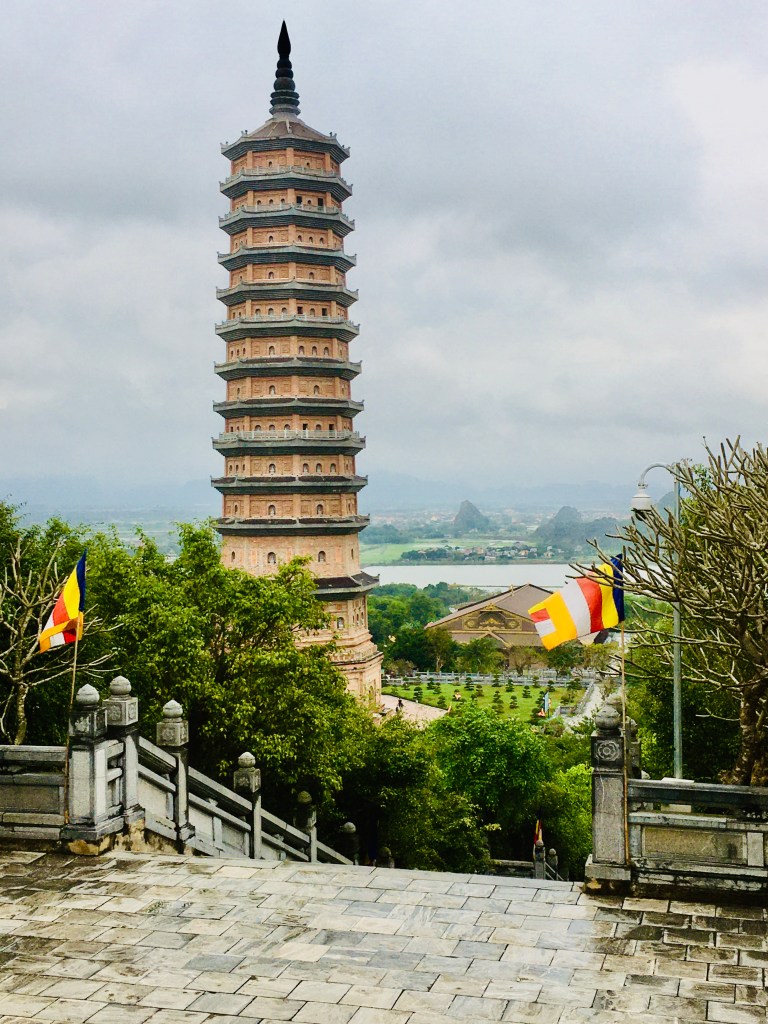
On the 24th we rented bikes and made our way to the Hoa Lu ancient capital. The site was the capital for the Dinh dynasty (the first monarchy system in Vietnam) and early Le and Ly dynasties. It was the capital for 42 years for an empire spanning from Northern to Central Vietnam in the 10th and 11th centuries. Thereafter, the Ly Dynasty moved the capital to Thang Long (see Hanoi post), before it was moved again to Hue. It’s been really nice to visit all three sites and piece together Vietnam’s ancient history. Basically it all started in 968 when Dinh Bo Linh defeated 11 other warlords and declared himself emperor, setting up the capital in Hoa Lu with a state government, trade and minted coin and naming the country Dai Co Viet (the country of the great Viet people). Dinh Bo Linh was murdered in 979 and like all good stories it involved a traitorous general and a devious mistress. As we walked around the site we could see why it was a choice for the capital as the limestone mountains that dominate the landscape would help protect against enemies (except your own generals…). The site was not as well structured as Thang Long (our favourite of the three) or as big as the capital in Hue and there are few original remains left (although that’s not surprising given the age of this capital and Vietnam’s turbulent history), but for 20 k it was worth a visit, even in the rain. The next stop on the Tour de Tam Coc was Bai Dinh Temple, another 10 km from Hoa Lu. It is South East Asia’s largest Buddhist complex and although more modern, it was extremely impressive with a towering stupa and huge golden Buddhas, positioned in front of golden lotus leaves. We escaped the rain in the temples, marvelling at the statues. One of the funniest things was the offerings, which included fruit and money but quite often candy, soft drinks and crackers.

On our second full day in Tam Coc we woke to a thunderstorm, so used the rainy time to do some planning for the next month. We’ve been doing things fairly ad hoc, but it’s nice to have a bit more structure now (a few flights booked). We then walked to the Thung Nham bird park…albeit in the rain again!! Our stay in Tam Coc has coincided with the holiday season (known as Tet), so the walk to the park was really quiet and we enjoyed chatting, whilst admiring the scenery. We then explored the Vai Gioi cave, ascending different levels from Hell, to Earth, to Paradise, which fittingly featured stunning valley views. We then stumbled across an amazing little cafe, Tuan Vu, near the Bich Dong Pagoda where we had noodles with vegetables and tofu in tomato sauce with lemongrass. Then the lovely host gave us some Tet cake to celebrate New Year. It is made of sticky rice with mung beans in the middle and is boiled for six hours. It was gross. We ended up giving one piece back under the pretence of fullness and hid the second piece in my bag so not to cause offence! A memorable lunch.

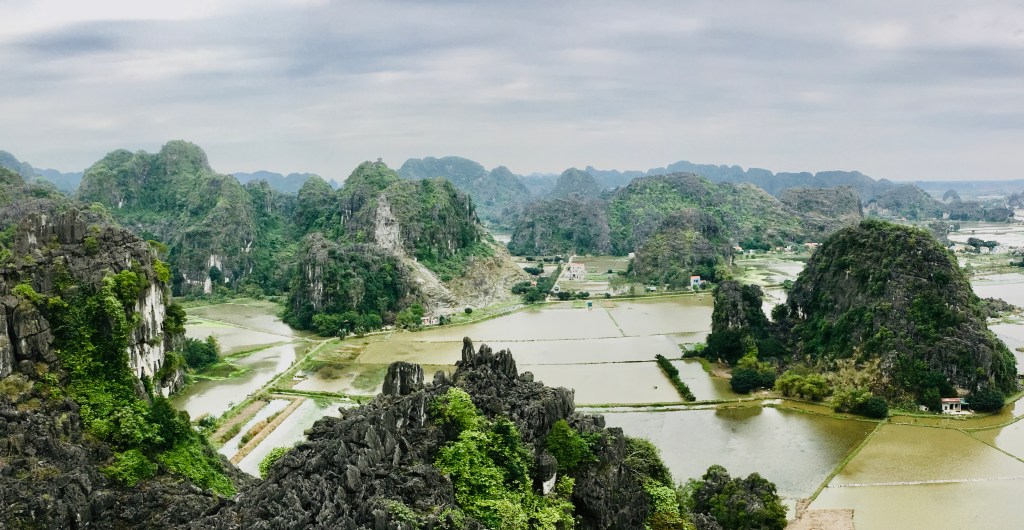
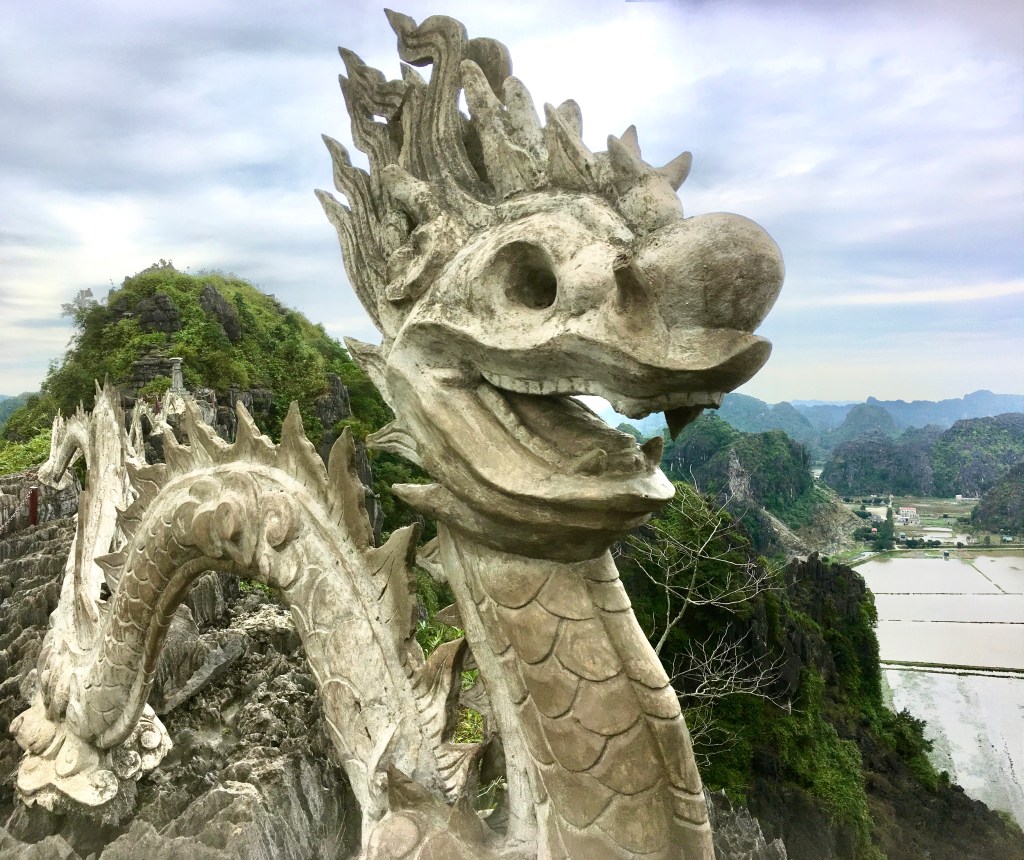
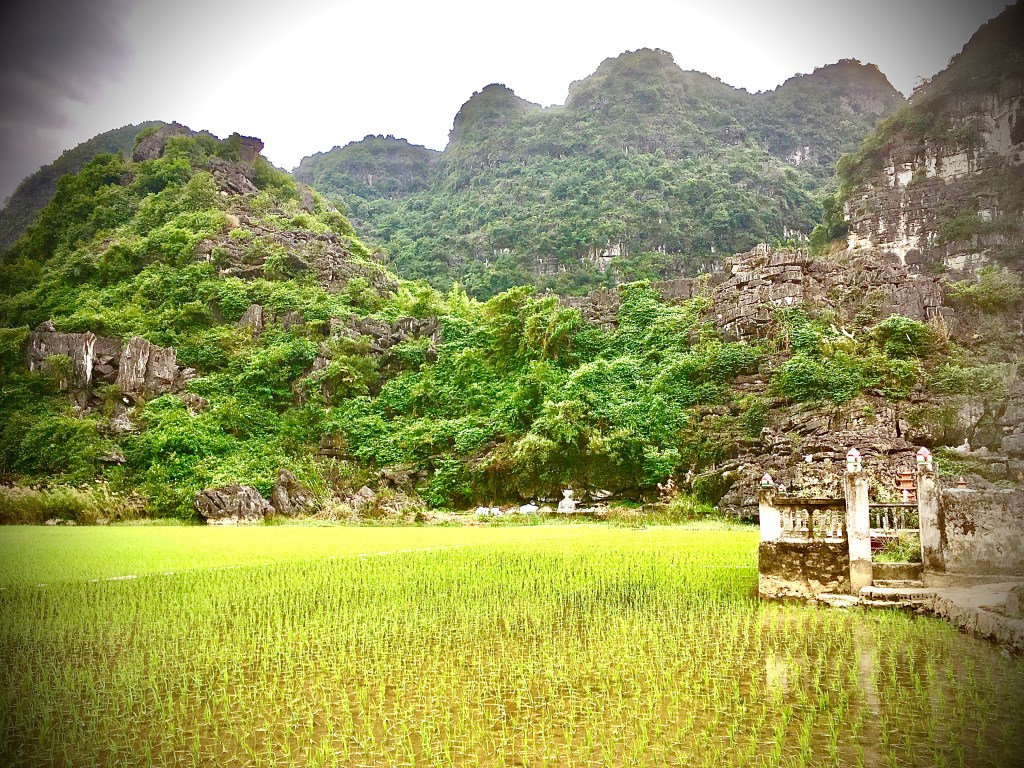
After a rather sleepless night thanks to New Year celebrations, we walked out to the Hàng Mua cave and viewpoint. The views from the top of the ‘lying dragon mountain’ were wonderful and we could imagine that with vivid green rice fields later in the year it would be even more spectacular. The cave itself was a bit average and not a scratch on the random man’s cave from day one. After another lovely Vietnamese lunch we walked to Trâng An, where the river winds through the towering hills. Unfortunately a lot of the walking was on a road, but otherwise we could have been in Jurassic Park. Then (FINALLY) on the edge of town we found some planted rice fields, with the distinctive bright green set magically against the darker hills. As a side thought, Ninh Binh has goats living in the hills, which is fab. What’s not so fab is the fact that these goats are sold on the side of the road. Cooked but whole. Best not to dwell on that too much…

Vietnam travel tip #9: If you are in the country for Tet, don’t eat the cake…

Vietnam travel tip #9b: As a more serious comment, we both wished we had stayed further outside of Tam Coc town. For anyone visiting Ninh Binh there are nicer areas on the outskirts of Tam Coc that are prime for exploring the countryside.

28th January – 29th January (Pu Luong)

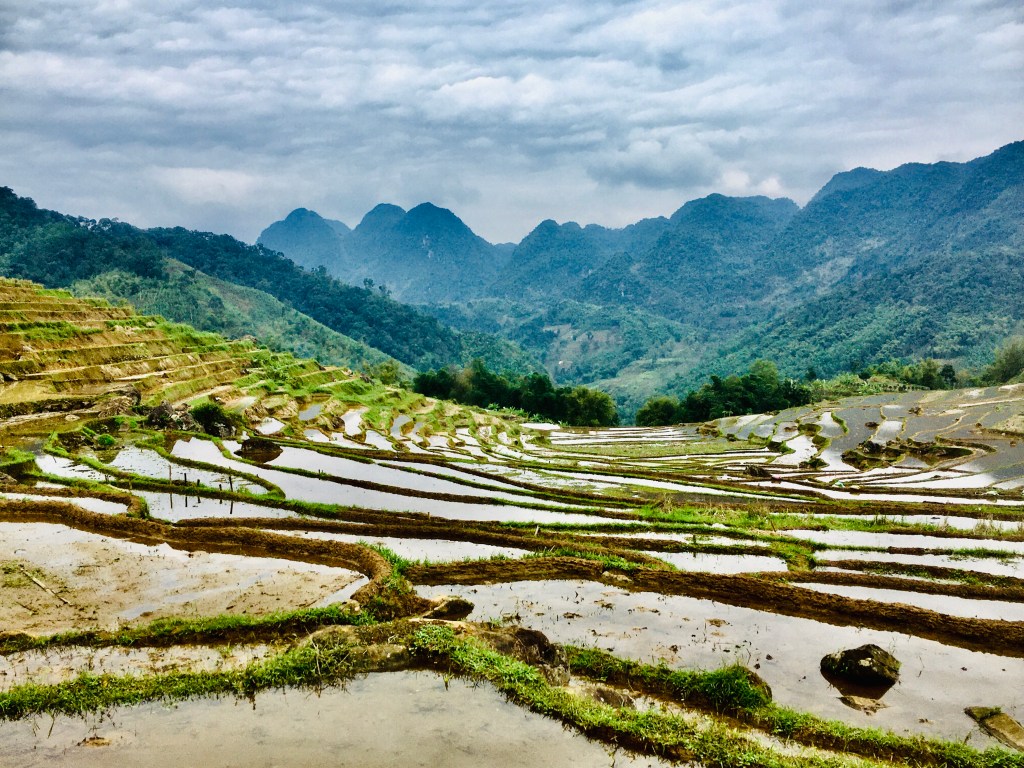
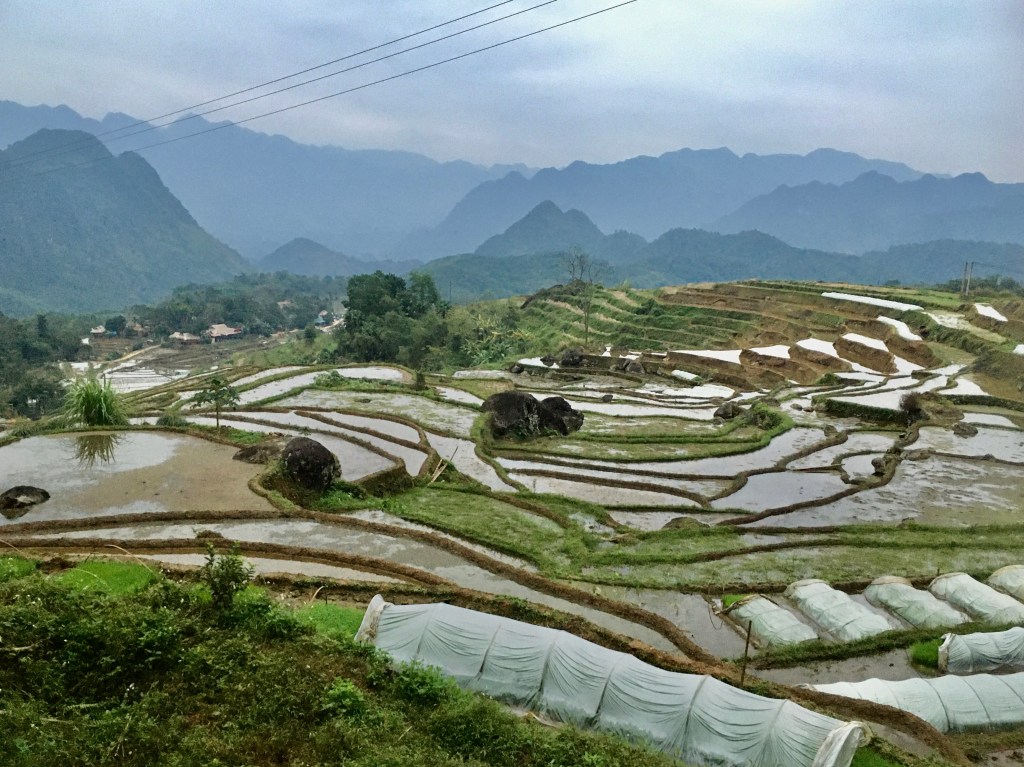
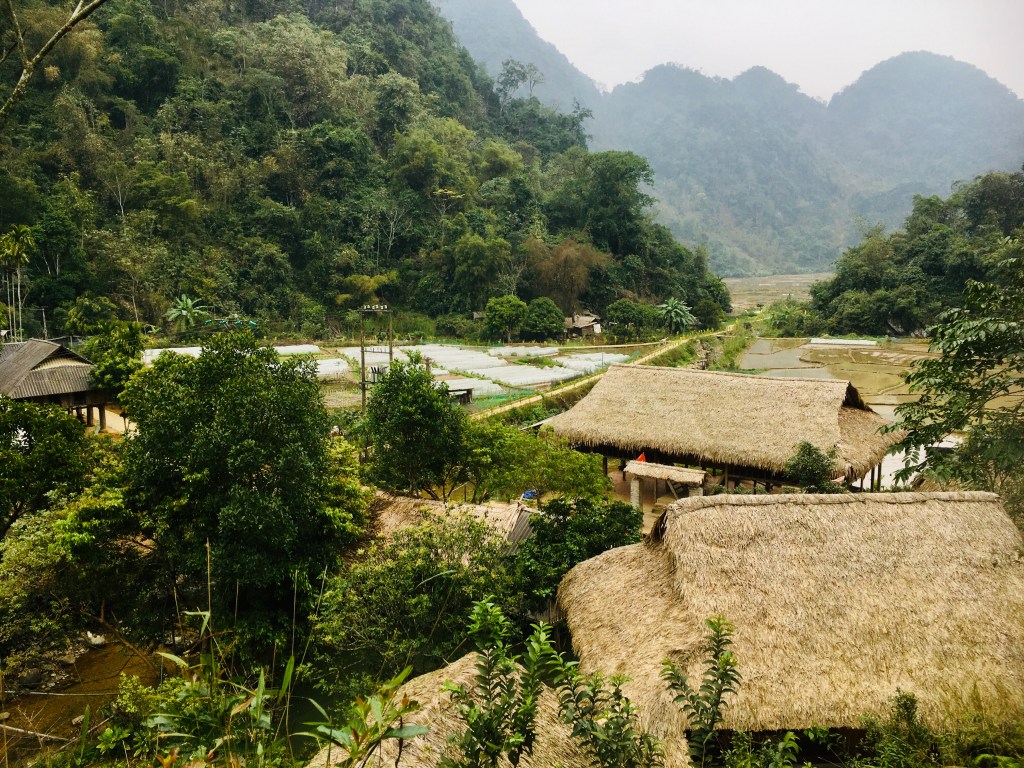
The car journey from Tam Coc to our last stop in Vietnam, Pu Luong, was gloriously green. Rice paddies, towering limestone hills, farms and forests. It took four hours, but seemed shorter as we marvelled at our surroundings. It will come as no surprise that Pu Luong was also top dollar. Even more rural than Sapa but with the same tiered rice fields, lush valleys and mountainous peaks. After dropping our bags we confidently strode out towards Hieu village and waterfall. An hour later we were halfway up a hill without a clue where we were… Instead, we spent the afternoon trekking, wandering along quiet footpaths and through tiny villages. Sometimes getting lost pays off…

After a cosy night in our homestay (a very simple wooden cabin with a mattress on the floor) we set out for Kho Muong village. Two hours of trekking took us past small villages and over a big hill to the impressive Hang Doi cave. It was HUGE and exceeded our expectations. We then set out for the elusive Hieu village and waterfall (from day one) trekking for another four hours only to find January wasn’t a good time to see the falls (they were disappointing as you can probably now guess). Never has the song ‘don’t go chasing waterfalls’ been more appropriate. Having said that we could see how the falls would be spectacular with more rain and reminded us a little bit of Erawan waterfalls in Thailand. It was a long walking day and we got back to our homestay feeling tired, but very happy.

We spent the last morning of our Pu Luong experience meandering around the rice fields and taking in the views. Tomorrow we depart Vietnam, ready for our Laos adventure. We are very sorry to be saying goodbye but are looking forward to the next country on our grand tour of Asia.

Vietnam travel tip #10: Part A) Go to Vietnam. Part B) Make sure you spend as much time as possible here. There is SO much to see and do in this wonderful country.

A Sapa experience

17th January – 19th January (Sapa)

Our next adventure took us on another overnight bus, this time from Hanoi to Sapa. We had signed up for three days of trekking with Mama Mao, which was organised through Lily’s travel agency (Website: http://lilystravelagency.com/project/sapa-trekking-with-mao/). We arrived in Sapa at 4 am, feeling quite tired but after a big breakfast we perked up and were surprised by the size of the town as we explored the bustling local market.

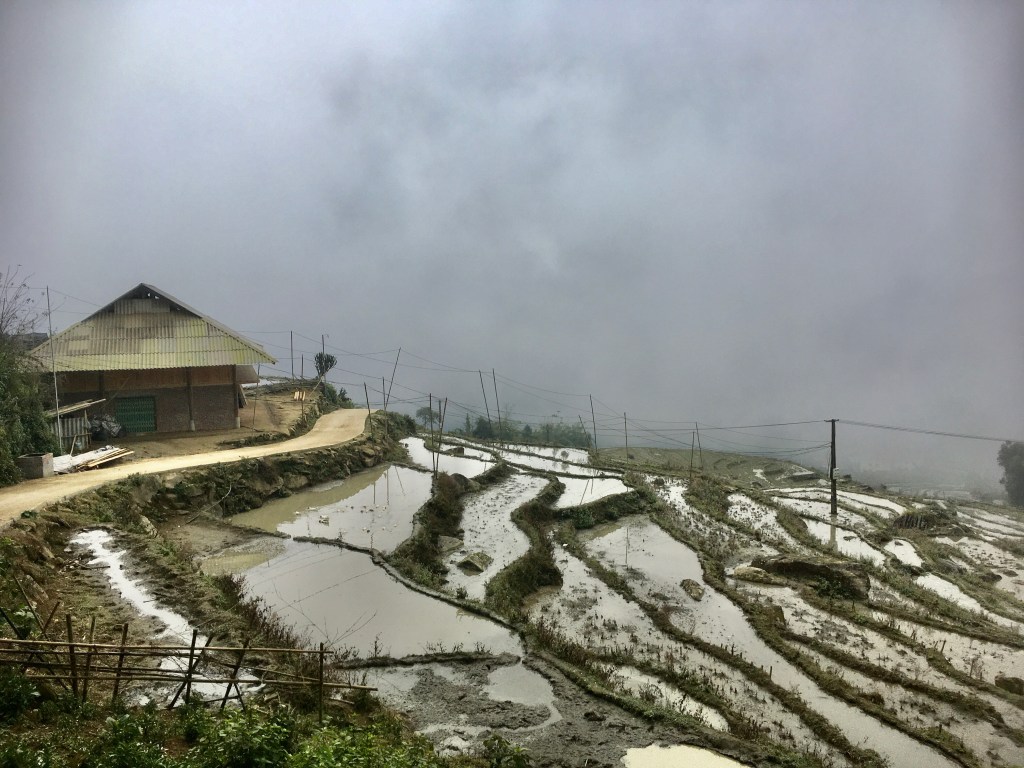
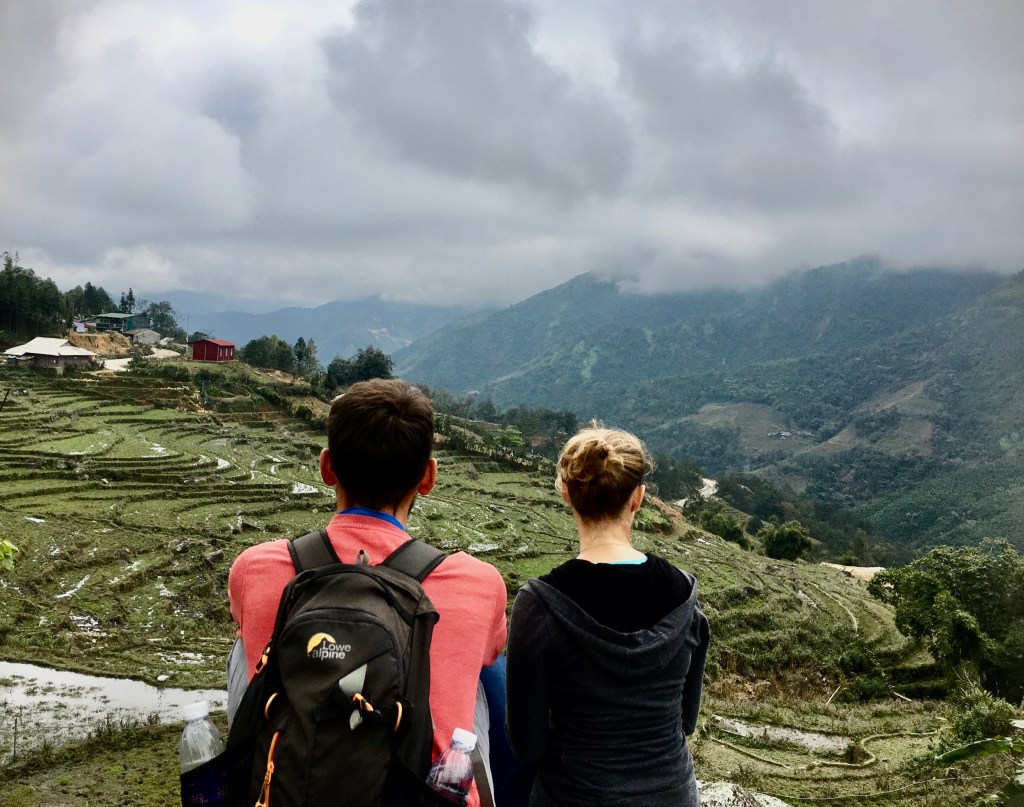
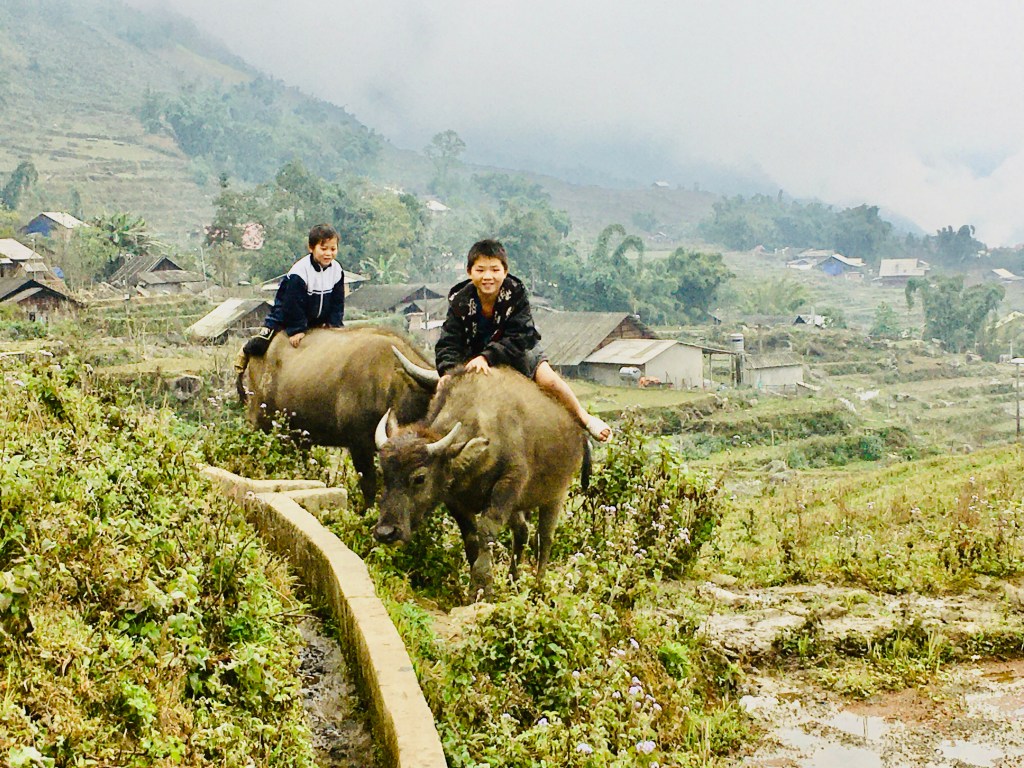
We were then met by Mao and we trekked up from Sapa through forests and over mountains, seeing cows, horses and buffalo along the way. As it is winter in the region, it was not as green as Phong Nha (the rice season starts from March which brings the wonderful colour in July and August) but the countryside was still beautiful and we often found ourselves hiking above the clouds. The best thing about the day was leaning about the beautiful H’mong people. Classically they are a farming community, but now some of the ladies from the villages are doing guided treks, whilst their husbands mostly still do farming. They grow a variety of vegetables, including carrots, broccoli, squash, rice and potatoes, whilst also keeping chickens, pigs and buffalo to support themselves. We also learnt how buffalo are used for farming and also killed for important funeral celebrations.

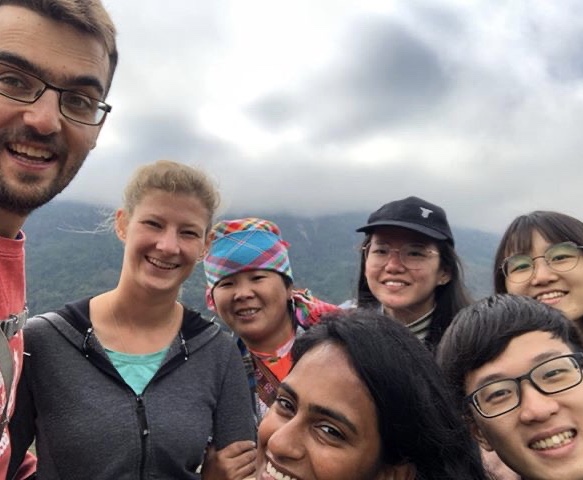
Throughout the day we also learnt about other aspects of life and were given beautiful handwoven gifts, witnessed cloth dyeing, and how bamboo is grown and used for houses and water canals for crops (you can do it too, with bamboo…) The community used to be completely Buddhist, but is now a fairly even split between Buddhist and Catholic Christian. By far the most interesting aspect was chatting to Mao, and she discussed how much life had changed in recent years. Until 6-7 years ago, they didn’t have electricity and plastic has only been recently introduced. Sadly this has led to more littering as the area doesn’t have good infrastructure for removing rubbish that isn’t biodegradable. Mao’s wooden homestay was beautiful and we relaxed with our hiking team, which featured new friends from New York and Malaysia. We learnt more about life in Malaysia over a dinner of rice, fresh vegetables and spring rolls. We are well into rural Vietnam and living in the clouds. I guess you could say that Sapa has been mist-erious.

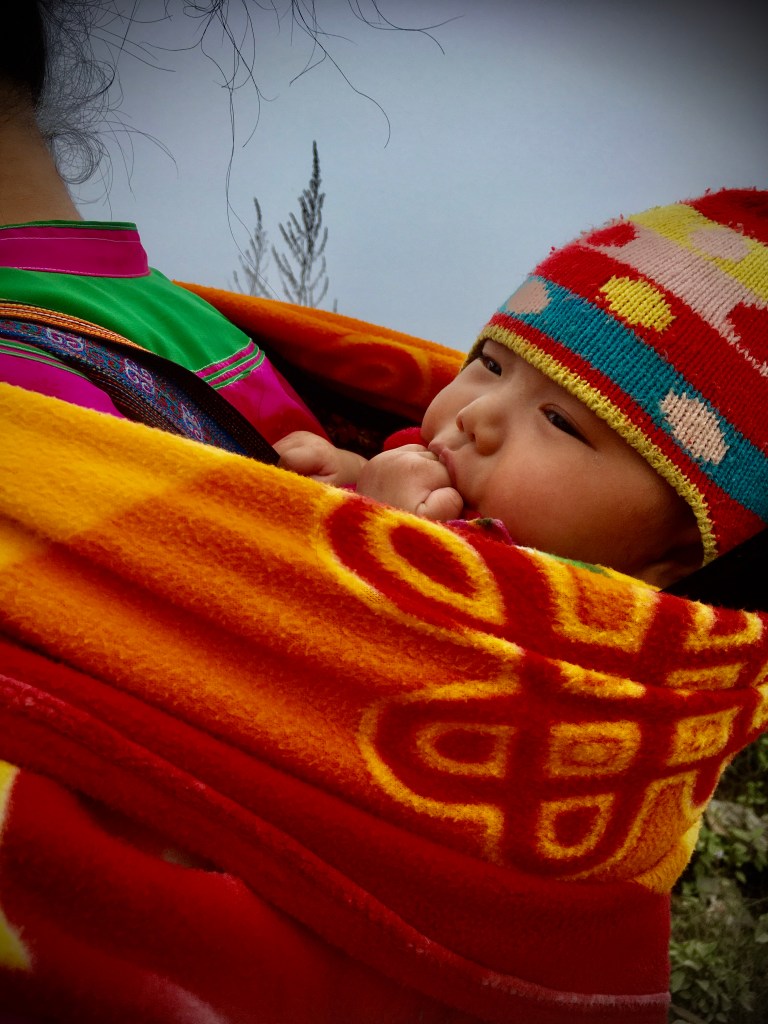
On our second day in Sapa we trekked again through the rice paddies and bamboo forests. We woke feeling (for the first time in a LONG time) rather chilly, and were warmed by delicious noodle soup. Mid-morning the sun also came up and we were treated to amazing valley views, with distinctive tiered rice paddies. The trekking was not particularly strenuous but it was great to chat with our new friends. In the evening, I went with Mao to her garden to collect some vegetables for our dinner, which was spectacular, tofu and tomato (our new favourite), broccoli, spinach, potato (yay!!) and rice. The evening was spent chatting by the fire in the homestay, reflecting on another great day in Sapa. We also got to meet the most amazing baby, Don Bin (Mao’s grandson)!!

Mao has been an incredible host, she is around 40 years old, but is an absolutely bundle of energy, never stopping and bounding up and down the hills like a nimble mountain goat. Her English was also excellent and she made us laugh all the time, branding me ‘chicken boy’ (I was too scared to dye my hands blue like Helen) and Helen ‘buffalo girl’ (not sure why…). After living with the family for a few days, I can honestly say I could slip into life in the mountains. Their days are spent hiking and looking after crops and animals and their evenings are spent sitting around the fire, laughing and drinking ‘happy water’ (STRONG rice wine) seemingly with no worries. They also get up early and go to bed at about 8 pm. Remind you of anyone?

Vietnam travel tip #7: Go and stay with Mao. Just do it.

20th January – 23rd January (Cat Ba Island)

On the 20th we took a bus and ferry combination from Hanoi to Cat Ba Island. Unfortunately the weather was misty and cloudy so the island views weren’t as spectacular as they might have been, as we made the ferry crossing. However, we had a nice afternoon exploring the coastline and then doing a few jobs, like laundry and planning. Rob enjoyed a coastal run and Helen did some writing, before a top-notch coffee (one of the best so far!!) and dinner in bed.  We decided to make more time for low-key days like this because it has been brilliant to just unwind.

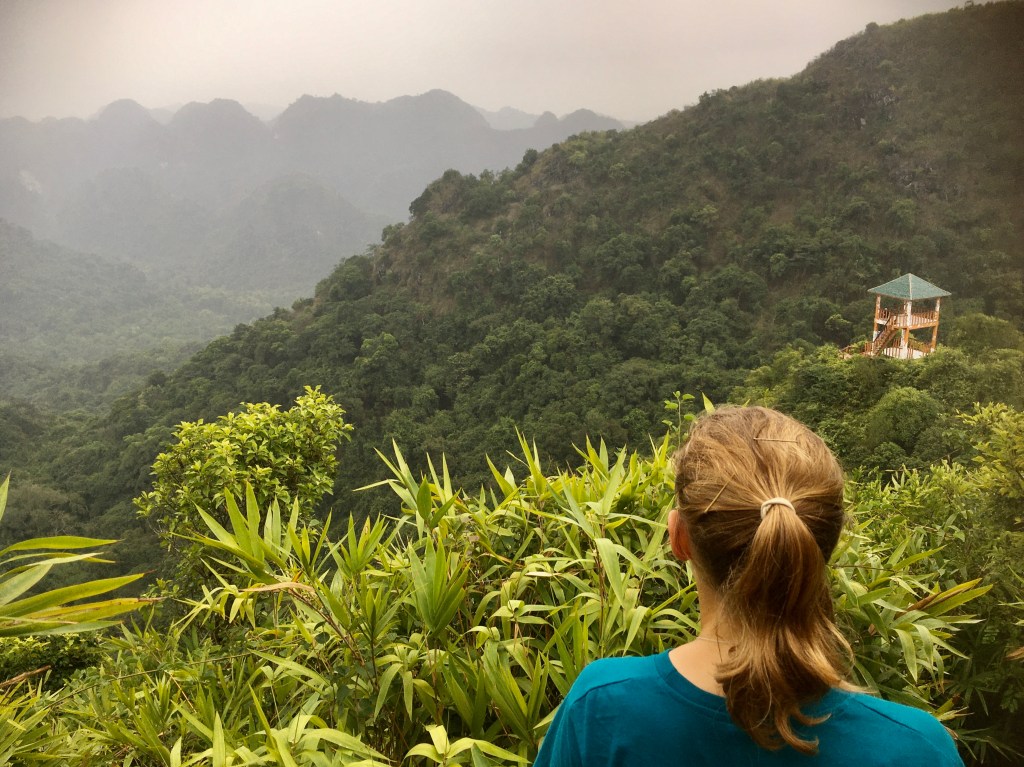
On our first full day on Cat Ba, we took an early bus from town to the national park for a modest fee of 30 k per person. We then had a tree-rrific morning hiking through the jungle in Kim Giao Forest. The trees get there name from a legend, whereby after the death of her prince (poisoned by an enemy) a princess died soon after in mourning. Upon finding the roots of a tree on their graves the King combined their names to christen the tree Kim Giao. The tree is used to make chopsticks, which remain popular today as these were supposedly also used by ancient kings, due to their ability to detect poison. After lunch we trekked to Ngu Lam Peak, to witness an array of stunning karsts, that seemed to stretch on forever. The view was effectively a land version of the islands of Ha Long and Lan Ha Bays (see below…), which are some of the most iconic examples of karsts in the world. It was spectacular and well worth the steep steps to get to the top!! Then came the rain! We took refuge in Trung Trang Grotto, a limestone cave which is the result of water seeping into cracks and eroding the rock. There are ~150 caves on Cat Ba, with Trung Trang the most visited. The cave was unexpectedly good, and we stooped through narrow passages, marvelling at the weird rock formations. Finally we trekked back to the town before enjoying an ice coffee and a delicious dinner in bed (gluten free pad thai and coconut vegetable curry, washed down with chocolate milk…yum).

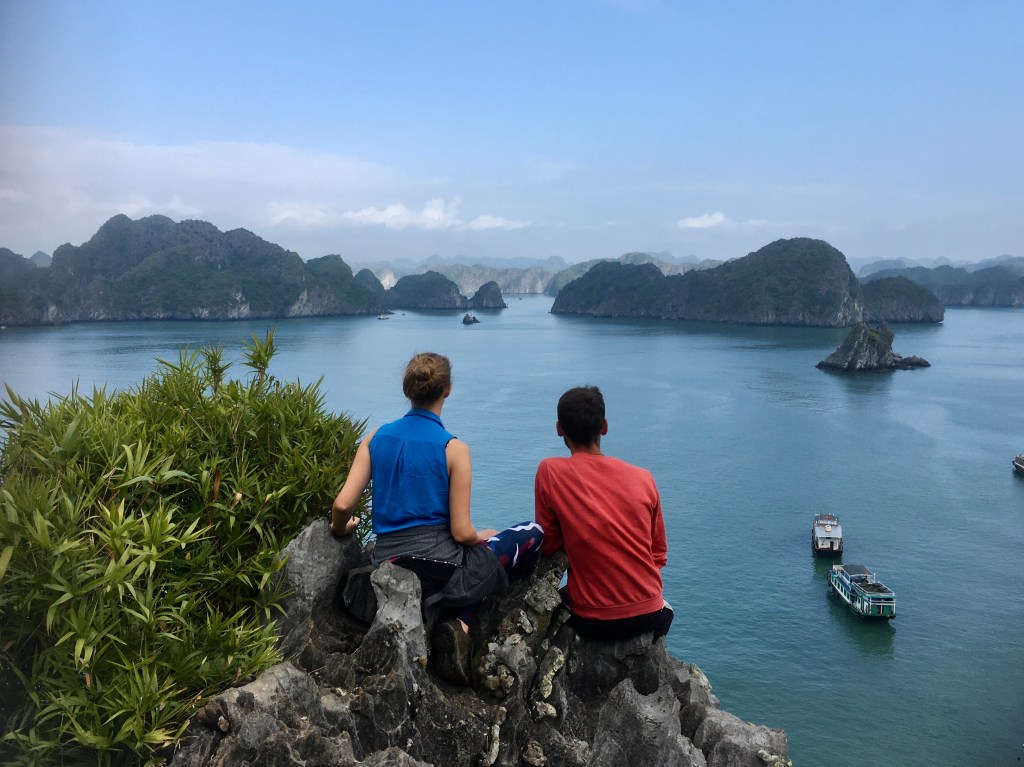
Well that was simply un-bay-lievable. Our last day in the area was spent doing a tour of Lan Ha and Ha Long Bays, which were spectacular. Our first stop was Monkey Island (yep they called it Monkey Island because there are monkeys on it) and we were treated to amazing panoramic views. We even did a spot of rock climbing to get to a small summit. The best bit of all? The sun had come out, so the stunning karsts (>1,600 limestone islands and islets) were set against a backdrop of cloudless skies, golden beaches and crystal blue seas. Imagine Pirates of the Caribbean crossed with Jurassic Park and you’re on the right lines.

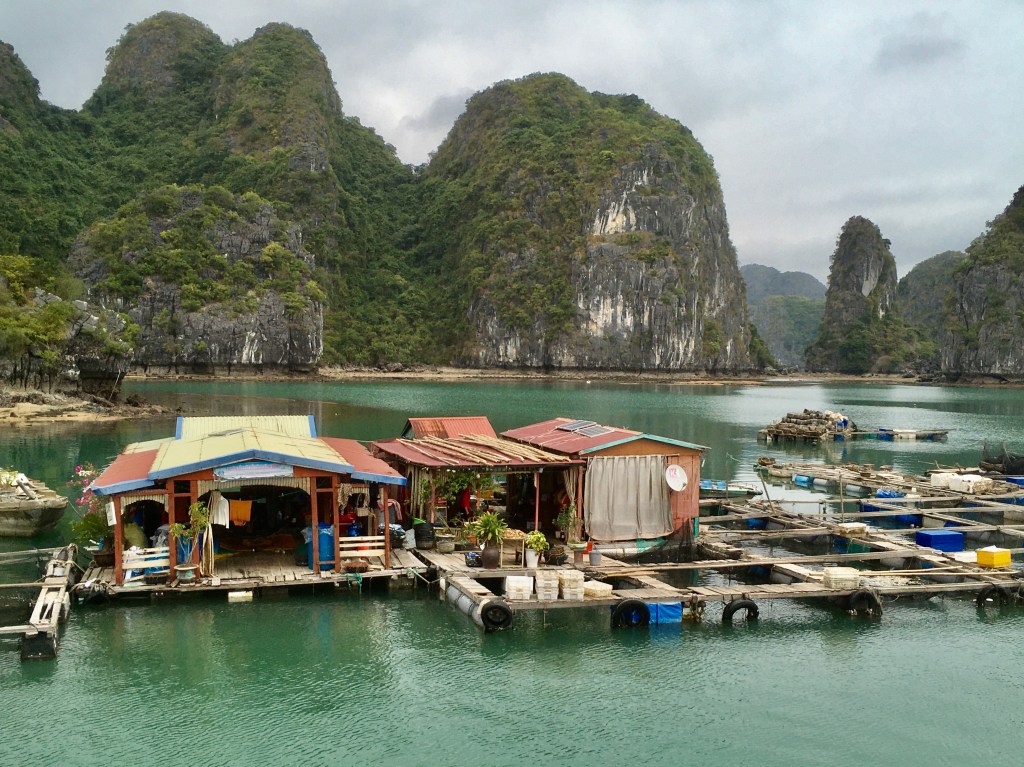
We then headed back to the boat and cruised through the bays learning about their history. Legend has it that the bays were formed with the aid of dragons. Indeed, in Vietnamese, Ha Long means ‘descending dragon.’ Dragons play such an important role in Vietnamese culture, and the legend of Ha Long states that a mother dragon and her children descended from heaven to defend the people of Vietnam from invaders, spraying fire and emeralds. The jewels formed the towering limestone karsts and a nearby bay (Bai Tu Long) refers to the children of the mother dragon. Much more interesting than that plate tectonics/soft limestone being eroded nonsense… After a short boat ride, we took to the water, swimming in the (really salty) sea (in Lan Ha bay) before scrambling across rocks and crawling through caves. At every turn I expected to find a treasure trove!! Lunch on the boat preceded a kayak adventure, we (well actually only me as Helen relaxed again like a lady of leisure) navigated through bright cave (it was bright) and dark cave (it was dark) before exploring a lagoon in Ha Long bay. The bays really weren’t as busy or polluted as we had heard, although we were glad to be visiting in the off-season. This will certainly go down as another memorable day on our tour. Our last morning on Cat Ba has been set aside for low key exploring before Ninh Binh.

Vietnam travel tip #8: Travel with Rob as he will (for free) row you around stunning bays. It’s fun.

Caving and misbehaving

11th January – 12th January (Hue)

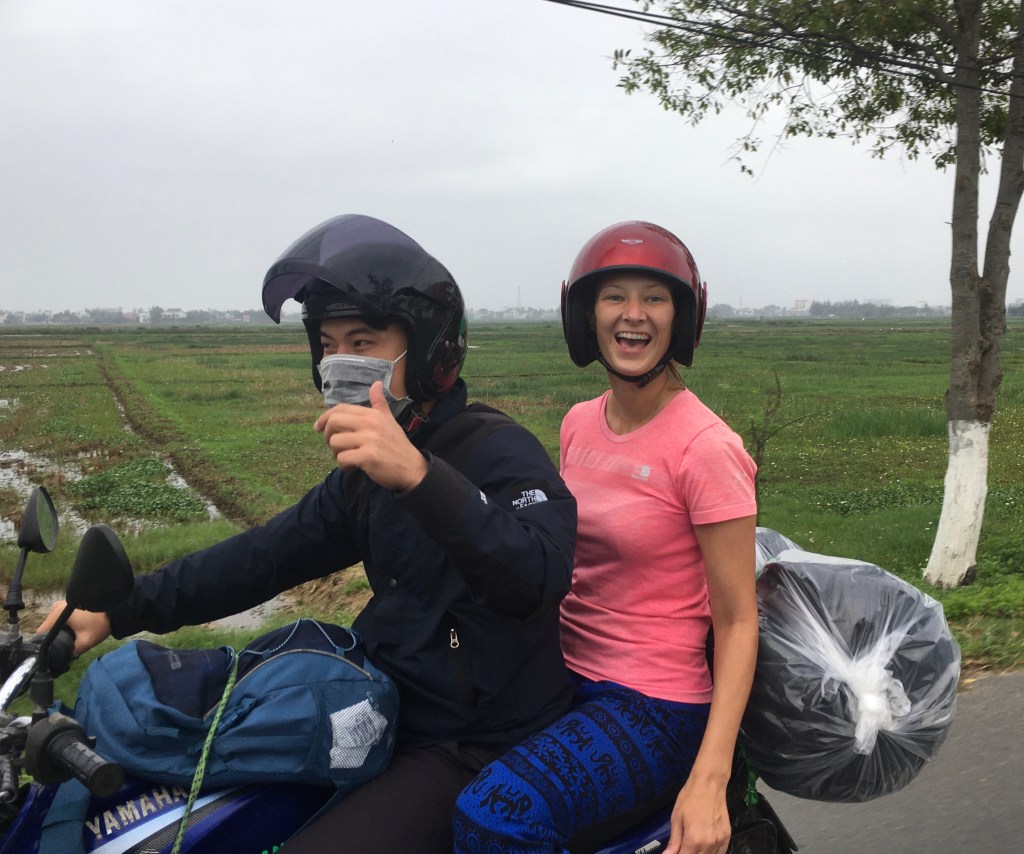
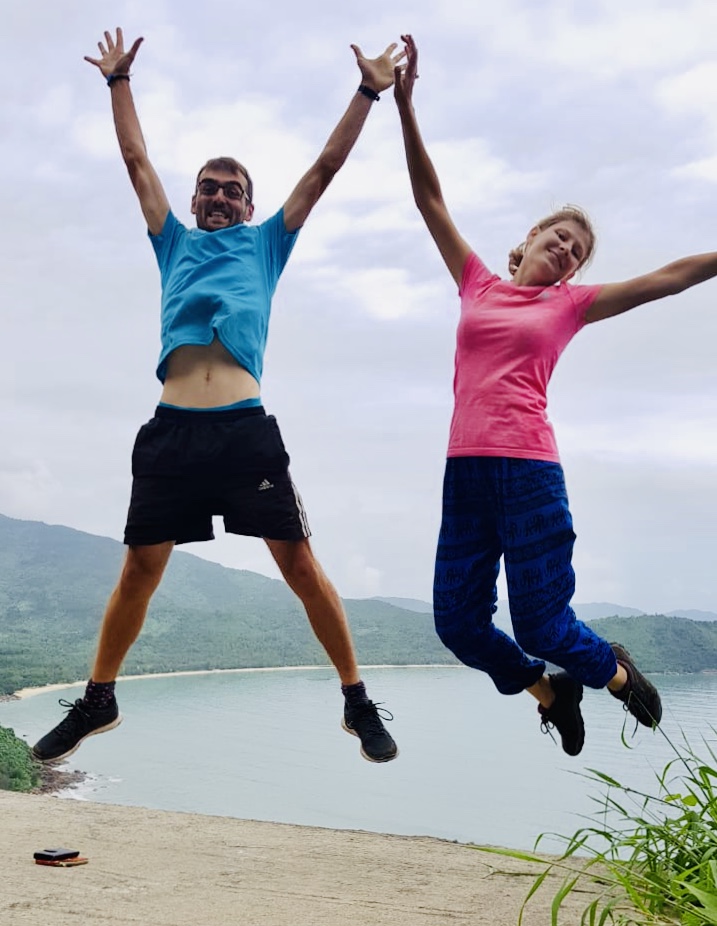
As a belated Christmas present to each other we decided to travel from Hoi An to Hue by motorbike. In true Top Gear style (see: https://www.youtube.com/watch?v=639EFj3RJkw) we conquered the Hai Van Pass as part of an epic day led by our guide Chung, who made us laugh with his great sense of humour (the company website: http://hiddenlandtravel.com/tour/hoi-an-hue-motorbike-tour/). The pass was only part of the experience and we were treated to stunning views throughout the day as we sped past fishing villages, lagoons and rice fields. It was nice to escape from the bigger cities and see a quieter side of Vietnam, something that could easily be missed if making the same journey by car or bus. Other stops along the way included the very slippery Elephant springs (where Helen’s phone went for a dip), the city of ghosts (a brilliantly coloured cemetery) and the ancient Thanh Toan Bridge. Travelling by motorbike was exhilarating and although we were suffering from sore bums and stiff legs, it was a great (and truly Vietnamese) experience. The evening was spent exploring the riverside in Hue and dining at the highly rated, ridiculously cheap and super tasty Madam Thu restaurant (http://madamthu.com/). A top (gear) day.

Vietnam travel tip #4: Ride a motorbike at least once. Motorbikes are simply part of the scenery here and it is a great way to explore the countryside. A tad scary but extremely memorable.

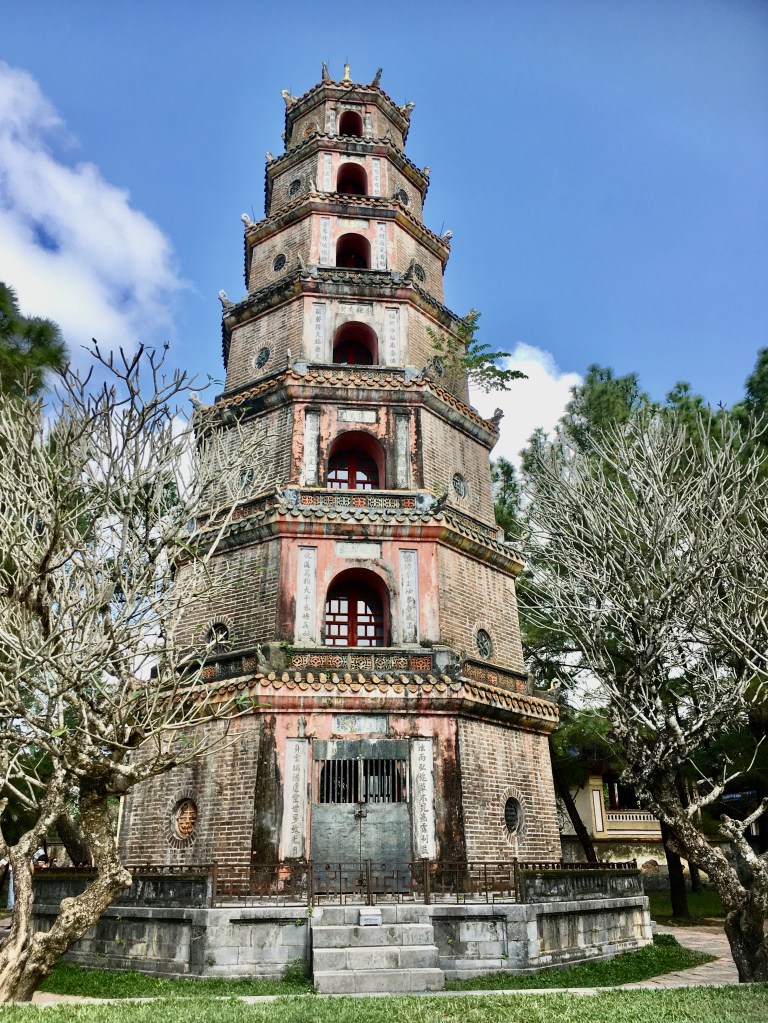
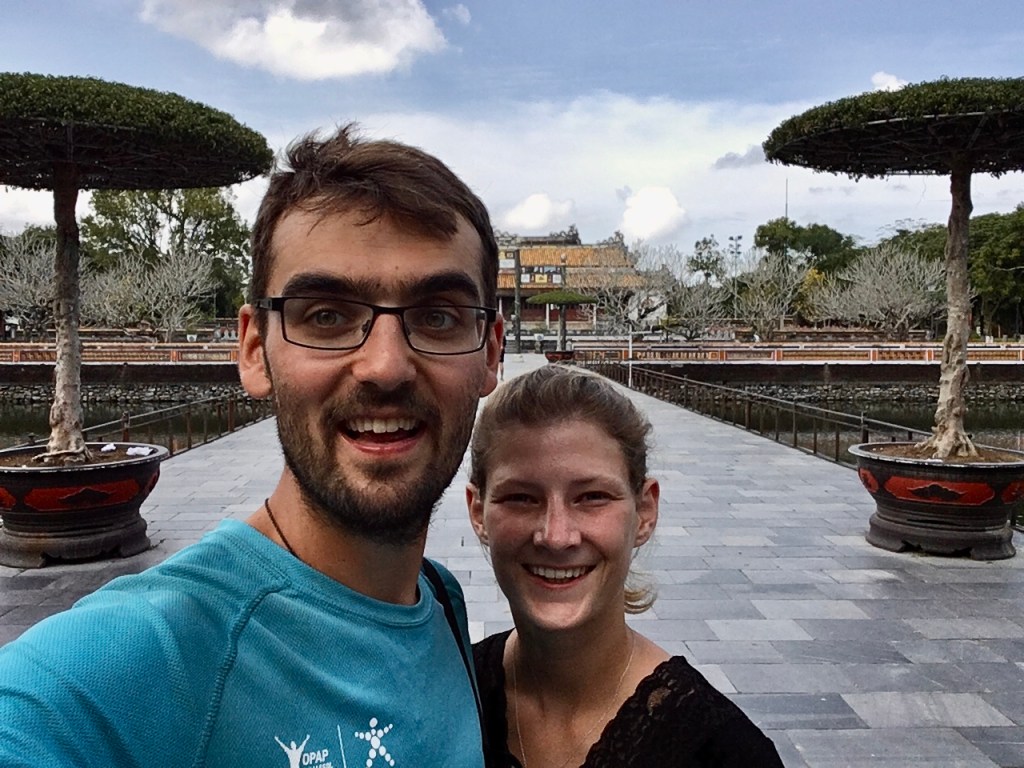
Hue-t a great day. Our day in Hue started with a walk to the beautiful seven-tiered Thein Mu Pagoda, which is a Buddhist temple and the tallest religious building in Vietnam. The gardens behind the main structure were also nice to meander around. We then headed back towards the main city to visit the old imperial city complex. The complex was developed between 1804 and 1833 and contained around 150 structures and buildings, acting as an important centre of political affairs but also daily life for the Nguyen emperors (1802-1945). The complex was badly damaged by war in 1945 and 1967 and is now being restored, but some of the old buildings have survived and the area made for pleasant walking. Our first stop was the Throne Palace (also known as the Thai Hoa Palace or Palace of Supreme Harmony), which was the preferred setting for ceremonies including the coronations of new emperors. The palace contained stunning decorations and the gold plated throne of the emperor, from where it was possible to hear anything from within the temple (spies and enemies beware…). We also visited the royal theatre where the imperial family enjoyed traditional arts, banquets and music performances. It was nice to learn about Vietnam’s history from the time of the first Nguyen emperor (Gia Long in 1802), and the following ebb and flow of power between the monarchy and the French, before the last emperor (Bao Dai) gave up sword and seal at the Ngo Mon gate (at the front of the complex) in August of 1945. Aside from the beautiful gardens, sculpted bridges and towering ornate gates, our favourite spot was the Hiem Lam Pavilion which contained nine dynastic urns which represent the reign of each emperor with carvings of mystical animals (a personal favourite was the dragon with five claws). In the same area the To Mieu temple also houses shrines to the emperors, with Gia Long taking centre-stage.

Vietnam travel tip #5: As self-exploration is quite difficult in many areas of Vietnam, tours can be a great option to explore the country in a more stress-free way. We mainly looked at tours that friends and family have done previously but it is also possible to book last minute in many of the cities.

13th January-14th January (Phong Nha)

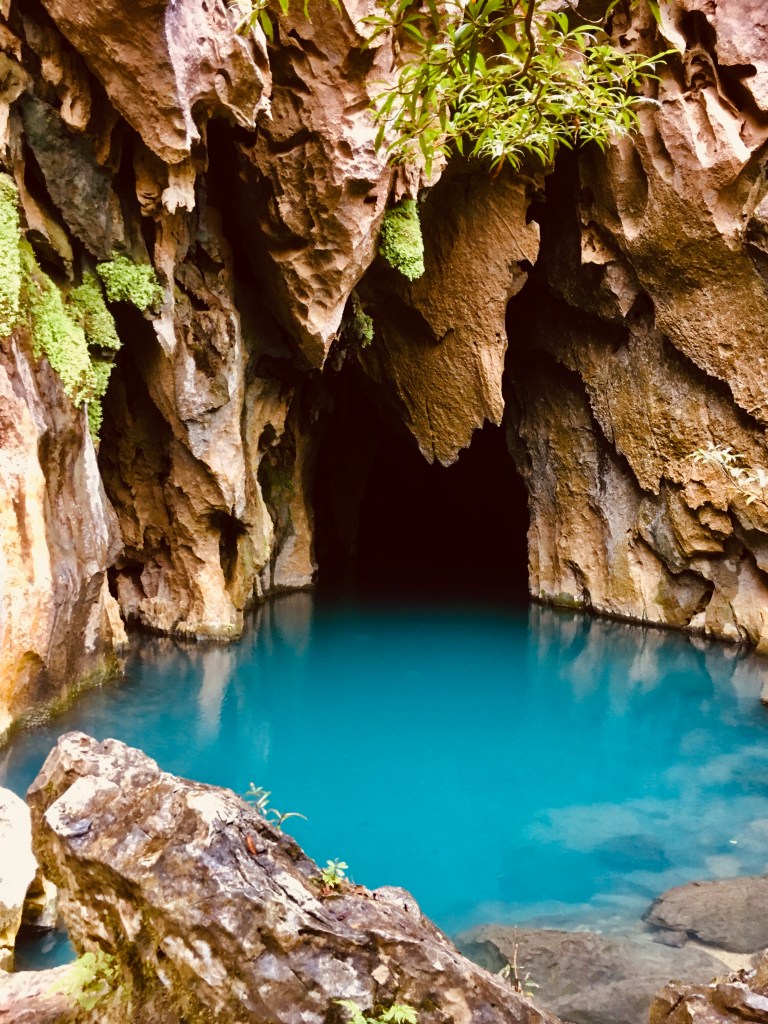
On the 13th we did an adventure/trekking day in Phong Nha National Park. The tour was arranged by Jungle Boss (link: https://www.jungle-boss.com/adventure-tours-2/abandoned-valley-trek/) and was a Christmas present from Bob and Pat French (MASSIVE thank you!!). We were picked up early and started trekking through the dense jungle, before arriving at our first stop, the very aptly named Dark Cave. Yep, they called it Dark Cave because it is dark inside. We both loved the trekking and we waded across rivers (often knee deep) and clambered over rocks inside the cave. We then swam in the blue waters at our second stop, E cave, before an outrageous BBQ lunch (I think I must have eaten my bodyweight in BBQ food). Our guide Dung was brilliant and throughout the day explained the history of the original Ho Chi Minh trail (which we hiked on). This was a definite highlight of the trip so far and we celebrated with our group over a cold drink at the end.

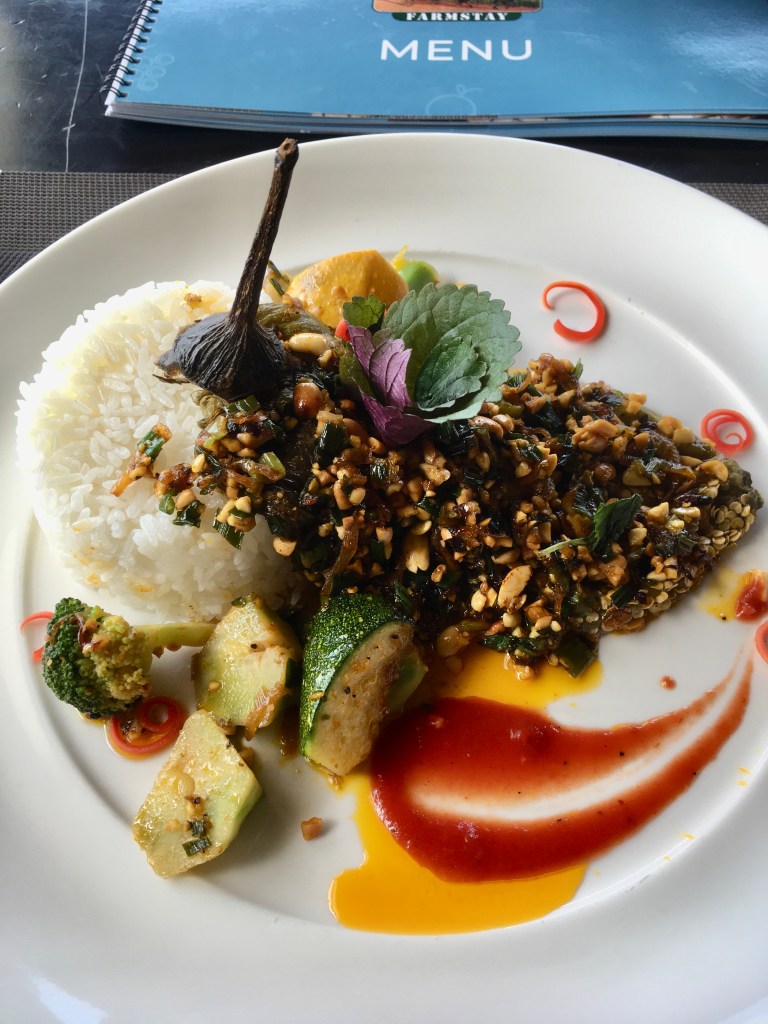
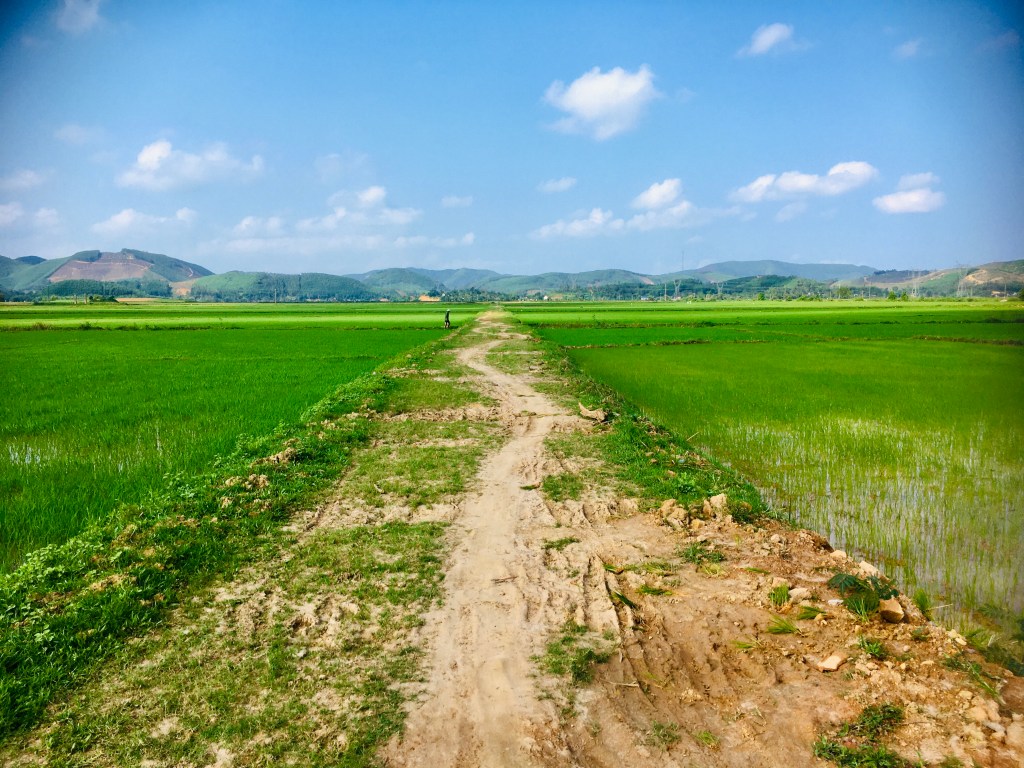
On our second day in Phong Nha, we rented bikes and cycled through the amazing Vietnamese countryside. We found ourselves in rural villages, surrounded by rice fields and panoramic views. Our lunch stop (Phong Nha Farm Stay) was also insanely good and the eggplant with peanuts was to die for. It has been lovely to escape from city life over the last few days and emerge ourselves fully in nature. Some of the rice fields were so green it looked like they had been filtered. We have already visited some amazing places, but Phong Nha is right up there in the natural beauty category. I just hope that it manages to keep its rustic charm with the ever-growing tourist industry in the area.

Vietnam travel tip #6: If you want the best price for buses and tours, it is often best not to pre-book but to do things last minute with homestays/hostels on arrival. We made the mistake of booking some buses online and overpaid by a fair few quid. Lesson learnt!! 

15th January-16th January (Hanoi)

In an attempt to reduce our flying time, we took an overnight bus from Phong Nha to Hanoi, which was surprisingly ok. Apart from some rather rude bus conductors, we managed to get a few winks and weren’t too tired for Day 1 in Hanoi. The morning was spent exploring a small botanical garden, before heading to the extremely impressive Imperial Citadel of Thang Long. In a nut shell, the imperial city in Hanoi is an older version of Hue (although so much better). The complex dates back to the Ly Dynasty (1009-1225 AD), who moved the capitol here in 1010 AD from Ninh Binh. Then in 1802 the Nguyen emperors moved the capitol again (this time to Hue) although the complex was still used as their Northern Palace and remained an important site for ceremonies (but many of the original buildings were destroyed). However, prior to the Nguyens, the imperial city in Hanoi was the most important site for political, cultural and religious events in Vietnam. One of my favourite exhibitions explained the education and examination system of the Ly Dynasty and the royal exams, with ceremonies featuring cool hats, robes and feasts (just like a PhD graduation).

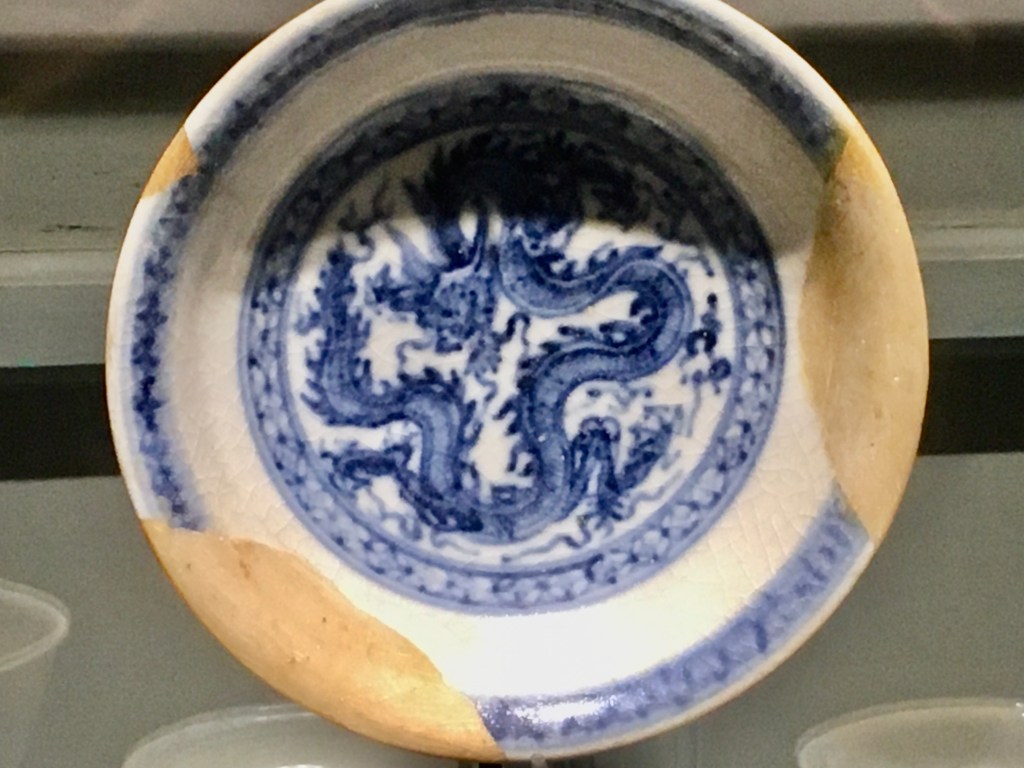
Since 2000 the site has been excavated extensively, which has unearthed domestic implements like ceramics, stoneware, metal objects for cooking and daily life. In particular the high class ceramics were impressive with beautiful decorations featuring dragons with five claws (a symbol of the kings) but also phoenixes, swans or floral wave patterns (for the queens). The sad part is that now the complex is mostly in ruins and although some structures survived, these have been dramatically transformed at various points. In particular, the occupation of the French (1883-1897) involved the destruction of the central Kinh Thien Palace. Another surprise was that the site played a hugely important role in Vietnam’s recent history. After the armistice of the first Indochina war, when the Vietnamese army liberated Hanoi (10th October 1954) the flag ceremony happened in front of the South Gate (Doan Mon Gate). Also, the complex was the HQ of the North Vietnamese government and army during the American war and we went into old bunkers and the D67 building, where many important figures including General Van Tien Dung (the chief of general staff) had offices. Ha-noit at all bad for just £1 each (although it would have been nice if every child in Vietnam had not also been there at the same time as us). The afternoon included a visit to the Dong Xuân market and St Joseph’s cathedral, before a tasty lunch at Huong Viet restaurant in the Old Quarter. We then got Helen a new phone (turns out phones can’t swim as per the entry for Hue).

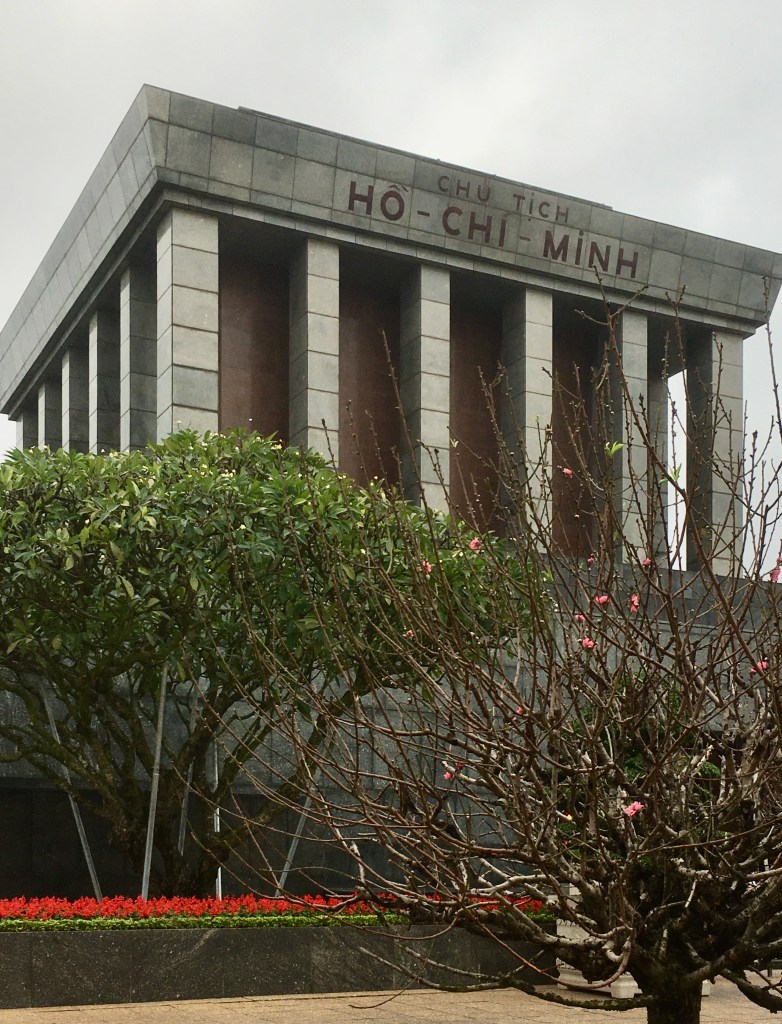
On our next day we visited the Ho Chi Minh Mausoleum in Ba Dinh Square, which is the final resting place for Uncle Ho (as known to the people in Vietnam). Here, his body remains preserved in a glass case (on show to the public) albeit against his wishes for a simple burial. Ho Chi Minh (this was an adopted name meaning bringer of light) travelled and did a variety of normal jobs in his youth. His interest in politics grew whilst living in France and in 1941 he returned to Vietnam to lead the independence movement against the Japanese and French. In 1945 the Viet Minh announced independence with the end of WW2. However, the French remained in control of the South as they refused to relinquish their colony and shortly after war broke out again and conflict remained between the communist North and non-communist South until 1954 (with Ho Chi Minh as leader of the North). In subsequent years, there was more conflict with the Viet Cong against the Southern government with the US, fearing the spread of communist becoming involved. Eventually when the North recaptured Saigon in 1975, they named the city Ho Chi Minh City, demonstrating the importance of their leader who died in 1969. We also visited Ho Chi Minh’s simplistic house on stilts and other residences where he worked and lived from 1954 to 1969. The complex, also contained the One Pillar Pagoda which was originally built in 1028-1054 and represents the lotus blossom (Buddhist symbol of enlightenment) coming out of the water. The pagoda was rebuilt in 1955 after being destroyed by the French.

Over the last week we have learnt so much about Vietnam’s rich history which has been fantastic. Our next stop is Sa Pa for some more hiking and exploration of the countryside.

A pho-bulous start

2nd January-4th January (Ho Chi Minh City)

Whilst the adventure so far in Vietnam has been pho-bulous, the start was a tad…slow. We caught a bus from Phnom Penh in Cambodia, across the border into Vietnam via Moc Bai. The journey took around 9 hours and we were all feeling a bit worse for wear by the end. The highlight was seeing the absolutely CRAZY amount of motorbikes as we entered Ho Chi Minh City. They swarmed everywhere, whizzing in and out of the traffic without any clear regard for rules. Wonderful chaos.

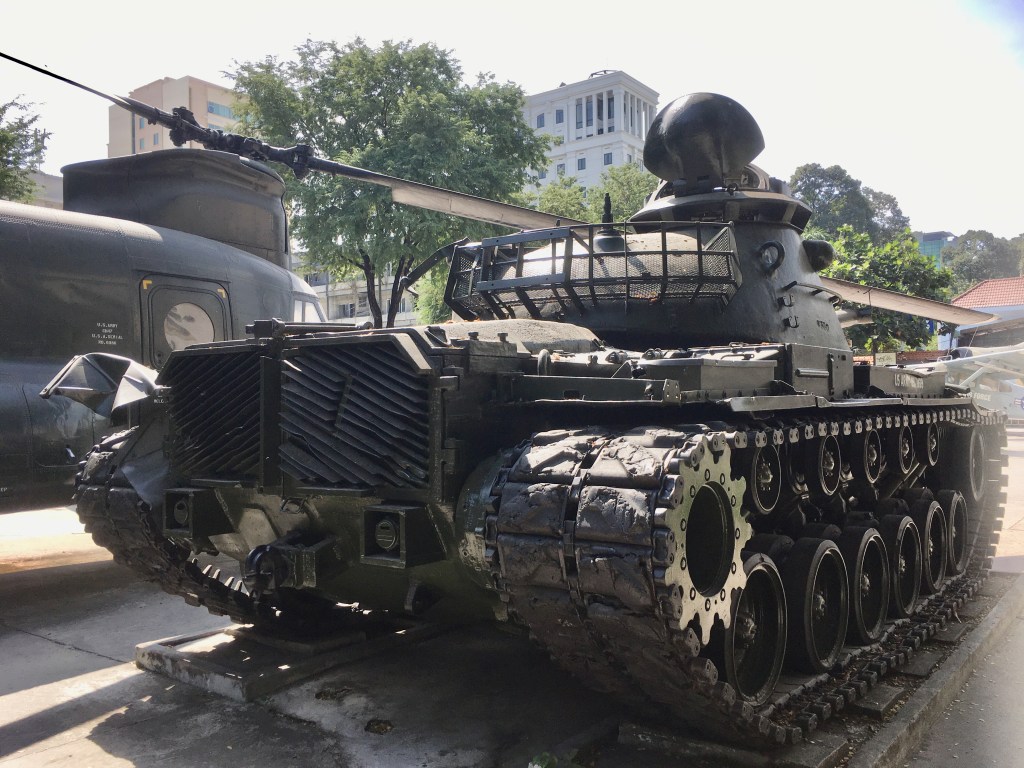
The first morning in Ho Chi Minh City was spent at the War Remnants museum, which (similarly to the Cheong Ek Genocidal Centre in Cambodia) was important to visit, but left me feeling shaken and very reflective. I am by no means an expert in the Vietnam War but I found the following link quite useful in educating myself afterwards (https://www.history.com/topics/vietnam-war/vietnam-war-history). Some of the facts about the war are so shocking, over 3 million people were killed (~2 million civilians), a further 2 million injured and around 300,000 missing. The museum contained some of the weapons used during the war, with US armoured vehicles, artillery pieces, bombs and infantry weapons on display outside. One corner of the grounds was devoted to the notorious French and South Vietnamese prisons on Phu Quoc and Con Son Islands. Inside the museum, several exhibitions also showed the devastating effects of the war with pictures and captions from war photographers. Few museums convey the brutal effects of war on its civilian victims so powerfully. The exhibitions about the effects of Agent Orange and the brutality of the war were for me the most vivid and heart-breaking. What is also clear is that the effects of the war are still evident today, with over 800,000 tons of bombs left across >6 hectares of land in the country, causing (1975-2002) a further 40,000 deaths and over 60,000 life changing injures. Both the visit to the war museum and the genocidal centre in Cambodia highlighted a very dark side to human nature.

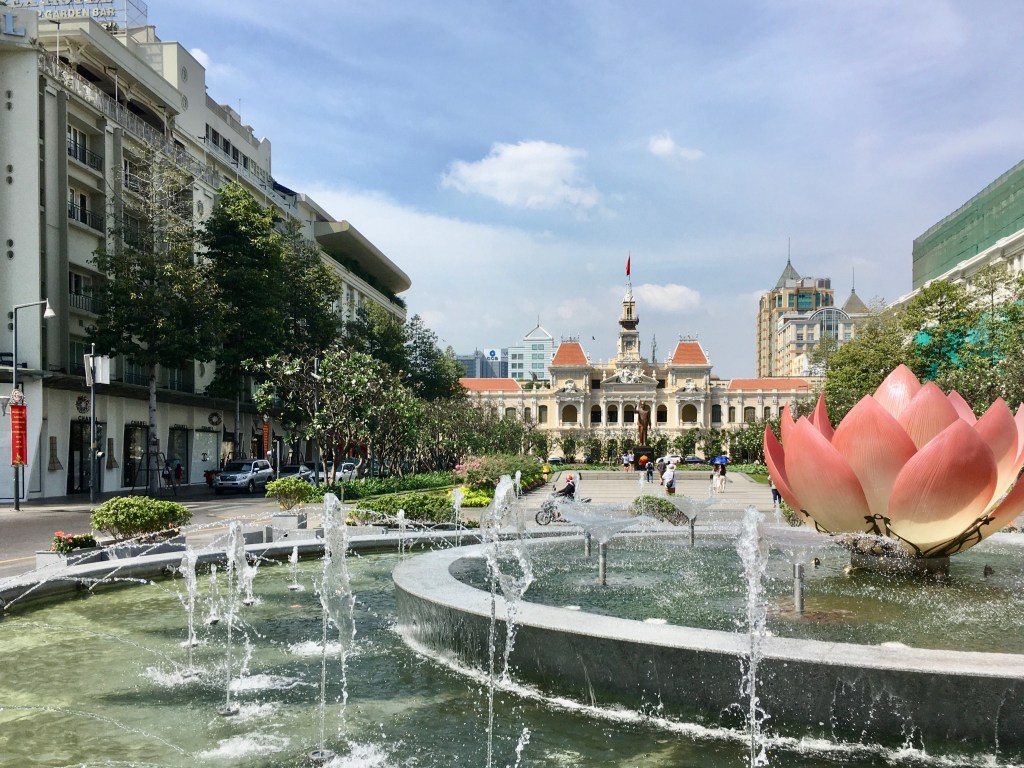
After the museum we withdrew 3 million Vietnamese dong (woohoo we are millionaires!!), before an iced coffee and lunch. The Notre Dame Cathedral of Saigon and City Hall were beautiful and the area of the city surrounding them made for pleasant walking.

On Saturday morning (the 4th), Helen was feeling a bit worse for wear (our first real stroke of illness on the trip) so the remaining Fells and I set out to explore more of the city. Ho Chi Minh City is much more developed than Phnom Penh and we walked the streets around City Hall and the river front. After a check up on Helen, I then visited the Jade Pagoda, taking in more of the city life as I went, with the hustle and bustle of street vendors, swarms of motorbikes and intense heat. We had a nice lunch of rice, fresh greens and an omelette, purchased from a street vendor. The food tasted really fresh and we are both very excited about a month of Vietnamese feasting. The afternoon was a 50 minute flight to Da Lat, where it is a balmy 22 degrees. Time to get the thermals out according to Bob French.

Vietnam travel tip #1: When crossing the road step out like Moses and behold the sea of motorbikes part before thee. Dally not on the kerb, lest thou grow old and befuddled (i.e. don’t wait for the motorbikes to let you cross at a zebra crossing, as they NEVER will). A bizarre concept for us English.

5th January-7th January (Da Lat)

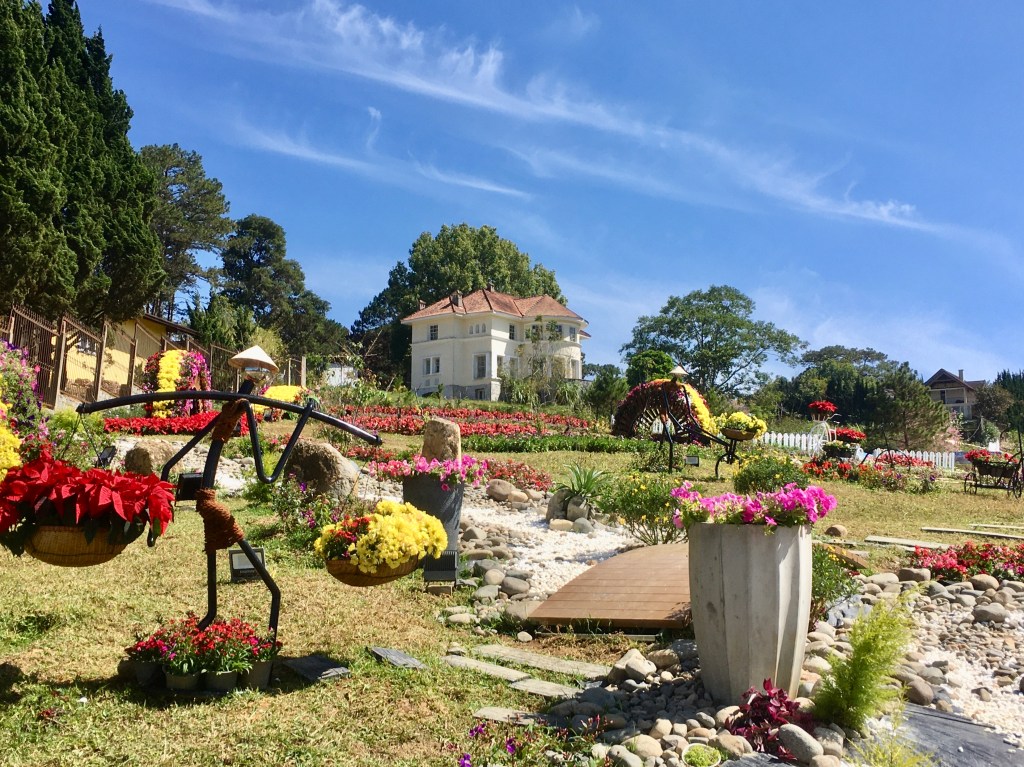
Well Da Lat was just what we needed after a few big Asian cities. Whilst still a sizeable city, the temperatures were much cooler, the air was much fresher and the chaos level was taken down from 100 (Phnom Penh) to a safe 50 (for reference I am using a Monday afternoon in Bath as a 0 on my chaos scale). Our first day in Da Lat was spent visiting Crazy House, which was (as it says on the tin) crazy. Designed by owner Mrs Dang Viet Nga, the house has been a work in progress since 1990 and is now an outrageously artistic hotel. The house has strong Gaudí features, but is (if possible) even wackier, with sculptured rooms connected by super-slim bridges rising out of a tangle of concrete greenery. Madness. As Helen was still feeling a tad rough, we then spent the afternoon relaxing and I walked around the lake and visited the central market and French quarter. The city reminded me strongly of Capri (or other similar Mediterranean cities) and the hill town, was full of families and young couples relaxing by the picturesque lake. On our last day in Ho Chi Minh City I had a conversation with Sarah (Fell) about what we enjoyed most about Cambodia and Vietnam, and we were both in agreement that this was the people. They are so welcoming, good natured and generous, which is remarkable given the terrors they have had to endure in recent decades. Whilst walking around the lake I decided that Da Lat reflected this in many ways. The city was awash with colour and life, both with people and a vast array of stunning flower displays, which is in stark contrast with the bleakness and disregard for life of previous eras. It was so refreshing and marks a tribute to the resilience of the wonderful inhabitants of these countries.

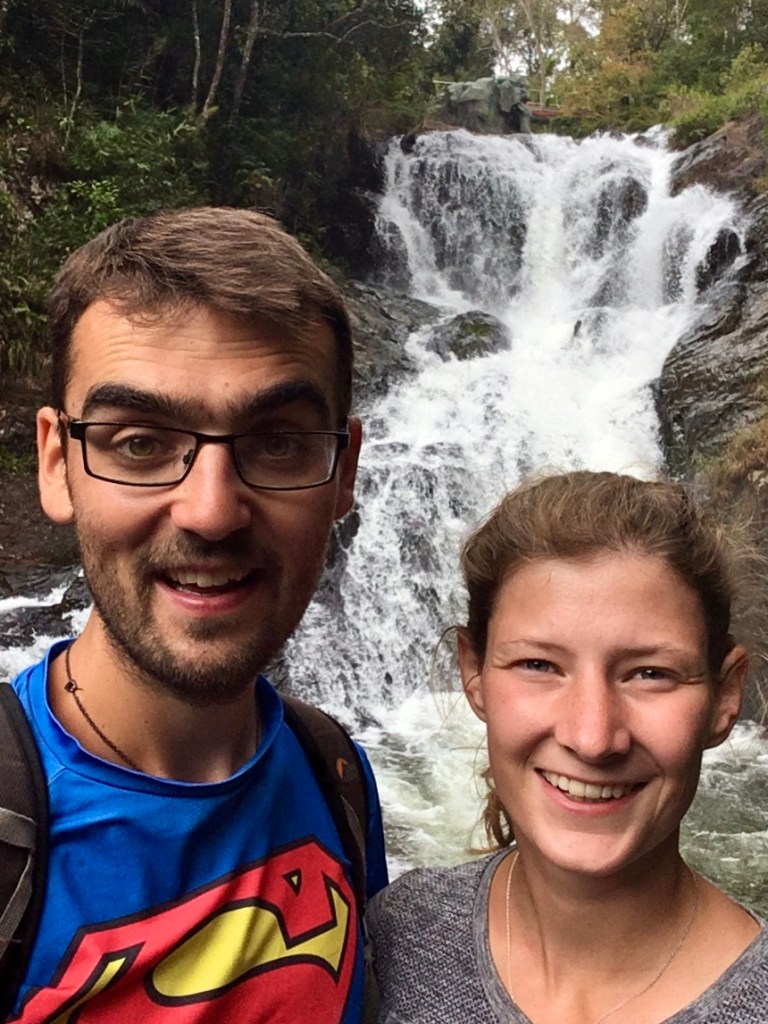
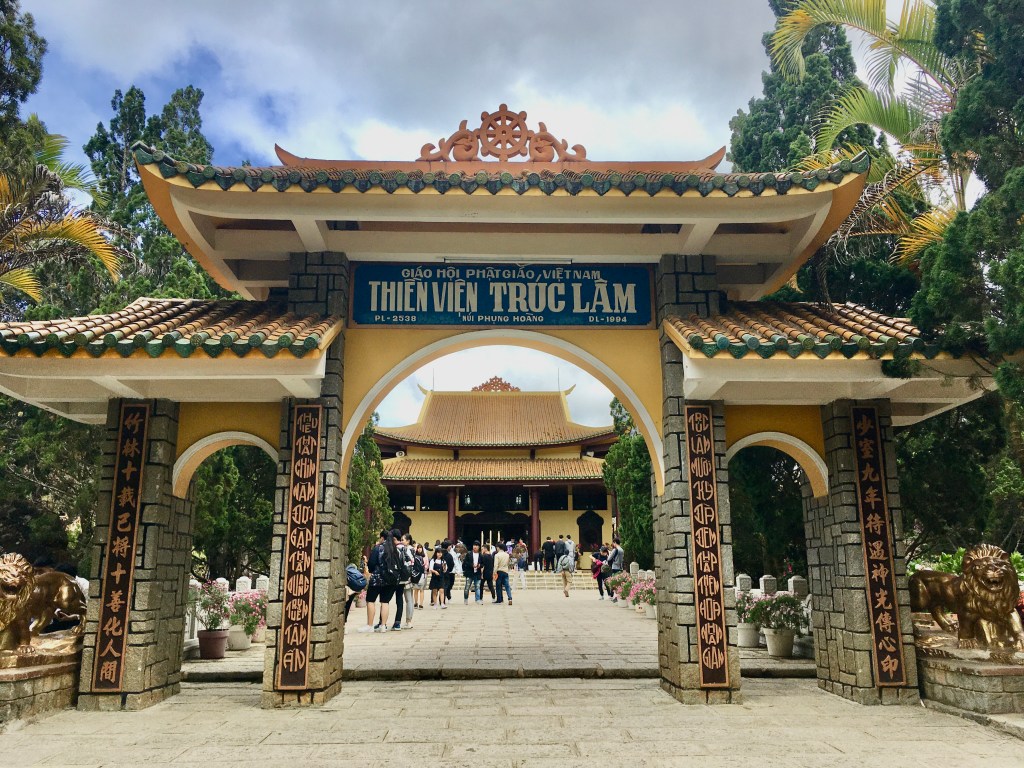
Our second day in Da Lat was spent exploring Datanla Waterfalls, which exceeded our expectations. The waterfall experience can come with a rollercoaster/slide experience (we chose not to do this) and as such we had dreaded the falls being very touristy. However, we had a wonderfall time (terrible pun I know) walking down through a forest path to reach the falls. As Helen was still feeling under the weather (but on the road to recovery), I headed out to the beautiful Trúc Lâm Temple, which had stunning gardens and was a lovely spot to take a short walk. We then headed back to the city for a restful afternoon before a final walk around the lake and an hour on a pedalo, watching the sun set. Helen relaxed like ‘a lady of leisure’ whilst I did all the work. Bloody typical. Overall, Da Lat has been great. Some much needed freshness after bigger and more chaotic Asian cities.

Vietnam travel tip #2: In Vietnam the local cuisine is amazing and it’s possible to get great vegetarian food for cheap prices. Sticky-rice with peanuts is a solid breakfast option!!

8th January-11th January (Hoi An)

Our next stop was the beautifully charismatic (although extremely touristy) Hoi An. Our flight from Da Lat arrived mid-afternoon and we shared a cab with a Brazilian chap to our hostel, before setting out to explore. The buildings and street plan of Hoi An reflect the influences (both indigenous and foreign) that have combined to produce this unique heritage site. The 21st-century curses of traffic and pollution are more (although not entirerly) absent, and we wandered through the lantern-lit streets, before having a take-away dinner (pumpkin and eggplant with rice) by the river. Hoi An owes its preserved state to the silting-up of the Thu Bon river in the 19th century, which put an end to its importance as a trading post, but (although it may not have seemed like it at the time), fortuitously helped it escape modern development and US bombing in the Vietnam war.  

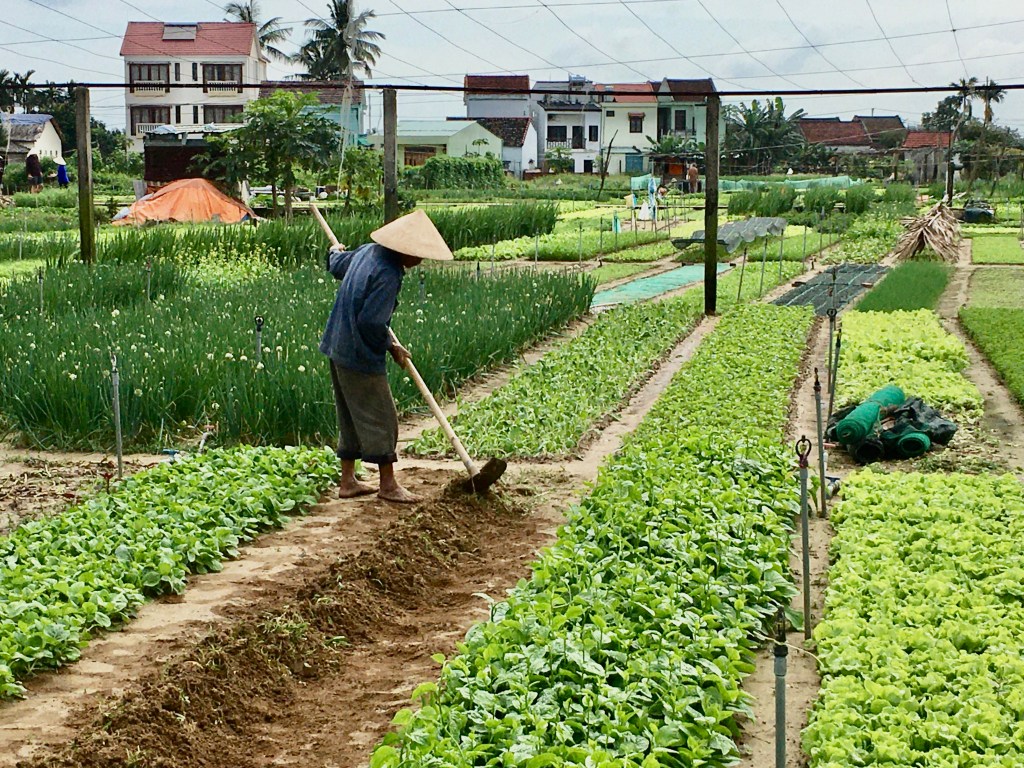
Whilst Hoi An deserves all its plaudits as a unique and beautiful city, the old town is incredibly crowded, especially at night. Therefore, on our first day we decided to head away from the city to the outskirts and we visited Tra Que Vegetable Village en route to An Bang and Hidden beach. The vegetable village was formed in the 16th century and the people living in the area continue to live and preserve the traditional values of the village. Due to the coastal climate, the area has good soil and temperatures and as such farmers (dating back from the communities of Sa Huynh, Cham Pa and Dai Viet) have cultivated the land for decades, growing many herbs including basil and mint. As I have been suffering from a cold (how can I have a cold… it’s like 30 degrees??), we had a nice rest over a basil seed, ginger and mint drink. The beaches were a little disappointing and like some other beaches in Asia have been slightly spoiled by litter. The evening and afternoon were spent exploring the old town again with a delicious dinner at the highly rated BUP café.

Vietnam travel tip #3: Say no to plastic if you can. In contrast to the UK where plastic bags have a cost to them, in Vietnam you are often given overwhelming amounts of plastic. Sometimes shops put your items in a plastic bag and then put that plastic bag in a plastic bag. We have now started to avoid take-away meals and always take our own bags to shops. We have also been guilty of buying a lot of plastic bottles (tap water is a no-go) but have started to look for safe re-filling options as well.

The Marble Mountains dominate the landscape along the coastal road between Hoi An and Da Nang. According to folklore, a dragon laid an egg after emerging from the water on Non Nuoc Beach and after a thousand days and nights, the egg hatched, revealing a beautiful girl. The fragments of the shell eventually grew into the Marble Mountains. In 1825, after the decline of the Cham Empire, the Vietnamese King (Minh Mang), named them ‘Ngu Hanh Son’ or ‘The Five Element Mountains’, one each for water, wood, fire, metal, earth. We had a marb-elous time biking to the mountains from Hoi An, before our ascent of Thuy Son (water mountain), took us past shrines, statues and temples and through a couple of old gates. Once at the top, we were bombarded with signs for caves and viewpoints, so we spent the next hour or two exploring and avoiding large amounts of tourists.

Our last day in Hoi An was spent exploring the old town in the early morning, when the hordes of tourists had yet to arrive. We first visited the old house of Tan Ky, a 200 year old trading house built by Vietnamese, but with strong Japanese and Chinese influences. The long and narrow house is the most visited in Hoi An, backing onto the river (reflecting it’s importance for trade) with a beautiful courtyard and intricate wood carvings. Amazingly, the bottom floor of the house frequently floods, forcing the family to move all the furniture to the top floor!! We also visited the Phuc Kien Chinese assembly hall, which was used for social gatherings and celebrations before later being transformed into a temple. However, my favourite was the museum of folklore, where we learnt about the history of silk production (an important trade product in the history of Hoi An), the unicorn dance, Ba Trao singing, the Bai Choi game (basically Vietnamese bingo) as well as fishing and farming. It was great to have some insights into the culture of daily life in Hoi An. We also had a traditional egg coffee (an experience in itself!!)

Overall Hoi An has been great. Our hotel was world class (ridiculously posh for ~£5 a night) and the area we were staying was outside of the main tourist attractions. The downside is that the old town has become a tourist hotspot and speaking to Joe (Fell) has highlighted just how much Hoi An changed in recent years. It has also been amazing to have a final day with Sarah, Patrick and Joe. A pho-bulous start to our time in Vietnam.

A new year but the same me

2019 was one to remember. I finished my PhD, Helen left her job with Techmodal after four great years, we moved out of our flat in Bath to start our big travel adventure and… we got engaged (although I am sure Helen is regretting that now that she’s spending so much time with me). I also managed to visit 14 countries in 2019, which is a bit mad. Having said that, I am already trying to work out if I can beat that tally in 2020. So I guess you could say that it’s a new year…but the same me.

30th December-2nd January (Phnom Penh)

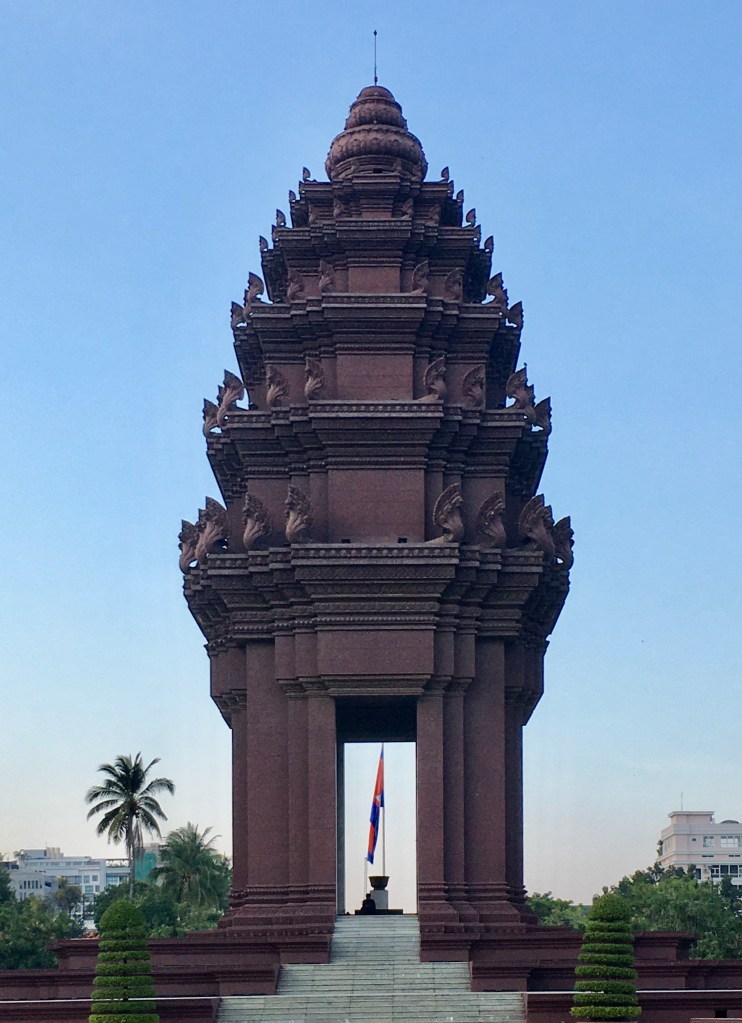
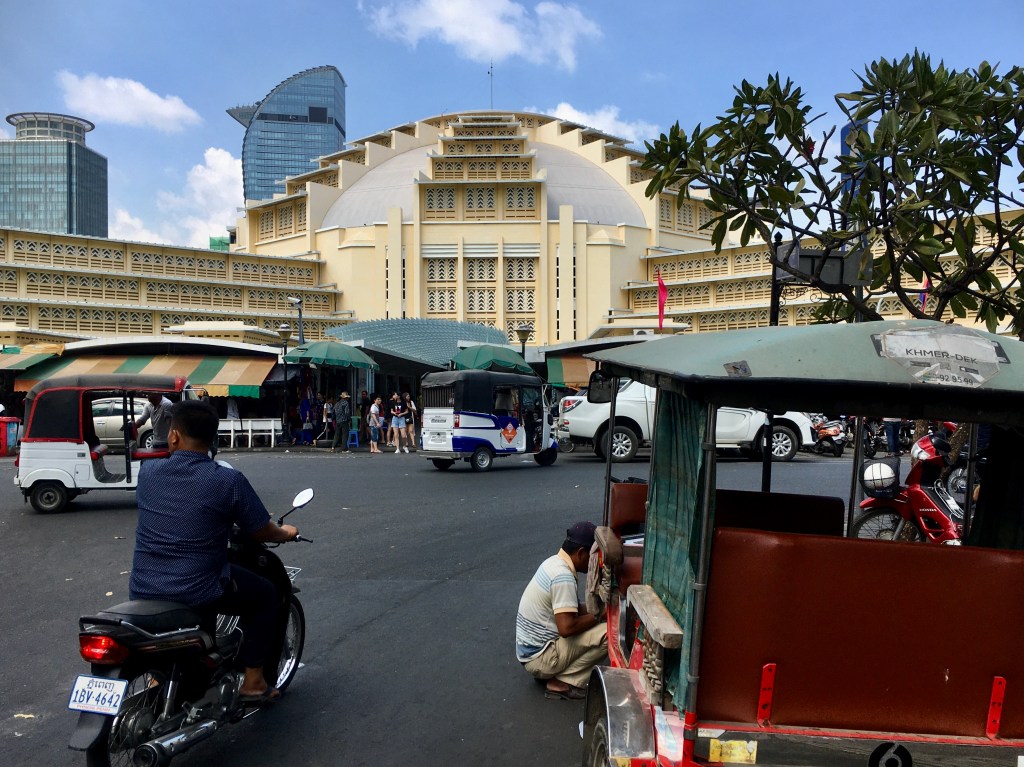
The 30th was a big travel day. We got an Ibis bus from Siem Reap to Phnom Penh which took about six hours, but we used the time to plan the first part of our month in Vietnam. As a side note, don’t buy what looks like boiled eggs from anyone in Cambodia. I am not sure what they were… but they were not boiled eggs (enough said on that matter). For someone who loves travelling so much, it’s a tad ironic how little I enjoy the actual ‘travelling’ part. So after arriving at a lovely hotel in the capitol city we dropped our bags and set out to explore (I was feeling very grumpy). We both thought that Phnom Penh exceeded our expectations and the Grand Palace and Independence Monuments were highlights, as they were surrounded by large open spaces and busy market stalls. Like many of the cities in Asia, the traffic and air pollution can get a little tiring (especially at night) so after a few hours of walking we headed back to the hotel to recharge ready for New Year’s Eve.

New Year’s Eve involved more exploring of the city including visits to Wat Phnom and the central market, which was bustling and vibrant. Phnom Penh is very busy and not overly accommodating for pedestrians so we spent the afternoon exploring the river side before returning home. Unfortunately the homestay didn’t cater for gluten free as well as we had hoped it would, so we finished 2019 with a dinner of yoghurt, bananas and porridge oats!! And when I say ‘unfortunately’ I am of course joking. It was GLORIOUS. You see what I mean about a new year, but the same me?

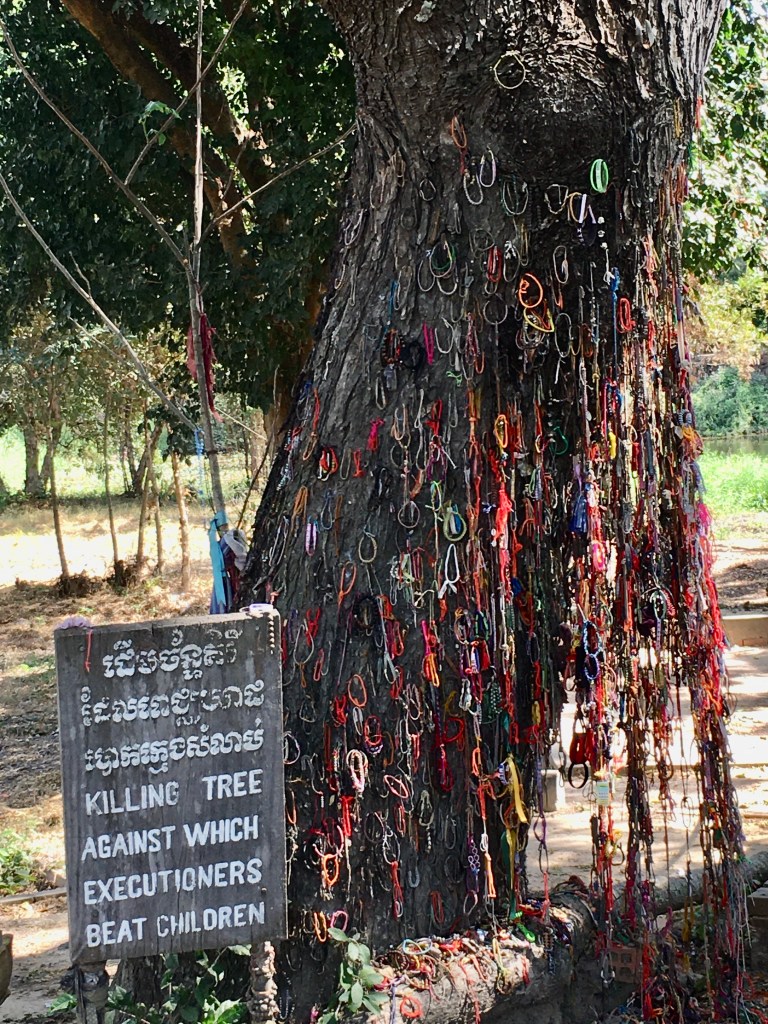
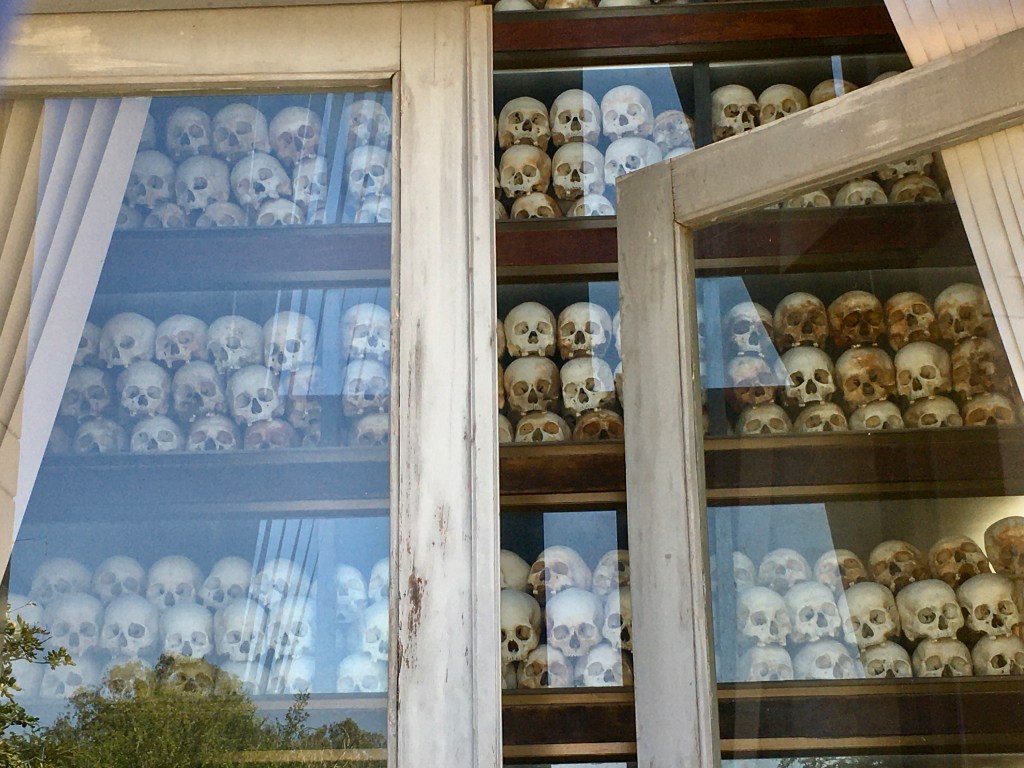
I apologise in advance for the next section of this post which contains heart-breaking information and my reflections about the Choeung Ek Genocidal Centre, which I visited on 1st January. The centre is located just outside of the city and is now a tribute to the darkest period of Cambodian history, namely the ultra-communist Khmer Rouge/Kampuchea regime (1975-1979). The centre is a unique and special place which reflects the barbaric crimes committed during a period of 3 years, 8 months and 20 days. Now, many of the structures have been destroyed and the site contains simple signs and beautiful monuments. The 129 mass graves, ~8,000 human skulls and memorial stupa at the site also bear testimony to the many unspeakable crimes of that era.

On the 17th April 1975, the Khmer regime (under the leadership of Pol Pot) took control of the country with the aim of setting up a pure and communist society. Cambodia was experiencing hard times (including for example bombings from the Vietnam War) and this state of terror and poverty helped to fuel the regime. Within 48 hours, much of Phnom Penh was under control (e.g. hospitals and schools) and religion and freedom of thinking was forbidden. People were forced to work on farms for up to 12 hours a day, without sufficient food. Anyone who spoke against the regime as well as teachers, lawyers, doctors and people who spoke foreign languages were imprisoned and killed. From 1978 onwards, Pol Pot became increasingly paranoid and many soldiers defected, but were often caught and killed as traitors. These people were tortured until they signed false confessions and confessions against their own friends and families. The site I visited witnessed the systematic and brutal deaths of over 20,000 people and is one of over 200 sites throughout the country. After the regime came to an end in 1979, Pol Pot fled across the Thai border, but Cambodia remained isolated during the Cold War. Incredibly, the Khmer Rouge were allowed to regroup in the jungle and were still recognized as the Cambodian leadership by many countries (e.g. the UK and the USA) and were even represented within the United Nations. Pol Pot continued as the leader for ~20 years, until 1997 when he was placed under house arrest, before his death one year later, aged 73 years.

At the site, I was led by an audio guide and the first stop was a site where the victims arrived, blindfolded, before being killed (usually on the same night). The next stop was the centre where the details of the victims were recorded, which reminded me of my recent trip to Auschwitz. The site also has many mass graves, many of which are undisturbed and during the rainy seasons, bones and teeth can still emerge from the ground. The staff at the centre do a wonderful job of maintaining the site and these fragments of human life are kept on display, along with rags and items of clothing from the victims. The audio guide also provided reflections from survivors, who described some of the terrors they experienced, including being forced to eat excrement, beat children, and being beaten themselves. As bullets were too expensive, victims were often killed with farm tools and thousands of families were torn apart in this manner, as though life simply had no meaning. Indeed, one of the mottos of the regime was ‘better to kill an innocent by mistake than to spare an enemy by mistake’. A second motto was ‘to dig up grass one must kill the roots’ and this was evident from the fact that over 100 women, children and babies were also killed at the site, by the most barbaric means. I was moved to the point of tears many times, and the experience was one of the most harrowing of my life. Revenue from the admission fee is used for developing and conserving the centre as well as sponsoring poor and talented students. After visiting I was left feeling heartbroken, but I was glad I had gone and pleased to have been able to support the continual preservation of the memorial.

Our next stop is Vietnam. Cambodia has been incredible. I have been blown-away by the ancient history and moved to tears by the recent history. I have enjoyed the charm of the country, as well as the good natured attitude of its people. It has been another fantastic stop on our adventure.

Christmas in Cambodia

Christmas. Oh WAT a wonderful time of the year!! Right… I’ve got that terrible temple pun out of my system so we can move on now.

25th December-29th December (Siem Reap & Angkor Wat)

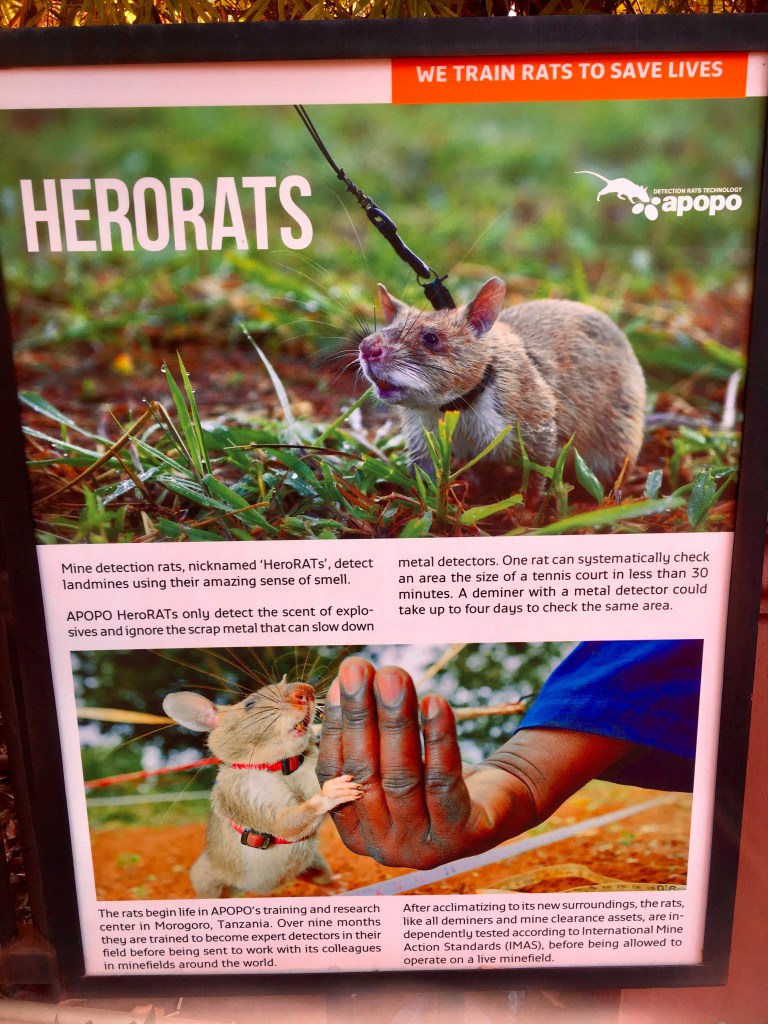
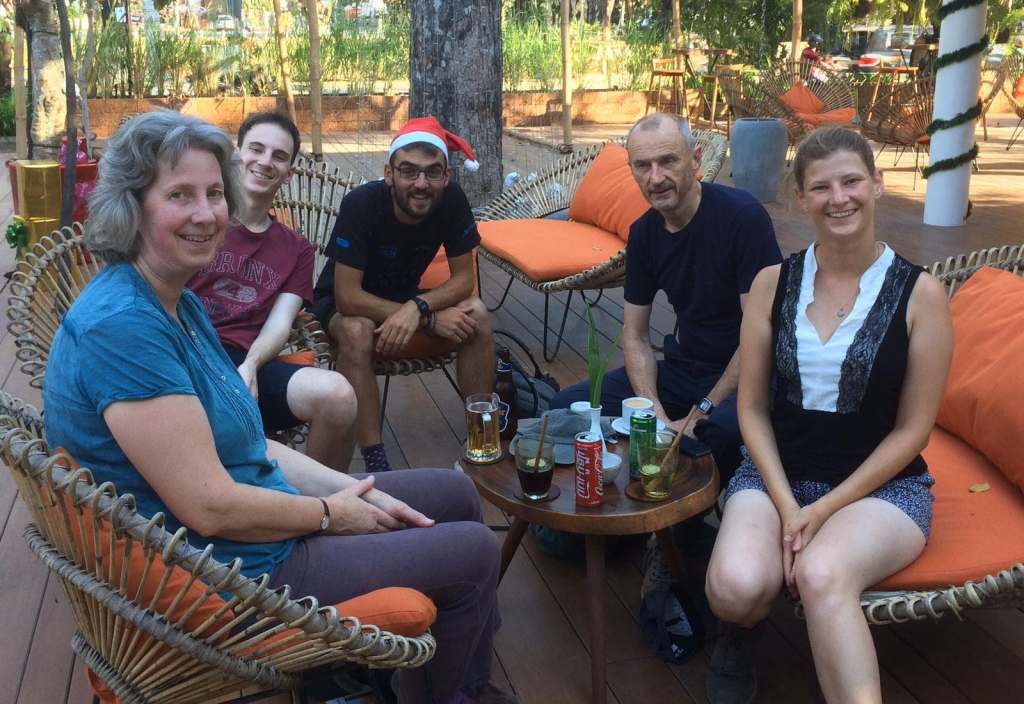
Christmas in Cambodia. A tad different to usual…. Temperature = around 30 degrees. Christmas lunch = banana smoothies and iced coffee. Christmas walk = a stroll around Siem Reap and a visit to the APOPO centre. Although ‘Pub Street’ did have an overwhelming number of Christmas decorations and our afternoon drink stop blared out jazzy Christmas songs. I guess some things never change.

On Christmas Day we woke in a beautiful homestay and spent the morning swimming in the jungle themed pool. We then did one of our favourite activities of the trip thus far… a visit to the APOPO centre (Website: https://www.apopo.org/en). APOPO is a non-profit organisation which operates in eight countries around the world. The company uses rats to help with various tasks, and in Cambodia that’s clearing land mines. As a result of three decades of war, there are thousands of unexploded mines throughout the country, mostly in rural areas. The mines have caused many deaths and life changing injuries (~19,000 and 51,000 respectively) to civilians, 50% of whom are children and means that people are afraid to tend to their crops and/or to travel. Historically the mines have been cleared by humans with metal detectors, but this is slow and dangerous for the operator. Up step the HERO rats. The rats are trained in Tanzania for 6-12 months before being sent around the world. They can clear a size of land the area of a tennis court in 30 minutes (it would take a human ~4 days) and they don’t activate the mines as they weigh ~1.5 kg, which is below the trigger point of 3 kg. Currently there are 51 rats in Cambodia and they live a wild but pampered lifestyle, working on mine detection from the early hours until mid-morning, before being pampered with air conditioned rooms and tasty snacks. The rats are doing amazing work and in the last three years have cleared ~1000 mines in Cambodia. For $5 per person we were given a tour of the centre, including meeting one of the rats called Bosco. I was so impressed that I am going to change my monthly direct debit (which currently supports a UK based charity) to APOPO. Training the rats is expensive (~£6000) and they also need to be cared for in Cambodia. I cannot think of a more worthwhile cause.

The afternoon was spent exploring Siem Reap before meeting Helen’s parents for more Christmas fun (woohoo the Fells have arrived). It was amazing to see them as we had been looking forward to the moment for many weeks. After some drinks and relaxing we headed back to the homestay for an evening swim and a recharge of the batteries ready for some prime temple exploring.

Angkor Wat is amazing. On Boxing Day we had an incredible day exploring the temples at Siem Reap. First we visited Angkor Wat itself, which is the most famous of the temples, also giving the temple complex its name. The Angkor Wat temple was built during the early 12th century in the reign of King Suryavarman II and was originally constructed as a Hindu temple (dedicated to the god Vishnu for the Khmer Empire) but it was gradually transformed into a Buddhist temple towards the end of the 12th century. Whilst the three dominating spires and architecture were stunning, by far the greatest attraction for us were the amazing frescoes including a giant goose, various battle scenes (normally gods versus demons) and nymphs with crazy hair styles (>2000 with 37 different styles). We then moved onto the weird and wacky Angkor Thom and Bayon Temple, famous for its 54 gothic towers with 200 smiling faces. The Angkor Thom complex was huge and we also visited a variety of temples hidden in the forests, complete with hidden passages. One of which was pieced back together brick by brick after being destroyed in the war. A giant jigsaw puzzle. The only downside to the day was that I didn’t have my Indiana Jones hat which would have been so appropriate. Temples galore!

On day two (and in line with all great childhood adventure books) the parents were ill, so the famous three (Helen, Joe and Rob) went out exploring. Let loose in the wild jungles of Cambodia, we rented bikes and explored the temples. We cruised past Angkor Wat and Angkor Thom before our first stop, the impressive Ta Keo (Temple Mountain in Angkor) which is thought to be the first temple built entirely with sandstone. Then onto Ta Prohm, famous for featuring in the Lara Croft Tomb Raider film with its stunning ruins intertwined with trees (although these have been manicured slightly to maintain this mysterious look). The downside to the temple was the amount of tourists and we all enjoyed our walk around the majestic Sras Srang (a 12th century lake/complex) and visit to the Bantaey Kdei Temple much more (with the exception of some extremely disrespectful tourists who were climbing on the ruins and branded Rob a ‘judgemental *****’ when he pointed this out). We finished with a visit to Preah Neak Poan, a glorious temple in the middle of a lake, with intertwined nagas (seven headed snakes that play a role in the transition from the human to spiritual world). The day was fantastic and we finished with tired legs, sore bums and big smiles.

On Saturday (28th) we got to see a different side to Cambodia. As a special treat from Sarah and Patrick (a massive thank you!!) we went on a bird watching/lake exploring tour of Tonle Sap Lake. The tour was arranged through the Sam Veasna Centre (Website: https://samveasna.com/) and it was class. We were picked up at 5.30 am and travelled to the Tonle Sap Lake, and specifically the Prek Toal reserve. The area is home to a vast number of bird species. Most are water birds feeding on the fish and aquatic life in the flooded forest, but there are also forest birds that feed on insects giving the lake a unique wildlife diversity. However, for around 15 of these bird species the lake represents their last chance of survival in Southeast Asia. Sadly this is largely due to human activity, including extensive fishing, hunting and the destruction of their habitats with deforestation. The Same Veasna Centre aims to sustain Cambodia’s wildlife and communities using ecotourism. I never would have thought that bird watching would be my thing, but we had a great morning spotting birds including oriental darters, spot billed pelicans, the black headed ibis, great and intermediate egrets, Asian openbills, blue tailed bee-eaters, black bitterns and the rare milky stalk. Our guide, Hang Oeung, was brilliant, explaining about the birds and making us laugh with his wonderful sense of humour. We then visited the floating village of Saray and learnt about fishing and the water hyacinth handicraft industry (run by the local ladies), which helps to remove the pesky weed (brought in by Europeans) and also provides another income for the community. Another wonderful day and a nice contrast to the tourist heavy Siem Reap and Angkor Wat.

Today (29th) another day of temple exploring awaits. Fair to say we love Cambodia so far and it’s been an amazing Christmas experience.